Quick answer
A narrower beam can concentrate light on a book; a wider beam gives more forgiving coverage but may spill farther. Compare actual fittings at the planned distance and aim.
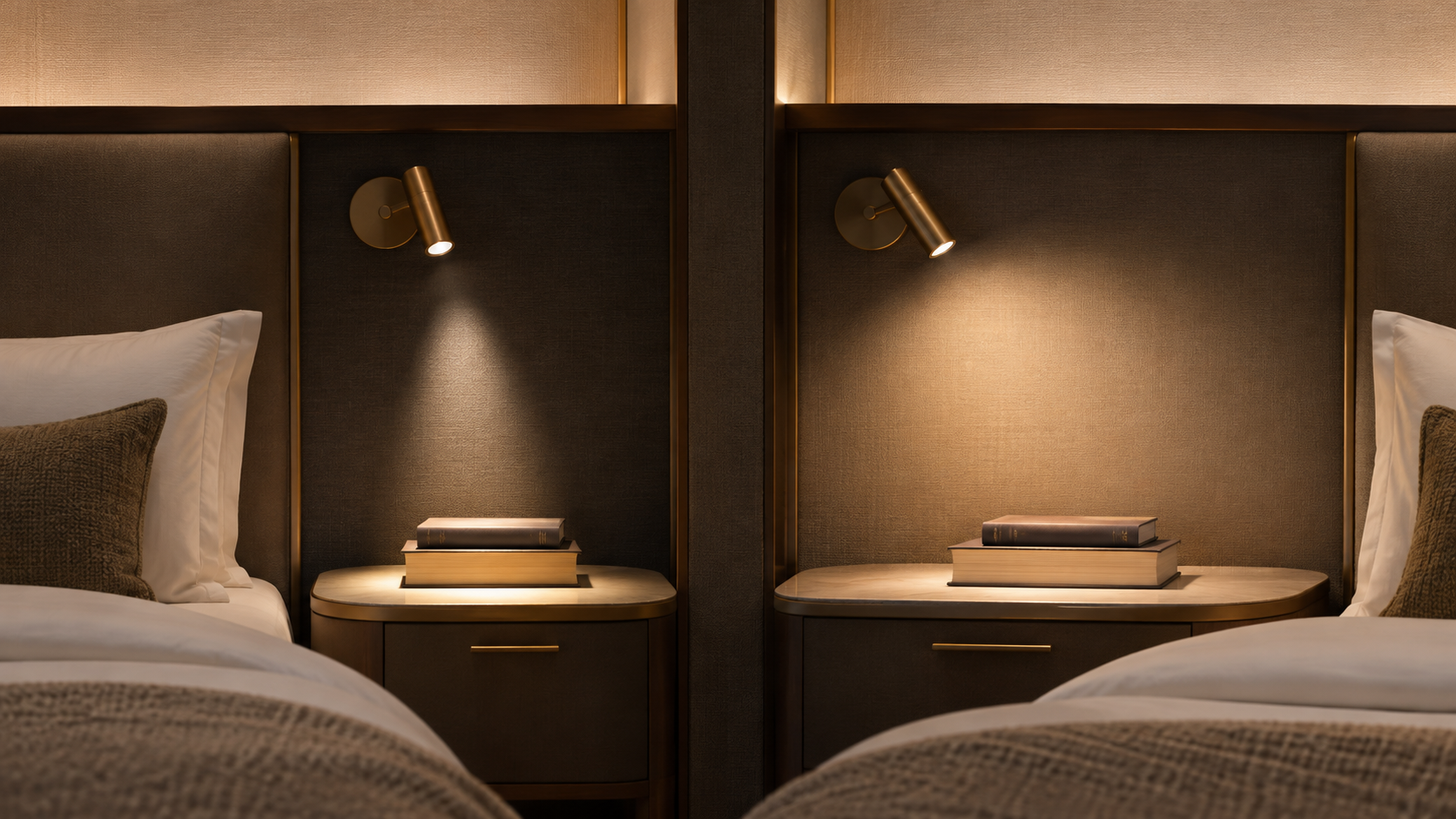
Narrow beam vs wide beam reading lights is a comparison of the installed light pattern, not a contest between angle numbers. A narrower distribution can concentrate light on a book and reduce spill toward a neighboring pillow. A wider distribution can cover a moving book or changing posture more easily, but may illuminate more of the bed. The result depends on distance, aiming, optical shielding and the complete fitting. Compare physical samples at the planned headboard position, with a real book and both guests' eye lines, before specifying an optic.
Translate the beam label into a room task
Beam angle describes one feature of a light distribution. It does not tell you how much light reaches the page, how bright the source looks or where spill begins. A beam may have a soft edge rather than a hard circle. The same nominal angle at two different mounting distances produces different coverage on the book. Ask for photometric data for the complete ordered luminaire and optic, then test at the room's actual geometry.
Start by marking the likely page positions. A guest may read upright with the book high, then recline with it lower. If a narrow spot only works at one angle, it may demand frequent adjustment. If a broad spot reaches the neighboring pillow, it may not suit a shared bed. The right balance comes from the expected posture range, not an abstract preference for “focused” light.
Compare the page, source and neighboring pillow
Set both sample fittings at the proposed height and horizontal offset. Use the same book, ambient scene and guest position. First observe page visibility and shadow. Then look directly from the reader's eyes and the other pillow for exposed LEDs or sharp reflections. A narrow beam can still glare if its source is visible; a wider beam can be comfortable when well shielded.
Record how the light moves when adjusted and where it parks. Check the shade or lens at low room light, because a source that seems benign by day may appear prominent after dark. The low-glare reading-light guide separates source visibility from beam spread, while the beam-angle guide explains the angle term more fully.
Keep model facts tied to their configuration
MD-WL-Y135 has a documented 30° beam for its recessed adjustable reading head. That is a model fact, not proof that it is the best optic for every room. The pack does not establish the installed page illuminance or cut-out. Ask for the exact optic and photometric file if a performance target is in the project brief. Do not assign that 30° value to a different MYDE model merely because the heads look similar.
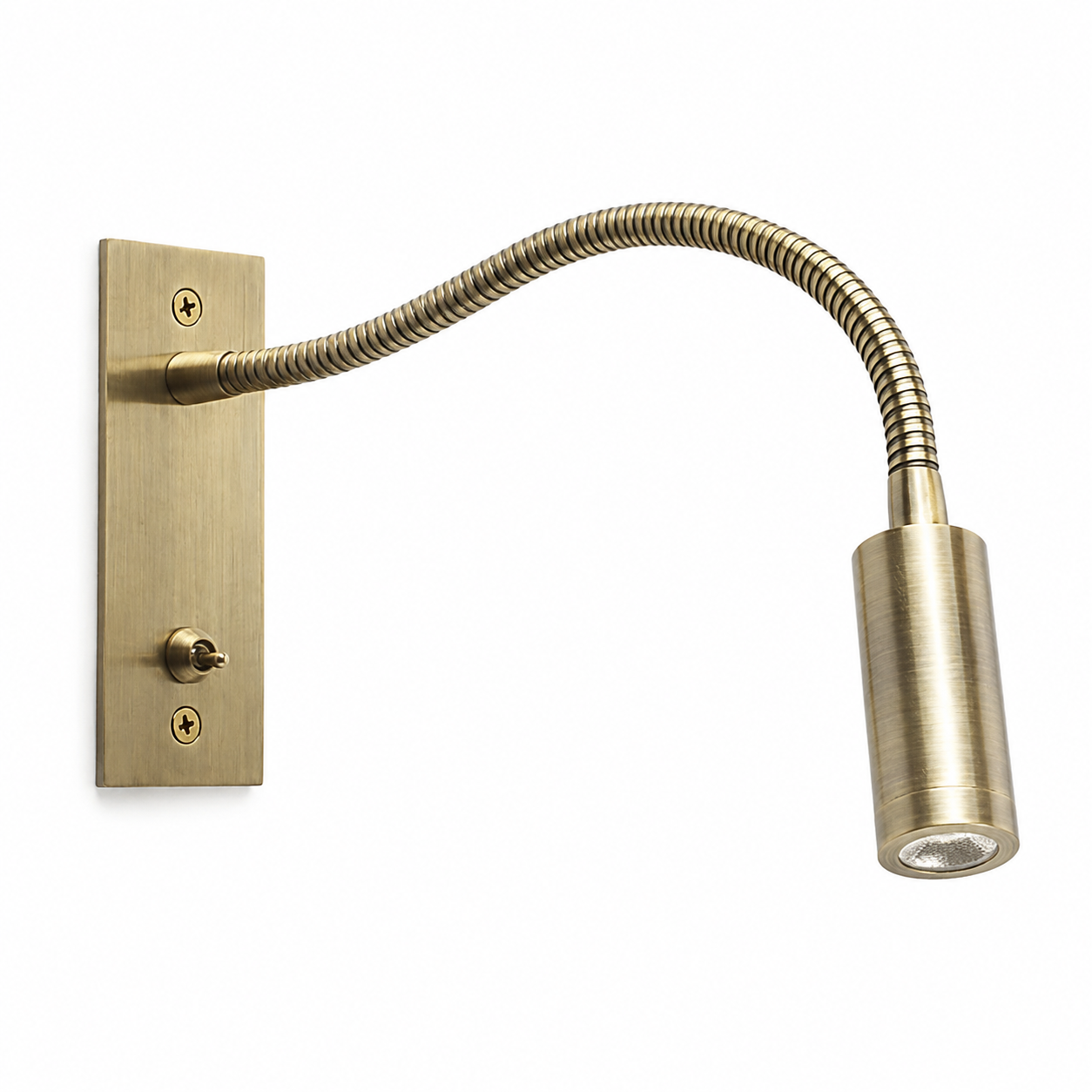
Where the room uses a moving flexible arm, the achievable aim matters as much as nominal distribution. Check both the full reading range and the parked position against pillows and wall finishes. A highly reflective headboard can amplify a stray highlight even when the page pattern looks controlled.
Make the choice repeatable
Write the ordered optic, mounting point and approved aim in the fixture schedule. Attach the mock-up observation or measurement for the intended book plane, and note the neighboring-pillow result. If a supplier changes the lens, shield or LED module, repeat the room comparison rather than assuming the beam label is sufficient. The objective is a usable page with low distraction for both guests, not the smallest number on a datasheet.