Quick answer
Start with the intended room mood and task use, compare actual warm-white samples beside finishes and daylight, then lock the ordered CCT and colour-tolerance requirements.
Warm-white lighting for hotel bedrooms is a choice about how the room looks and feels under the exact installed sources. A lower correlated colour temperature, or CCT, generally looks warmer, but a single Kelvin number does not describe colour matching, object appearance, glare or dimming behavior. Compare physical samples beside the selected fabric, timber and wall finish, in daylight and after dark. Then lock the ordered CCT option and the tolerance or sample reference that the procurement team will use across rooms. A pleasing rendering cannot settle those details.
Start with the room palette and tasks
Warm light can support a restful visual atmosphere, but the room still needs usable reading and dressing light. Evaluate the ambient layer, reading head and mirror light together. An overly warm, weak task source may make printed pages or clothing colours harder to judge; a brighter neutral source may feel out of place if it dominates the bedside. The project designer should balance task visibility and desired material appearance in the furnished room.
The US Department of Energy describes CCT as a condensed description of apparent light colour and notes that two sources with the same CCT can appear different. Their spectra, colour rendering and tolerance still matter. Treat a stated 2700 K or 3000 K as an ordering attribute, not a guarantee that two brands will match under every surface and viewing condition. The SDCM and consistency guide explains how to review variation across rooms.
Compare samples at useful output states
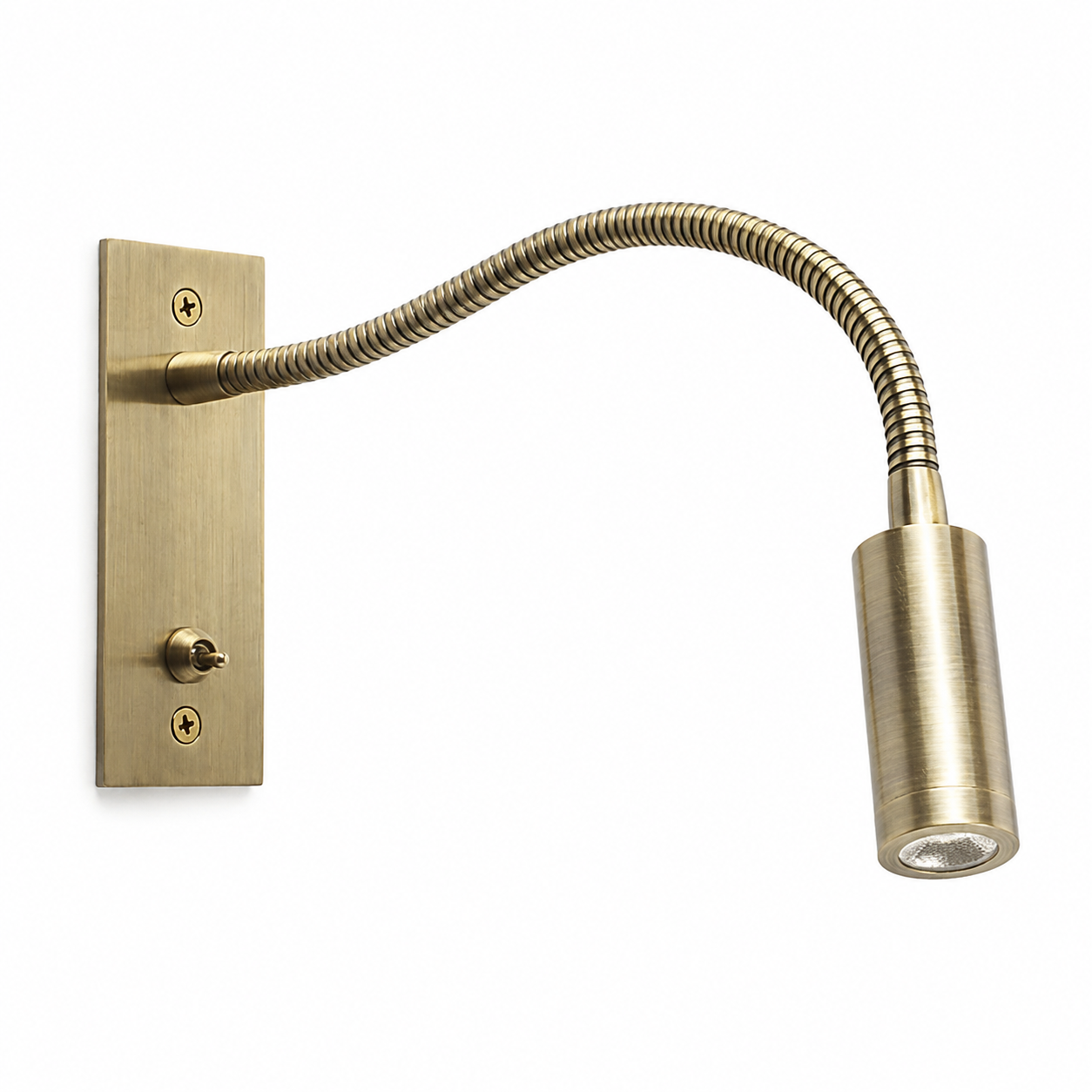
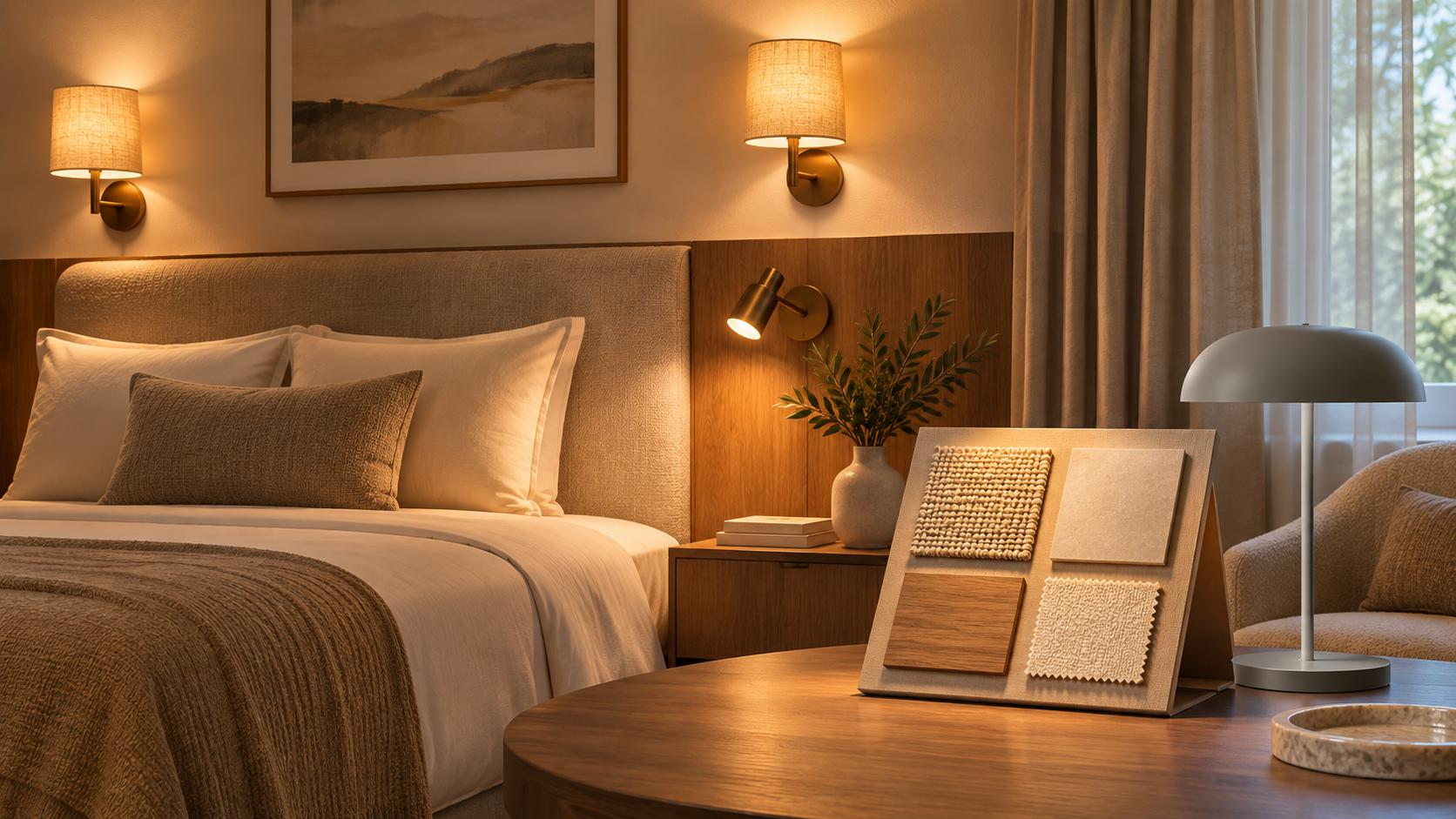
Place the candidate light beside the selected headboard fabric and metal finish. View it from the door, bed and mirror. Check whether the source is visible, whether shadows distort the task and whether polished surfaces produce a distracting highlight. Repeat at the relevant dimming state if the exact luminaire is dimmable. A catalogue photograph can hide differences in colour or exposure.
MD-WL-Y135 has documented selectable 2700 K, 3000 K and 4000 K configurations. These are order options in the fact pack, not a guest-controlled tunable-white feature. The chosen option should appear on the sample label and purchase schedule. Do not assume that another MYDE model offers the same selection. Ask for the complete luminaire colour data and confirm the optic and driver used in the sample.
Control variation across the room set
Approve one physical reference room or sample board under known lighting conditions. Record manufacturer, model, CCT, finish and batch or revision identifiers where available. If procurement spans phases, compare later deliveries with the approved sample before installation. A nominal CCT match does not settle a visible pink or green cast on adjacent walls; ask for chromaticity tolerance information when matching is important.
The hotel bedroom colour-temperature guide explores the broader room choice, but a physical room comparison remains essential. Review replacement parts too: a later LED module with the same nominal Kelvin value may appear different from aged nearby units. Service planning belongs in the specification, not only in maintenance instructions.
Approve appearance without overclaiming
Write down the selected room scene, sample settings and viewing surfaces. Separate warm appearance from any claim about sleep or wellness. The blue-light-at-night discussion treats exposure questions without assuming a health result from CCT. Sign off the actual ordered configuration and keep a photograph as supporting documentation, while relying on the physical reference and supplier data for the real colour decision.