Quick answer
Place each light from its own pillow and reading plane rather than spacing from the bed center alone; check both guests' eye lines and independent controls.
Bedside wall light placement for king beds starts with two readers, not a single centerline. A wide mattress can put pillows and books far from a wall sconce chosen only for symmetry. Mark each sleeping position, expected page and seated eye line on a furnished elevation. Then position each light so it can serve its own guest without shining into the other guest's face. Check switch reach and bedside table clearance as part of the same decision. The approved spacing is specific to the bed, pillows, headboard and fitting, not a dimension copied from a different project.
Separate visual balance from reading reach
The bed may be centered on a feature wall while the practical reading position is offset within each pillow. Make a first layout using the mattress and likely occupied pillow zones. A pair of wall lights can still look balanced if their heads aim inward or outward differently, but both sides must pass the same page test. Do not assume that equal distances from the bed center create equal useful light.
Compare the proposed light with the bedside table and any pendant, artwork or switch plate. A shade intended for ambient light can sit farther out than a focused head. A reading head may need to be closer to the page yet remain clear of head movement and housekeeping. The king-bed lighting design guide discusses the complete room scene; this page concentrates on the wall-light position.
Check one guest without waking the other
Switch on the left head only and read on the left pillow. Then observe the right pillow from a normal resting eye position. Repeat in reverse. If the source is visible or light falls strongly on the neighboring face, try a different mount, aim or shield. Check both upright and reclined posture, since a longer bed and deep headboard can change the viewing angle. The guest should be able to turn off their own light without crossing the other person's space.
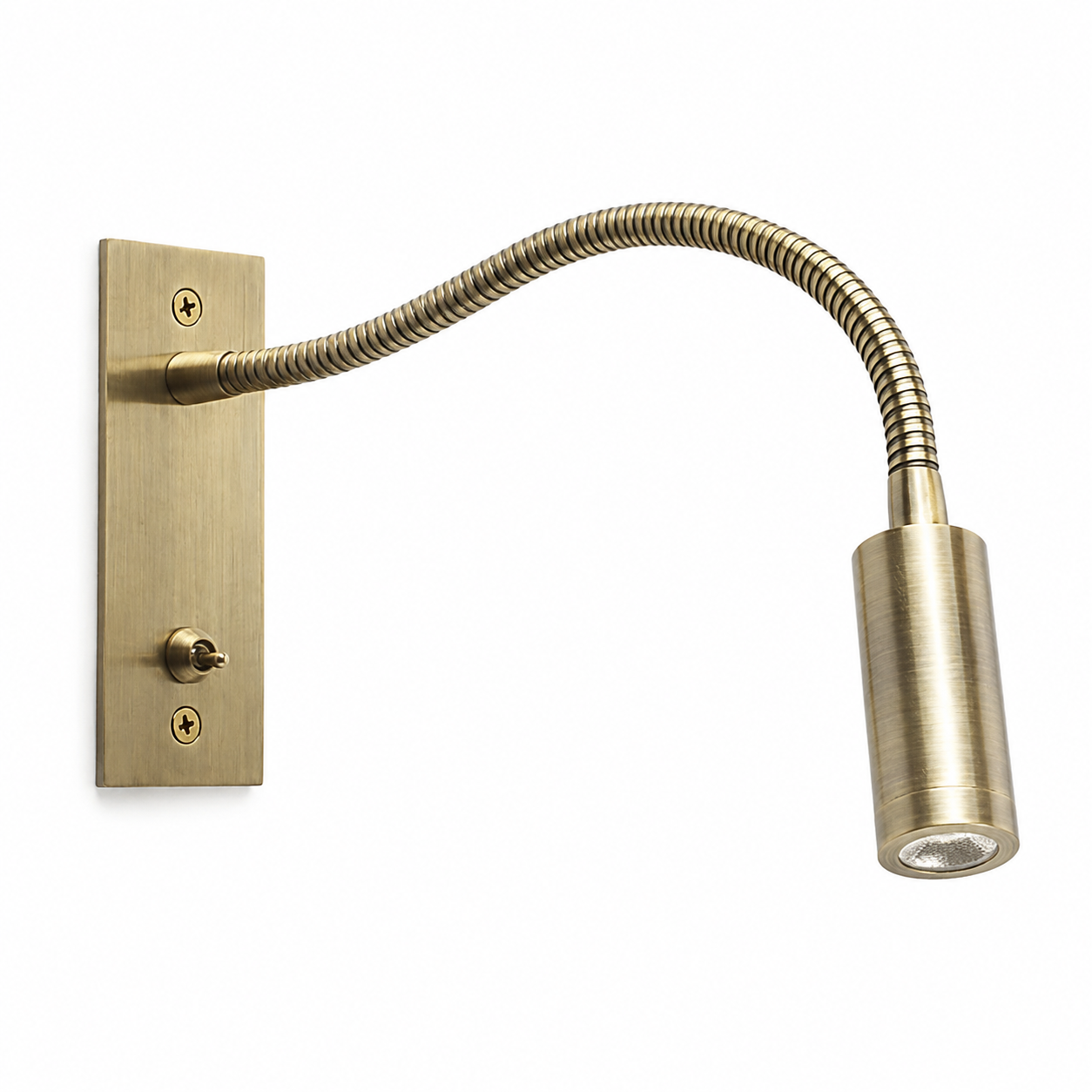
MD-WL-Y092 has a documented flexible 3 W head, touch dimming and a toggle. That format can be explored where posture varies, but its exact control sequence must be confirmed on a sample. Do not infer a universal reach or beam pattern from the flexible arm alone. A fixed or recessed alternative may work in a room with stable geometry if the actual sample passes the same tests.
Coordinate with the headboard and electrical plan
Put the approved horizontal and vertical points on the architect's elevation and the electrician's drawing. Specify whether each dimension locates a backplate center, pivot or light aperture. Account for the final mattress width and any bed skirt or headboard wings. Confirm the substrate, cable entry, control circuit and service route before the panel is fabricated.
If the king bed can be split or replaced later, document whether the chosen locations still make sense. A split-bed use case may need its own evaluation; do not pretend a king arrangement automatically works as twins. The twin-bed spacing guide is a separate decision path.
Sign off the furnished room
Measure from the installed mattress, sit at both pillows and check light on real books. Photograph each aiming and parked position and record how the lights respond to room master-off. Review glare after dark when ambient light is low. Release the repeated room detail only when both guests can use the switches, the joinery can be built, and the fitting can later be removed for service. Those checks matter more than a pleasing empty-wall elevation.