Quick answer
Keep the bright source out of normal eye lines while preserving useful light on the page, and verify the exact fitting in a room mock-up.
What makes a reading light low glare is the relationship between its bright source, the reader's eye and the page. A light can put enough illumination on a book yet remain uncomfortable if the LED or lens is directly visible from the pillow. Conversely, hiding the source so deeply that the book falls outside the beam defeats the task. Assess shielding, aim, mounting position and output together in the furnished room. A “low glare” label or one catalog photograph is not an acceptance test for a hotel bed.
Look from both pillows, not just at the book
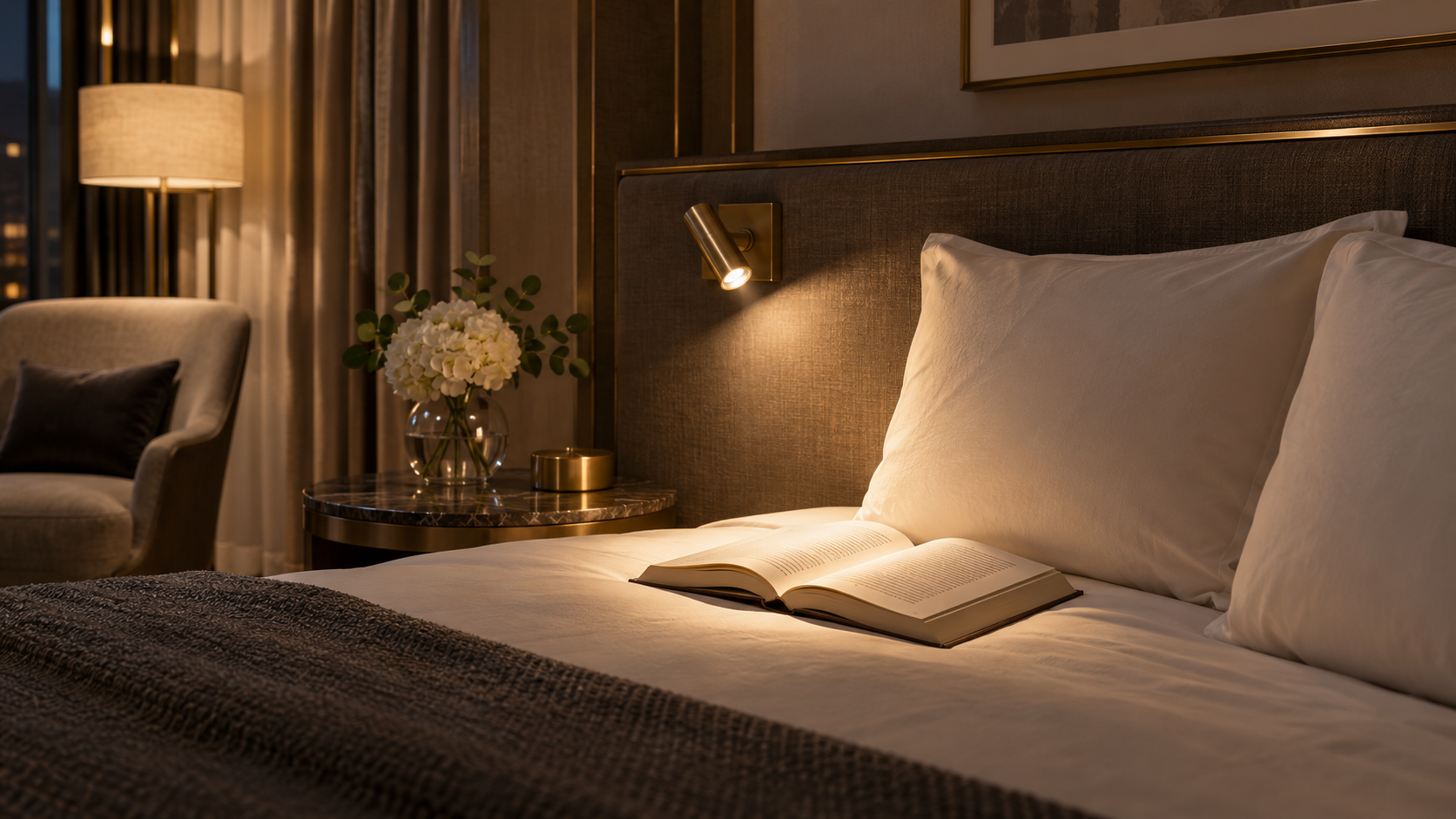
Sit upright and recline at each sleeping position with the actual pillows. Aim the lamp at a paper book, then look toward it from the neighboring pillow. Check whether a bright source is visible in ordinary use and whether the opposite guest receives a bright patch. Repeat with the arm parked and with the room's ambient lights off.
The bedside glare avoidance guide explains how position affects another guest. This article isolates the attributes of the fitting and its visible source. There is no useful universal number that can replace this eye-line review in the real room.
Separate shielding from distribution
A recessed source, visor, honeycomb or deep bezel may reduce direct views at certain angles. Each can also change beam shape or the light reaching the page. Request photometric data for the exact optic and check the intended mounting distance. An attractive dark bezel does not prove the beam is suitable for reading.
Adjustability helps only if the guest can find a comfortable aim. A movable head may point directly into an eye when returned to a common position. Test the range of likely guest use, not only one carefully staged photograph. Check reflections from polished headboards, mirrors and glossy tables, which can reveal the source even when it is shielded directly.
Review a real product without borrowing its claims
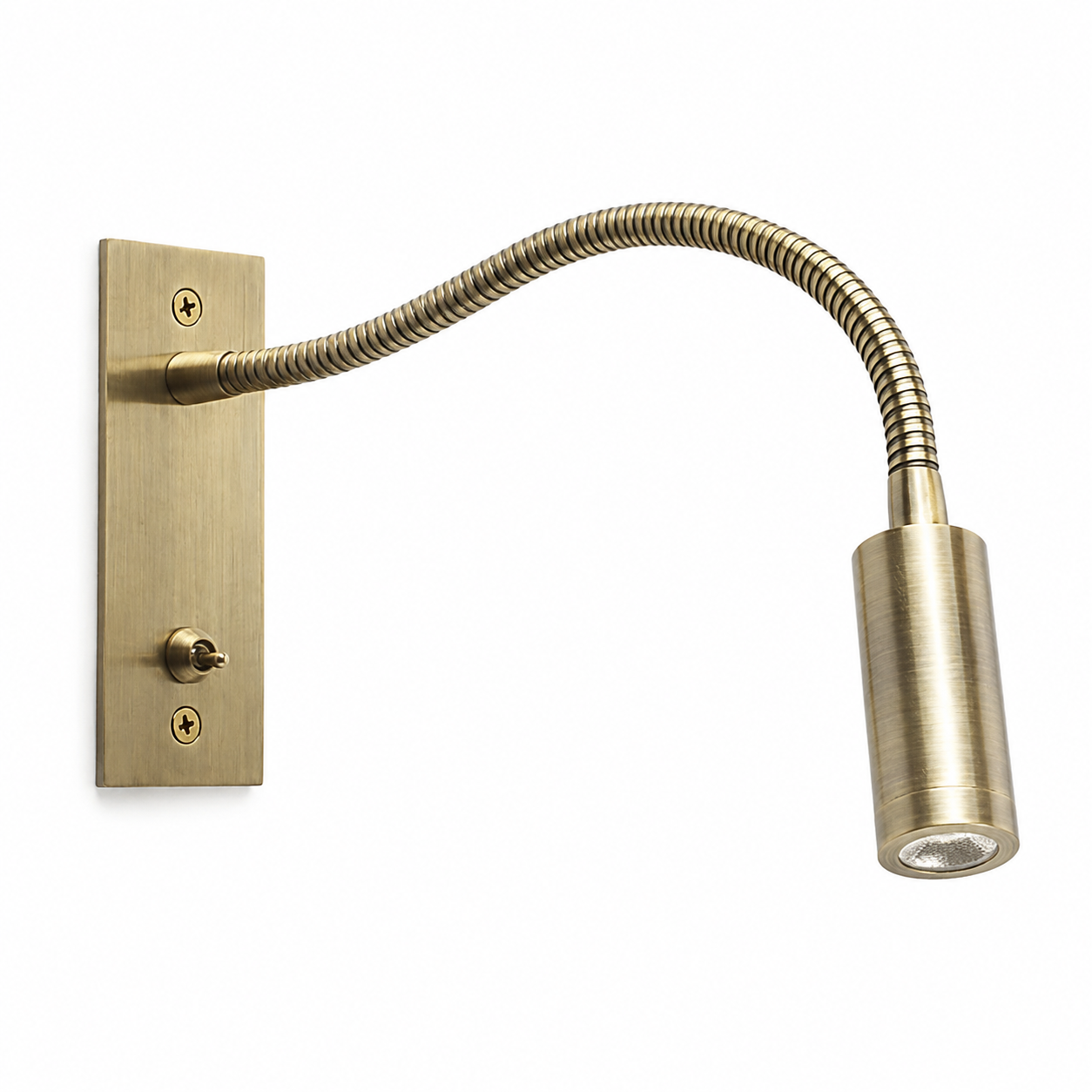
The documented MD-WL-Y135 is a recessed adjustable 3 W reading head with a stated 30° beam. That specification does not establish the glare experienced in a given room or a rating shared by other MYDE lights. Ask for the exact ordered configuration's drawing and photometric data, then compare the sample at the proposed position.
Do not use wattage as a proxy for visual comfort. Electrical input tells little about source luminance, optic, distance or reflection. Likewise, a narrow beam may concentrate light on the book but could expose an intense source at a poor angle. The decision belongs to the installed system.
Agree an observable acceptance method
Record the bed and pillow version, mounting point, lamp aim, room-light state and visible impressions from both pillows. Check whether the page remains usable without turning on a harsh general light. Photograph the source from the eye lines and note any reflected glare. Repeat the check after dimming, if the exact product supports it.
Have the designer, operator and supplier agree what needs correction before rooms are repeated. A lens or headboard change can alter the result, so retain the sample version in the fixture schedule. The strongest low-glare claim for a project is a documented mock-up with the actual fitting and room materials, not a generic badge.