Quick answer
Choose beam angle from the page area and fitting distance. Compare exact photometry and a full-size bedside sample for coverage, glare and spill toward the other guest.
To choose beam angle for hotel reading lights, begin with the book area and the distance from fitting to page. A narrow beam can limit spill onto the other pillow but may miss part of the book; a wider beam can be more forgiving yet create unwanted light around the bed. Beam angle by itself does not prove comfort or illuminance. Compare the exact optical distributions in a room mock-up and check the view from both pillows.
Translate the task into an optical brief
Draw the likely page positions for upright and reclined readers. Mark the luminaire centre, head travel and expected distance to the book. State how much of an open page should be usefully lit and where spill is unacceptable. If a fixed head is planned, the mounting position has to be especially accurate. An adjustable head gives flexibility but still needs a usable range.
Ask for a measured photometric file for the exact luminaire and optic when the project needs simulation. The Illuminating Engineering Society's IES-file primer explains that these files represent measured light distribution by angle. A generic beam-angle number collapses that distribution into a simple label. It does not tell you everything about edge fall-off, stray light or how the source looks from a pillow.
Compare the two sides of the bed
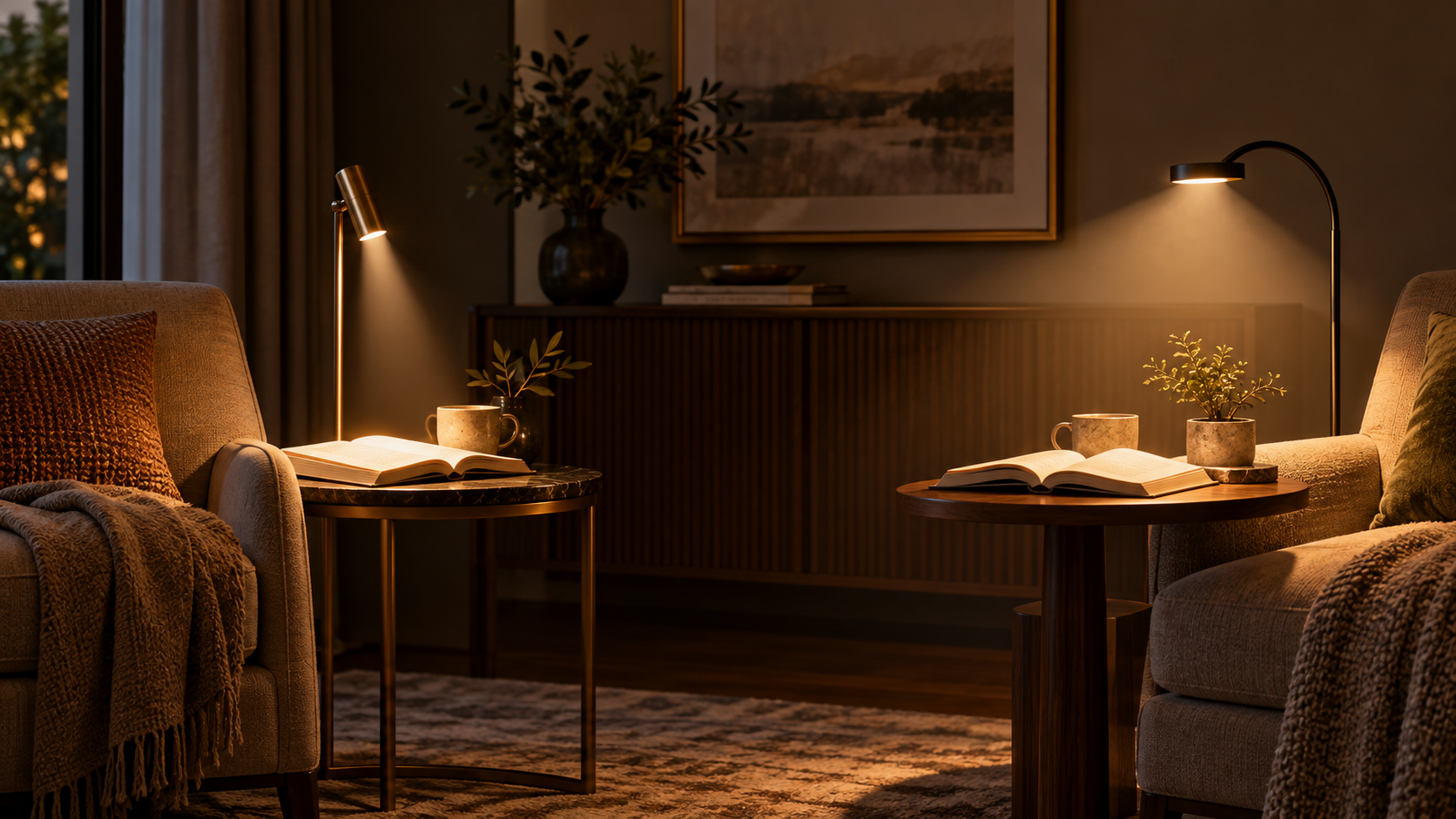
Aim a candidate fitting at a typical open book, with other lights off. Check coverage at the centre and outer page edges. Move the book and pillow through realistic positions. Then sit at the adjacent pillow and look for a visible source or bright patch on bedding. Repeat with ambient light on, since a fitting can behave differently in a combined scene. Ask a guest unfamiliar with the fixture to aim it; if they cannot recover useful light, the theoretical beam may be too demanding.
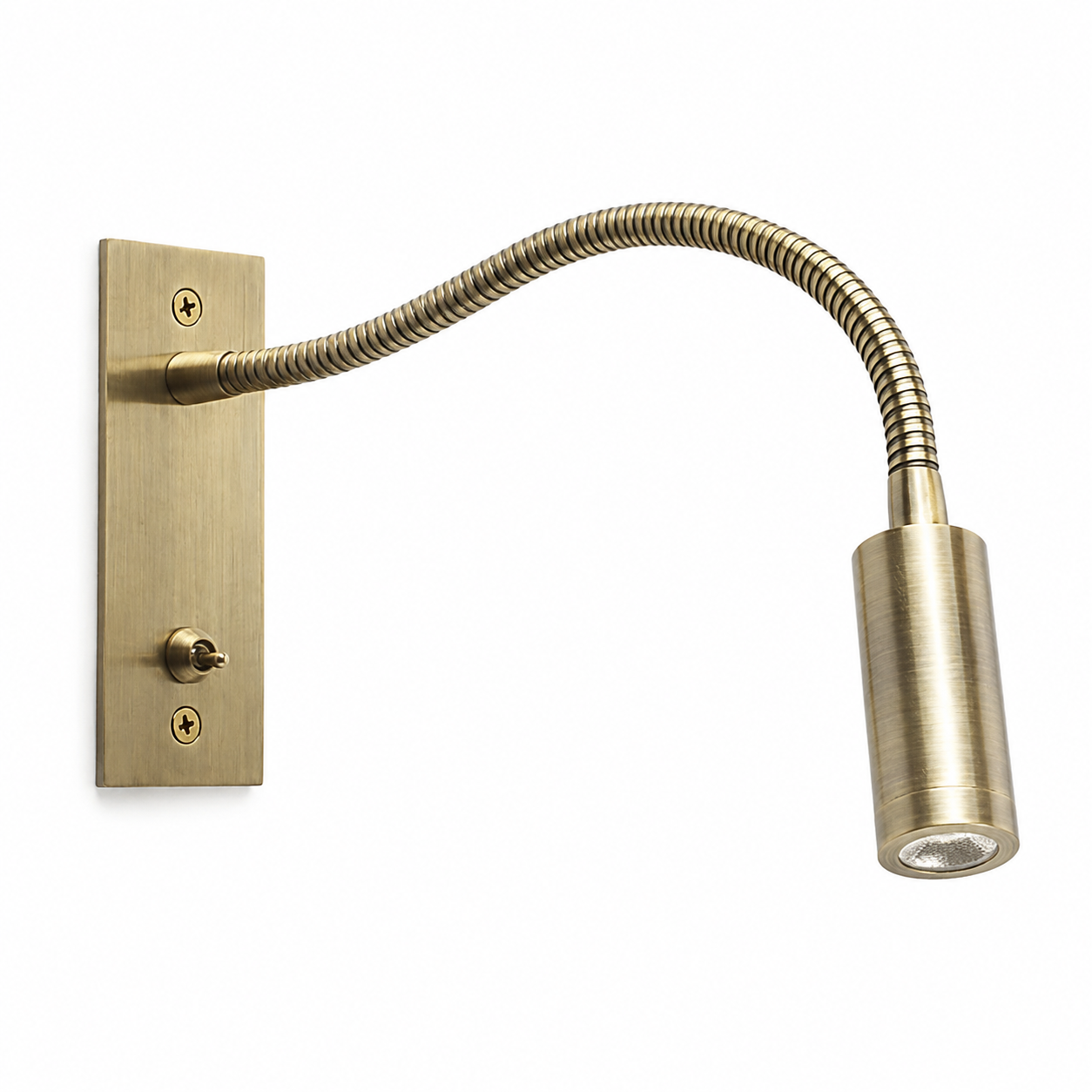
The MD-WL-Y135 fact pack specifies a 30-degree beam for its documented recessed reading head. That is a model-specific value, not a recommended beam for all hotel rooms. Its success depends on the mounting point, aiming and reading distance. Confirm the ordered optic and current technical sheet before comparing it with another product. The bedside angle guide covers how to set the head after its position is fixed.
Avoid false precision from a cone drawing
A diagram showing a perfect circle on a flat plane does not represent a tilted book, shadows from hands, reflections from pale bedding or the reader's eye line. Use calculations to narrow candidates, then test the full-size room. If the design brief includes a reading-plane lux target, measure at several positions on the page and retain the results. Do not choose by wattage or a photograph of a bright spot on a wall.
Include service and repeatability in approval. If the exact optic becomes unavailable, a replacement marked with the same beam angle may still have a different distribution. Compare its photometric data and room result before substitution.
Approval checklist
- Confirm mounting distance and realistic page positions.
- Request photometric data for the exact optic and variant.
- Check page coverage, edge fall-off, glare and adjacent-pillow spill.
- Record fixture aim, measurement conditions and accepted sample.
- Retest a replacement optic rather than relying on its label alone.
The useful answer is the distribution that performs in the built room, with the selected fixture and geometry documented together.