Quick answer
Use 2026 design commentary as a shortlist of ideas, then approve any bedside choice for guest control, glare and service in the actual room.
Hotel bedside lighting trends in 2026 are best read as design directions to test, not a universal specification for every property. Current hospitality and lighting-industry commentary points to layered guest control, tactile materials and restrained fixtures that still perform a clear task. A hotel buyer should translate any appealing direction into a furnished-room test: can both guests read, find the controls and move at night without glare? This review was prepared on 6 November 2026 from published design-sector sources. It does not claim market-share data, a completed MYDE project or a new feature on an unverified product.
More deliberate layers at the bed
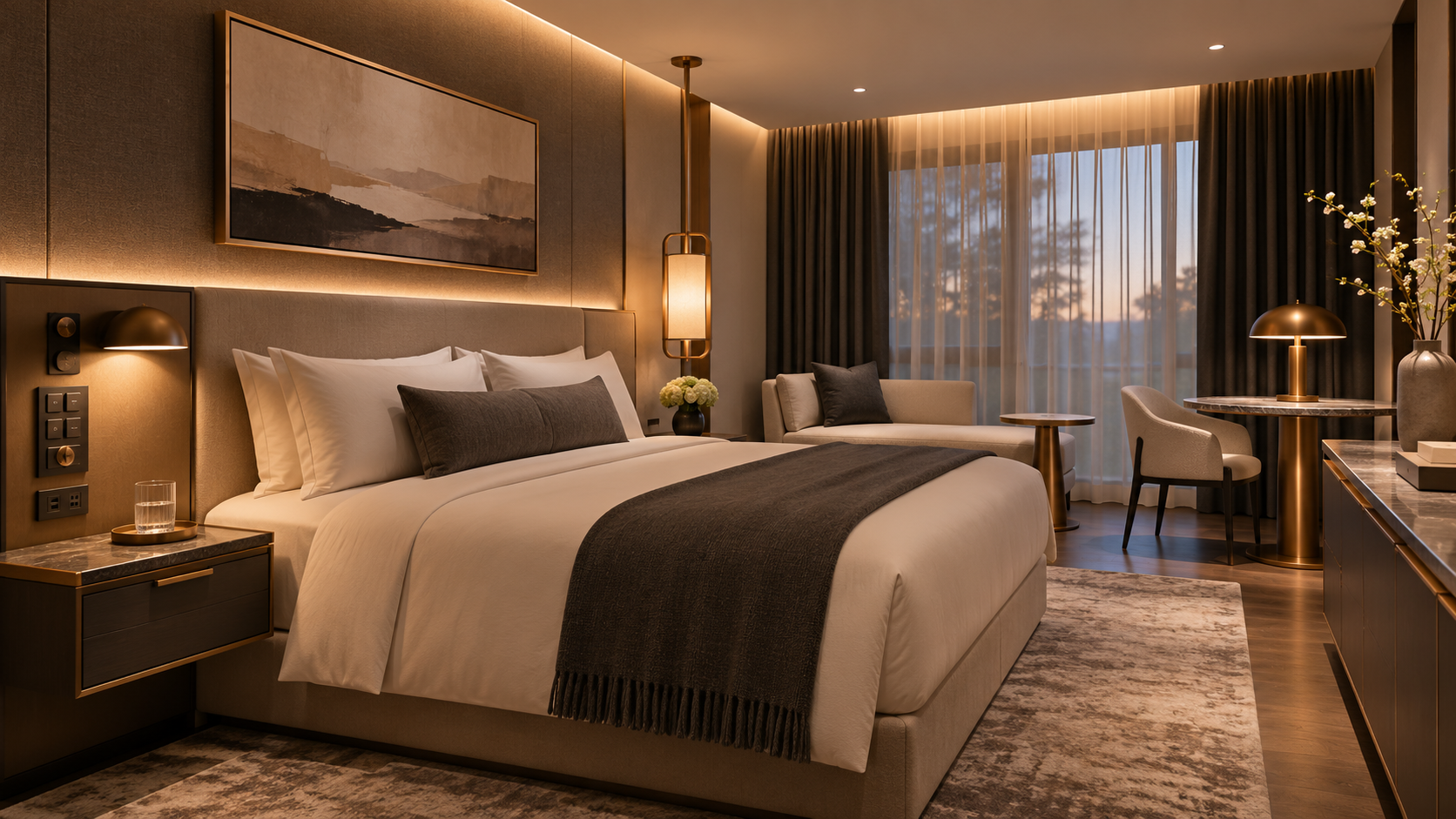
An ambient wall sconce, a directional reading head and a low night route can serve different moments. The 2026 EquipHotel lighting discussion treats light as part of the guest experience and material identity. That is a design signal, not proof that every hotel needs three separate fittings. A combined unit may work if its functions and switches are independently understandable. Test both pillows with the other room lights low.
The hotel room zone guide gives a practical way to map those tasks. Avoid making a decorative shade responsible for all reading light or choosing a focused spot as the only room ambience.
Materials that feel considered up close
The Light + Building 2026/27 trend programme highlights material expression, classic forms and metal such as brass and copper. Hotel bedroom commentators also discuss tactile textiles, ceramics and glass. These are examples of what designers are showing, not evidence of superior durability. At a bedside, inspect how a guest sees and touches the material, how housekeeping cleans it and whether a later replacement can match.
An attractive woven shade can be difficult to clean; a polished metal part can create a bright reflection. Resolve these details on a physical sample. Record the approved finish and care instructions before a large order.
Controls that disappear into use
The visual trend toward a quieter wall does not remove the need for an obvious switch. A compact plate, concealed head or touch control must still give useful feedback from the pillow. Ask what happens after a power interruption and how each side of a double bed operates independently. USB charging and room-management integration should be evaluated as electrical functions, not style accessories. Do not infer that a minimalist drawing contains a certain charging protocol or automatic switch.
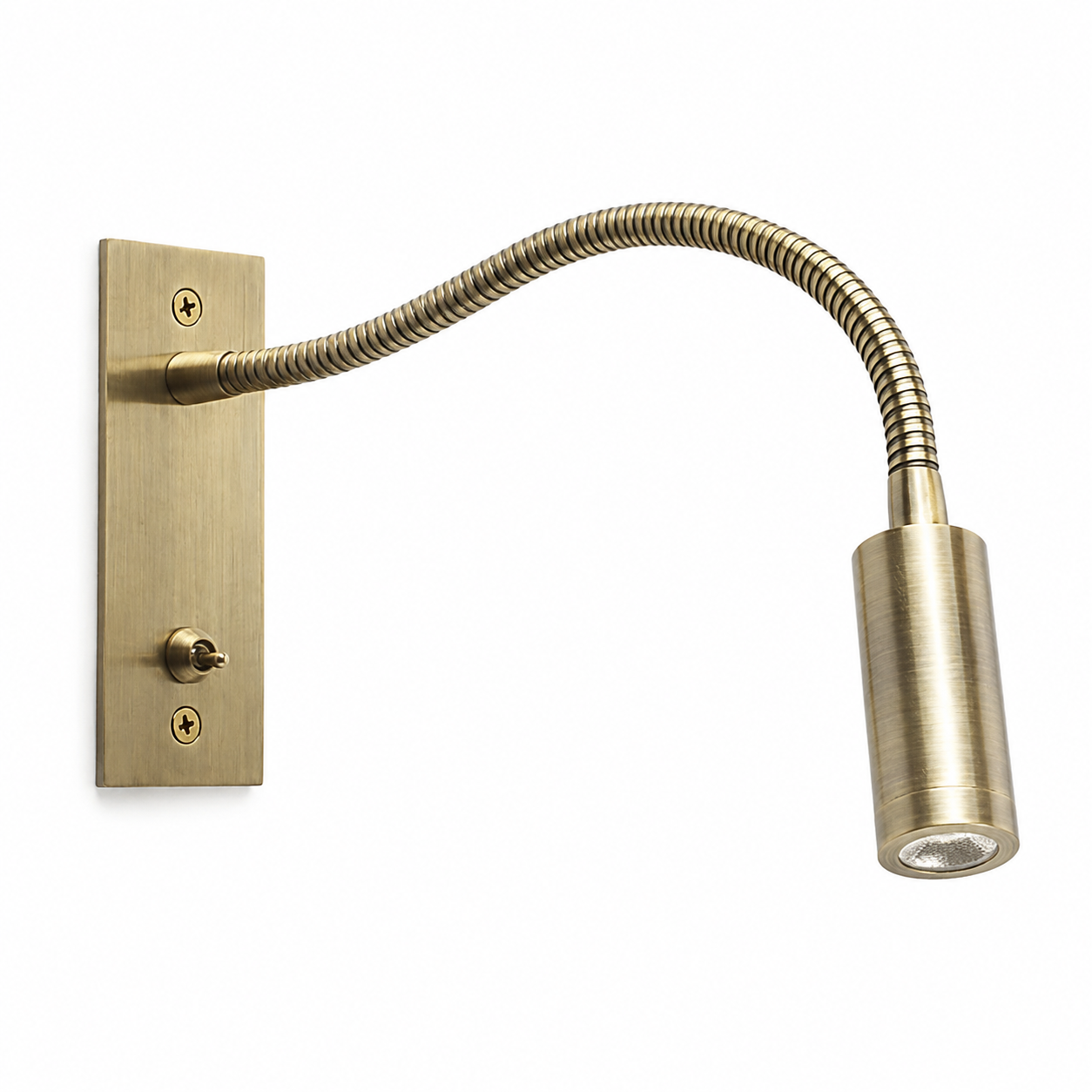
For a MYDE example, MD-WL-Y003 is documented with a physical BJB toggle and USB-A 5 V/2 A; MD-WL-Y092 is documented with touch dimming and a toggle. Those facts belong to those exact model records. They do not establish a 2026 trend or a guest outcome for every room. The control-selection guide helps test the actual interface.
Use trends as questions in a mock-up
Shortlist one visual direction that fits the hotel's identity, then place physical fittings in a furnished prototype. Check first impression from the door, eye-line comfort from both pillows, reading coverage, switch reach, finish appearance and maintenance access. Compare the proposed light with the approved bed, headboard and wall materials. Ask whether the solution will still be serviceable and visually coherent when a unit is replaced later.
The useful 2026 decision is to connect visual restraint with clear guest tasks and documented technical evidence. A trend should sharpen the project brief, not replace it.