Quick answer
Keep the form restrained while checking beam aim, source shielding, switch reach and service access from both pillows.
Minimalist hotel reading light design trends favour compact forms and calmer headboards in current design commentary, but visual restraint is useful only when the guest can still read, aim and switch the light easily. A small aperture can hide a bright emitter from some angles and expose it from others; a concealed switch can look elegant and frustrate a first-time guest. Treat minimalist examples as design options to test at the actual bed. This article was reviewed against 2026 hospitality and lighting-design sources on 6 November 2026; it does not claim a measured market trend or an unverified MYDE product feature.
Reduce visual clutter without removing the task
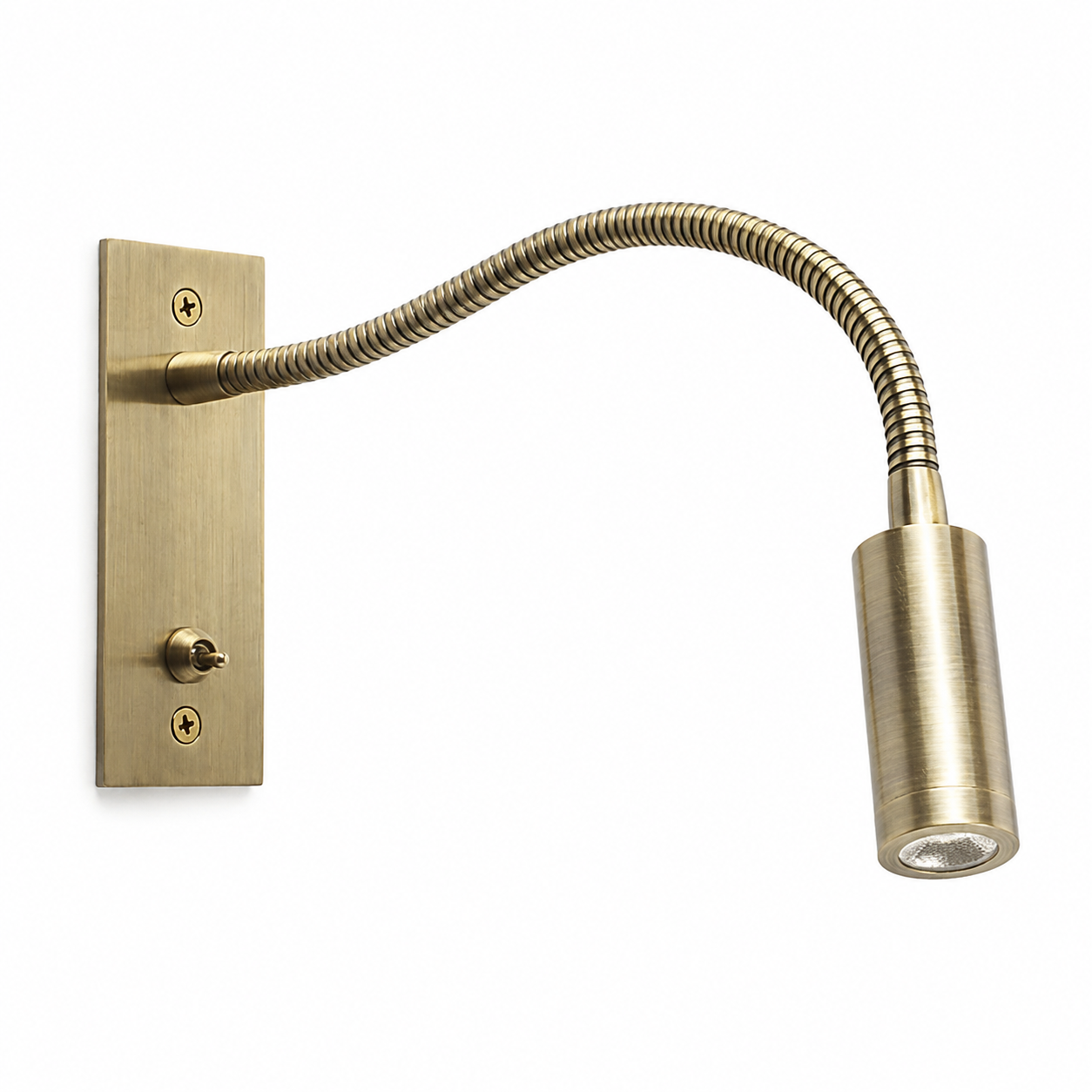
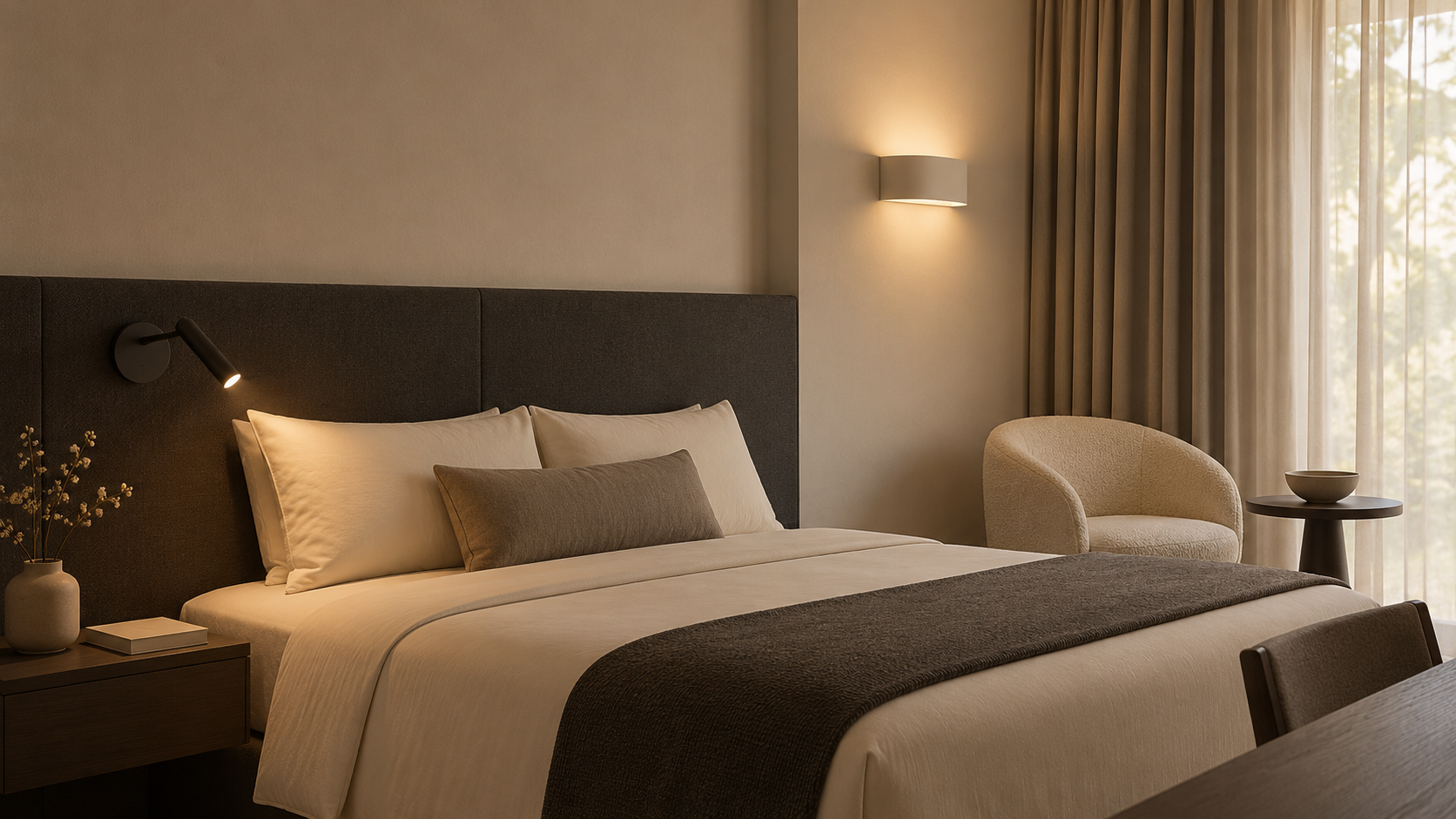
A recessed head, slim surface plate or compact articulated arm can leave more visual space around the headboard. The Light + Building 2026/27 trend review includes clear, balanced forms among its design directions. That supports a visual discussion, not a promise that the smallest fitting performs best. The book still needs useful light and the neighbouring guest still needs visual comfort.
Compare a complete sample at the planned height and distance. A narrow beam may give a tidy pool when carefully aimed but miss a large book after a guest moves. A small recessed aperture can require depth and service access that a thin headboard lacks. The anti-glare optics guide helps test source visibility independently of the silhouette.
Make interaction obvious
Minimalist hardware often hides or simplifies controls. Ask a first-time reviewer to find the switch from the pillow in a dark room. Check tactile feedback, off state, dimming if present and behaviour after a power interruption. A docking head may turn on when removed, but that mechanism must be verified for the exact model. Do not assume a current MYDE reading light has docking control because another manufacturer's design does.
If charging is integrated, specify connector and output separately. A visible USB-C port does not establish a Power Delivery profile. The electrical team must also check destination-market requirements, supply and protection. A small plate can become crowded if it tries to contain a reading head, two controls and multiple power functions; evaluate guest use rather than adding features for a trend board.
Choose material detail deliberately
The quieter a fitting's form, the more visible its edge, seam and finish can become. Compare samples against the actual headboard upholstery and wall material. A black plate may recede on a dark panel but look like a strong graphic mark on cream fabric. A brass rim may add warmth but catch a reflection. Check cleaning and replacement before approving a highly specific finish. The finish-choice guide covers those practical tests.
For a MYDE example with documented facts, MD-WL-Y135 is a recessed adjustable 3 W reading head with a 30° beam option. Those facts describe the product brief, not proof of a minimalist trend, guaranteed glare result or suitable cut-out for a particular headboard. Request the current drawing and physical sample for the project.
Evaluate the complete bed wall
Install a candidate in a furnished room. View the headboard from the door, then read and operate the fitting from both pillows. Inspect the stowed position, projecting parts, service route and any visible cable. Record the accepted variant and aim. If a substitute changes optic, switch or body depth, repeat the guest and installation review.
Minimalist design earns its place when the room remains intuitive and maintainable. The most successful form is the one that makes the task easy while letting the architecture stay quiet.