
Quick answer
Balance architectural form and material character with guest tasks, controls, cleaning and the room’s existing visual language.
Modern hotel wall lighting trends combine architectural integration, visible material character and more intentional guest control, but a trend page cannot substitute for a fixture specification. In 2026 design-sector coverage, wall lights appear as part of a room's identity rather than isolated decorative objects. For a hotel project, the relevant questions are where the light falls, what a guest sees, how it is switched and whether the fitting can be cleaned or replaced. Use current design references as options to test in a room, not as statistical evidence that a style is dominant everywhere.
The wall light as part of the room architecture
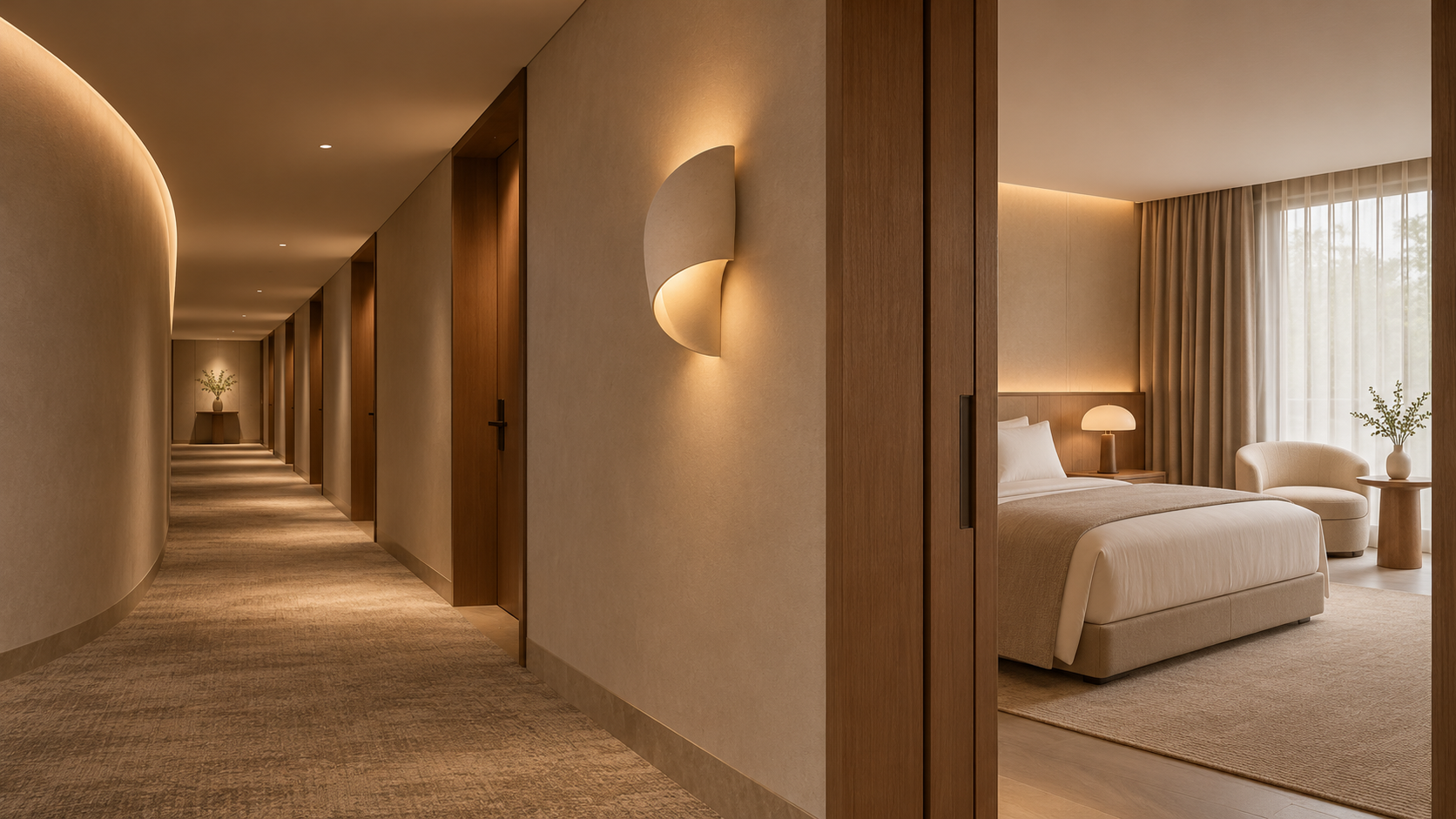
A slim sconce can reinforce a headboard rhythm; a larger shade can add domestic scale; an integrated reading head can reduce visible clutter. The EquipHotel 2026 design programme highlights the role of wood, metal, glass and textiles in a light's identity. This supports a material-led design conversation, while the hotel's own brand and buildability determine the right form. Do not copy a showroom arrangement without checking the actual wall surface and electrical route.
Draw the luminaire in the furnished elevation with bed, bedside table, artwork and curtain. View it from the doorway and pillow. A visually quiet plate may still expose a bright LED at a low viewing angle. The glare-optics guide explains the separate optical review for a task head.
Material contrast without visual noise
Designers are showing combinations of metal, glass, fabric and textured surfaces. The Light + Building 2026/27 trends include both expressive and restrained material directions. A hotel wall light can use one focal material and a quieter support finish, but test the actual combination under the room's intended colour temperature. A brass-like finish, a black plate and a pale shade may look balanced in daylight and behave differently when lit at night.
Ask for physical swatches and cleaning instructions. A finish that looks refined in the first sample may be hard to match across floors or years. The finish-choice guide turns style into procurement and maintenance checks.
Separate decorative effect from task performance
Wall lights can wash a surface, frame a bed, provide reading light or combine those functions. Define which task is essential. If a decorative sconce is selected, confirm where the book light comes from. If a combined unit is proposed, test each source and its control independently. A catalogue image rarely reveals spill toward another pillow or the brightness of an exposed shade in darkness.
Controls also shape appearance. A switch placed for visual symmetry may be difficult to reach; a hidden control may confuse a first-time guest. Verify the exact ordered variant and interaction with the room's master scene. Charging and mains outlet options need their own destination-market electrical evidence.
Test longevity of the design decision
Approve a furnished room, not just a mood board. Inspect proportion, finish, mounting, visible source, cleaning and service access. Ask whether the wall light can be replaced without opening finished joinery and whether a later batch can match the accepted sample. Do not claim a particular material or minimalist form will remain fashionable for a defined number of years; the project can instead choose an intentional form supported by reliable guest use.
The practical modern trend is a wall light that belongs to the architecture and still performs its job. Its final value comes from the room test and documented assembly, not the style label.