Quick answer
Select controls for reach and clarity, and charging ports for documented electrical output and power behaviour.
To choose switches and charging ports for hotel wall lights, specify the guest actions and electrical functions independently before combining them in one fitting. A tactile switch controls the light; a USB module supplies a device; a mains outlet is a separate regulated function. Decide which features are essential at each bed position, what remains powered after the light is off, and how housekeeping replaces a failed part. Match the exact ordered variant to the destination market and test it from the pillow in a finished room.
Start with a guest-use map
List the actions a guest should accomplish without sitting up: locate the switch, turn reading light on, lower output if dimming is present, charge a phone and turn the light off. Then note how the room master switch, key-card system and power interruption affect each action. A switch that looks elegant on an elevation may disappear behind a pillow. A charging port above a narrow shelf may leave no room for a connector. The furniture drawing and the luminaire drawing have to be reviewed together.
For a two-person bed, decide whether each side needs an independent reading control and port. Do not presume a single central plate serves both guests. Check cord reach and where a phone will rest so a charging cable does not cross the reading light or create a snag. A real bed mock-up reveals these issues more reliably than a catalogue image.
Choose the switch by behaviour
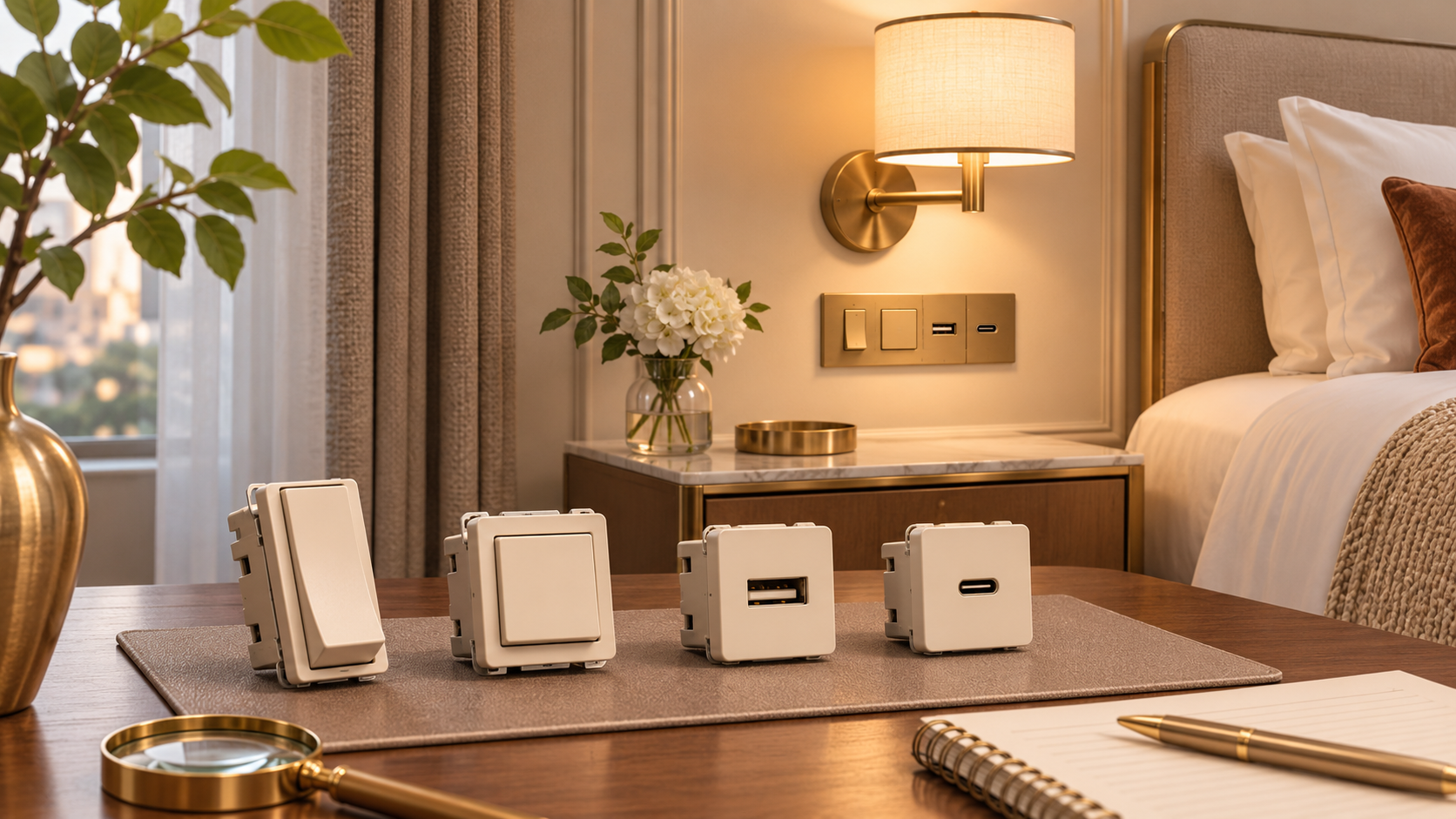
A rocker can provide a visible and tactile physical state. A momentary push button can support control-system logic, but its response depends on the electronics behind it. Touch controls can offer dimming in some variants, yet require clear feedback and a reliable target area. Test the chosen type with the intended room scene and power restoration. The rocker versus push-button guide gives a focused comparison.
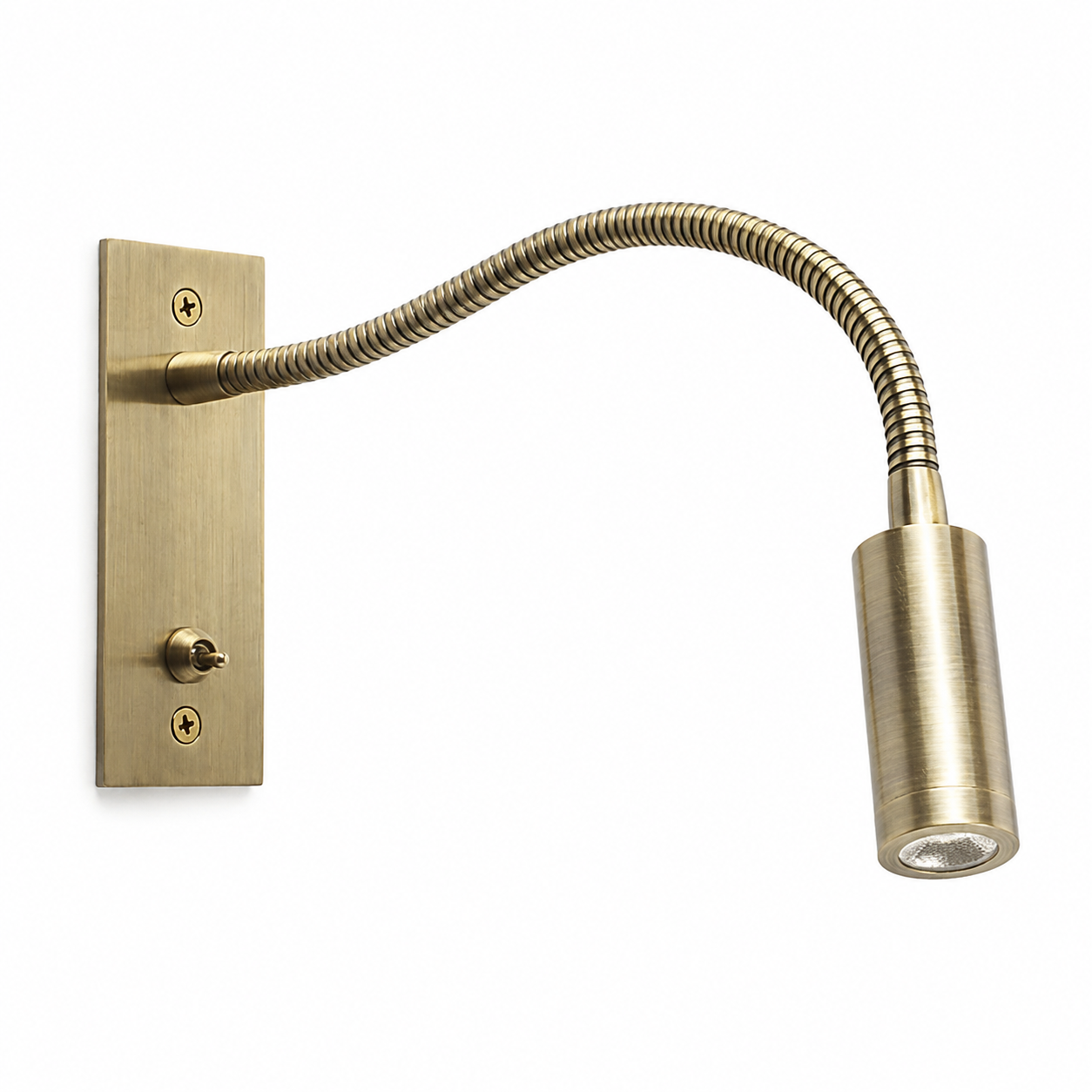
The documented MYDE MD-WL-Y003 uses a physical BJB toggle and its reading light is non-dimmable. MD-WL-Y092 is documented with touch dimming and a toggle. These are model-specific facts, not interchangeable options or a promise of one control sequence. Confirm the current SKU and sample before specifying either. If an automatic docking action is needed, request a separate verified configuration rather than attributing it to these records.
Specify charging in terms of capability
Identify the connector type and actual output, not simply 'USB included.' USB-A and USB-C differ physically; USB-C alone does not establish a Power Delivery profile or charging speed. Ask for the approved electrical data, device compatibility, idle behaviour, safety evidence, instructions and replaceability of the module. MD-WL-Y003 has a documented USB-A 5 V/2 A output. Do not describe it as USB-C or infer phone charge time from that rating.
Check whether the port is powered with the reading lamp off, with the room's master lighting off and during scheduled room shutdown. The answer affects usability. The project electrical team should confirm circuit capacity, protection, isolation and the applicable local rules. When a mains socket is added, treat it as a separate approval item; the power-outlet guide explains why.
Approve the combined assembly
Place the final control and port in a furnished room. Ask one reviewer to operate it from the pillow without explanation while another observes cable routing and light spill. Check the label and switch feel with room lights off. Test a common charger plug, a USB lead and the planned cleaning method. Confirm that the fitting can be removed and that a failed charger can be serviced under the agreed maintenance plan.
Record the exact option codes, electrical drawing, output data, approved sample and destination-market evidence in the purchase schedule. If one feature changes, retest the combined assembly. Guests interact with the whole bedside interface, not an isolated switch or port.