
Quick answer
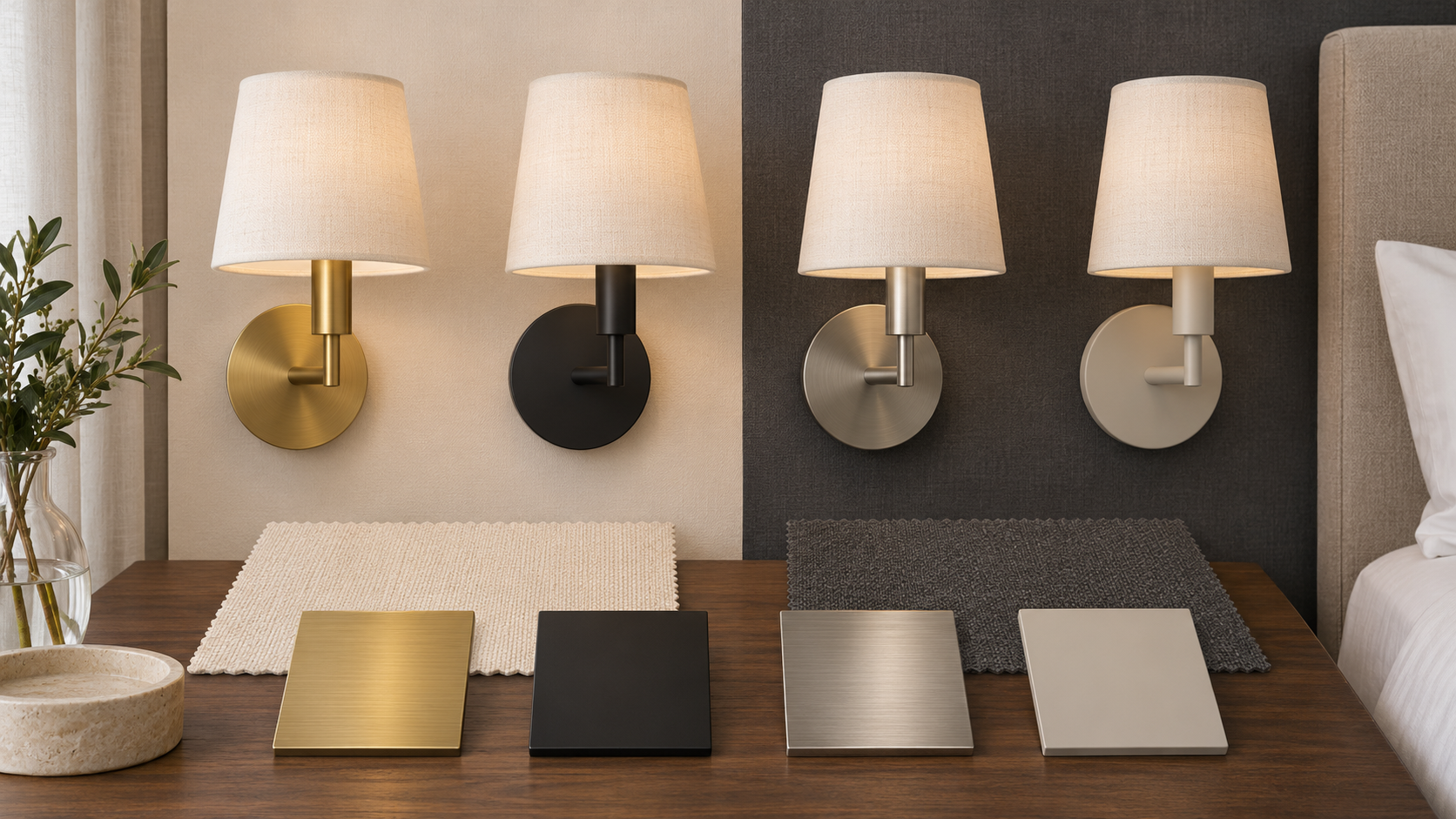
Compare real finish samples for visual fit, touch wear, cleanability and consistent supply before approving the final coating.
The best finishes for hotel bedside wall lights are those that suit the room's visual brief and remain practical under guest touch, housekeeping and phased replacement. No single colour or coating is best for every property. Compare physical samples for appearance, cleanability, edge quality and consistency, then ask for product-specific evidence about the actual substrate and finish process. A visible finish can look excellent at handover yet fail the operator if it cannot be cleaned or matched. Specify the finish as an approved material and reference sample, not merely 'brass' or 'black' in a purchase order.
Start with the room and the touchpoints
Identify what the guest sees from the doorway and pillow, where a hand touches a switch or adjustable arm, and which parts sit near cosmetics or water. A bedside reading head may be handled daily. A decorative sconce may be dusted but rarely touched. These uses justify different questions about texture, sheen and wear. Include headboard material, hardware, table and fabrics in the comparison; a finish should coordinate with the whole assembly.
The brass versus black comparison focuses on two common visual directions. This guide evaluates the selection method across any finish, including painted, plated, anodised or textured surfaces where available.
Ask what the finish is made from
Request the material, coating or treatment, approved colour reference and care instructions for the exact ordered variant. An apparent metal tone may be a coating on another substrate. Do not assign an impact, corrosion or cleaning rating without a report for that product. Inspect cut edges, seams, screws and joints because these may show defects before broad flat surfaces. If the product combines components from different processes, compare them after assembly under the room's lighting.
The Light + Building 2026/27 programme shows a wide design vocabulary of metals, glass, ceramics and textured materials. This is inspiration for a sample review, not proof that any one finish meets hotel durability needs.
Test cleaning and appearance together
Ask the supplier to approve a specific cleaning method and any prohibited products. Try the hotel's routine on a spare sample before rolling it out. Repeated wiping can change sheen or expose a weak edge. A polished surface may show fingerprints; a textured surface may hold dust in recesses. The right trade-off depends on cleaning frequency and the hotel's appearance standard. Never spray liquid into an electrical opening or use an abrasive method without written product approval.
Compare the finish under daylight, reading light and the low night scene. Digital images and phone cameras can shift colour and gloss. Preserve the physical master and note the viewing condition. The finish-consistency guide describes how later lots should be checked against it.
Plan a replacement before choosing
Ask how a damaged plate, arm or shade will be replaced, and whether a later batch is expected to match. A finish that cannot be repaired or replenished may still be acceptable for a small feature piece but creates a different risk for hundreds of paired bedside lights. Record exact SKU, finish code, sample revision and room location. If an alternative coating is proposed later, approve it in a representative room before mixing it with earlier phases.
The best finish is the one the team can identify, inspect, care for and replace while retaining the intended room character. A marketing colour name alone cannot establish that outcome.