Quick answer
Specify the outlet as a separate electrical function: confirm destination-market socket, rating, circuit protection and access, then check how it behaves when the light is switched off.
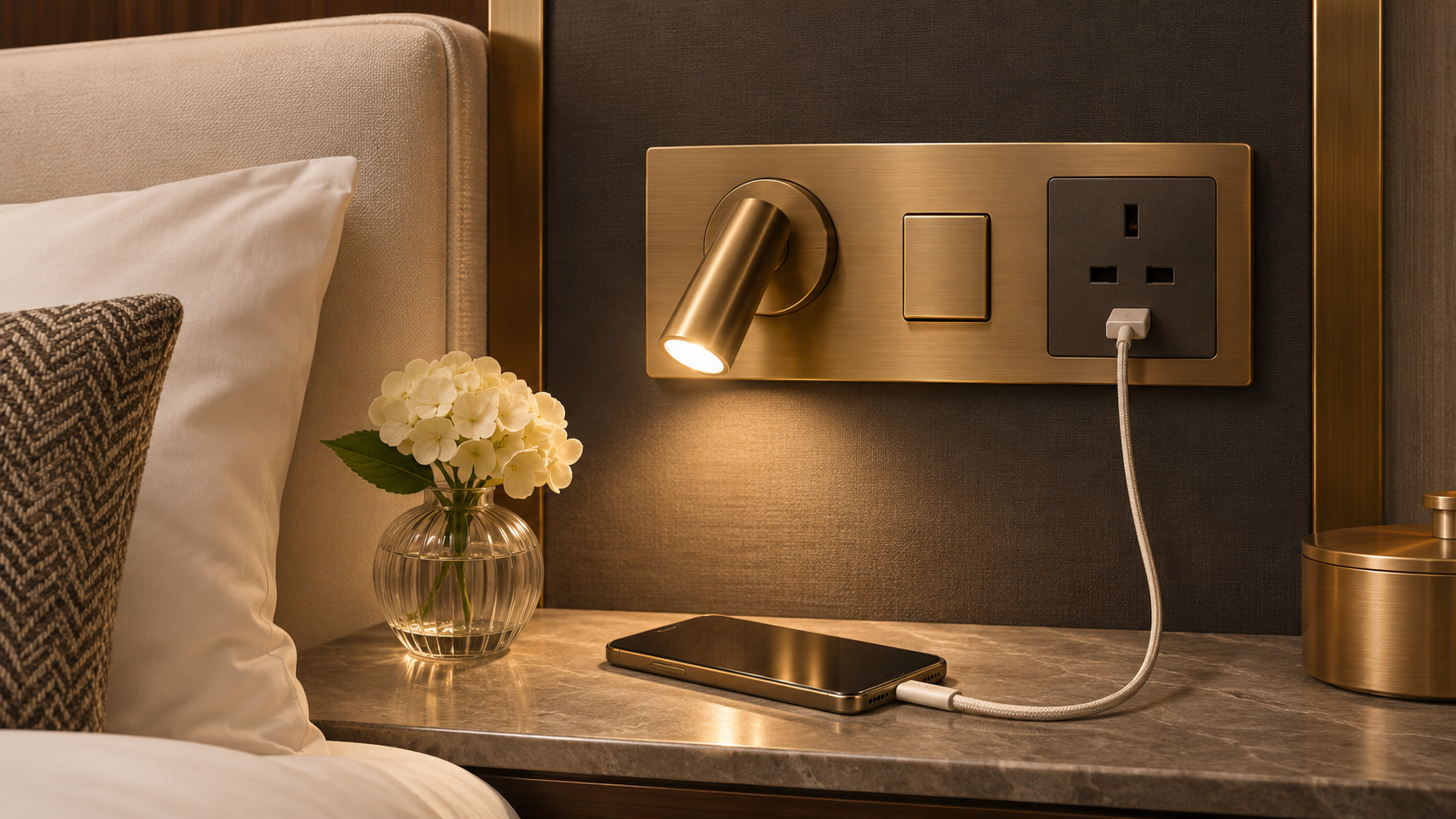
Power outlets in hotel bedside wall lights combine functions that must be specified separately. The lamp may provide illumination, a local switch may operate that lamp, a mains receptacle may power guest equipment, and a USB port may supply low-voltage charging. One visible panel does not prove that these functions share a rating, switch state or approval. Define the guest need and destination market first, then ask the electrical designer and supplier for the exact outlet configuration and documentation. Test the complete bedside assembly in a furnished room before buying it across a hotel.
Separate mains power from USB charging
A mains socket takes a plug and exposes the hotel's approved supply through a protected outlet system. A USB port has its own voltage, current and, possibly, charging protocol. The connector shape alone does not specify power. Put the functions on separate lines in the schedule even if they share a faceplate. This avoids a room drawing that says simply “charging” when the guest brief actually requires a laptop outlet or a phone port.
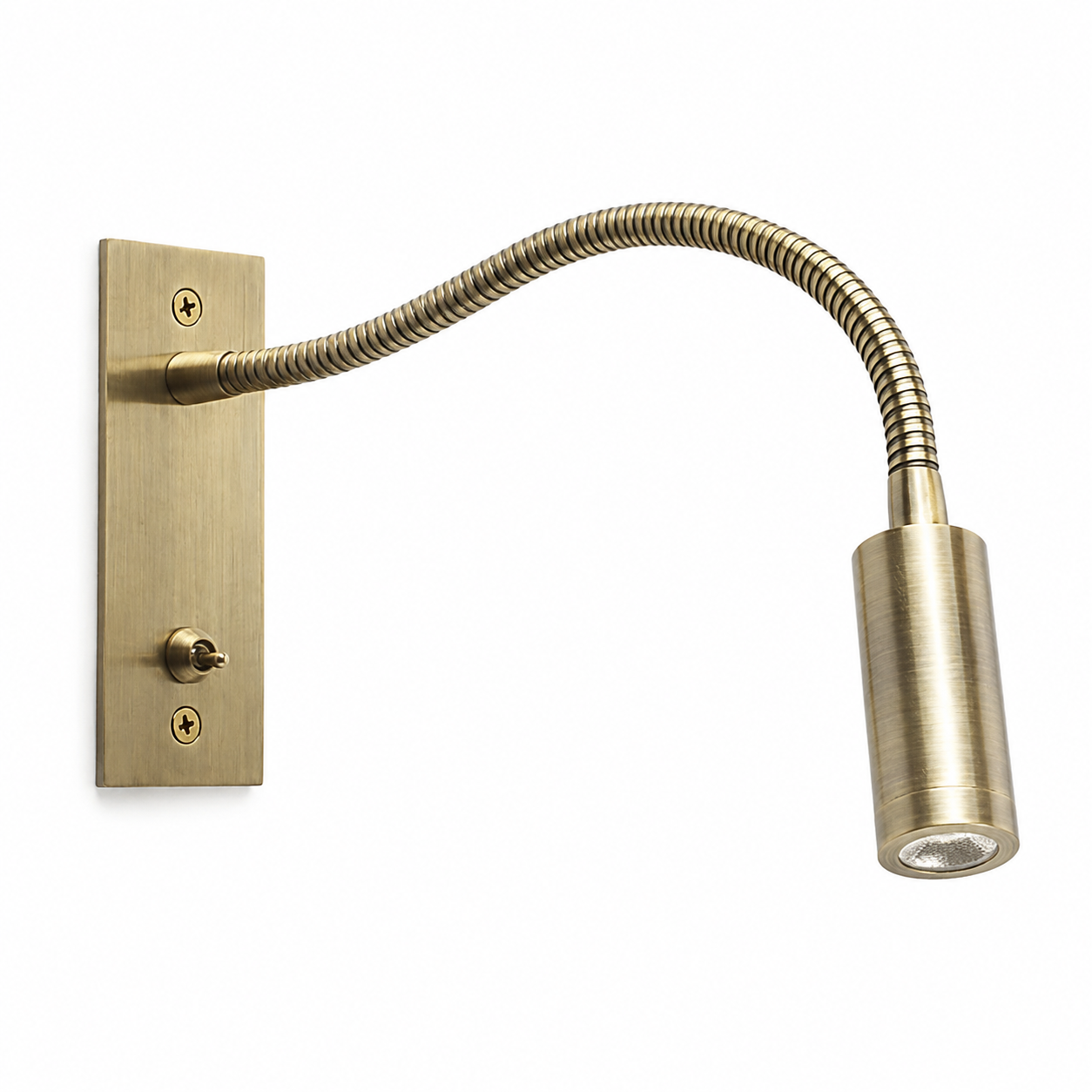
MD-WL-Y003 has a documented USB-A output of 5 V/2 A beside its 3 W reading head and physical toggle. That fact does not make it a mains-socket model, USB-C product or Power Delivery charger. The USB wattage guide explains how to interpret the verified port output. If the project requires a mains outlet, request a separate approved configuration rather than inferring one from a photograph of a bedside panel.
Check the destination-market electrical system
Ask the local electrical professional to identify the permitted socket type, supply voltage, circuit rating, earthing, protective devices and installation rules. A product that physically accepts several plug shapes is not automatically suitable for a particular jurisdiction. Request evidence for the exact assembled outlet and light, not a certificate for a different module or a generic component. The country socket guide frames this approval question.
Review whether the socket remains energized when the reading light is off, and what the room master switch does. The answer affects guest charging and energy controls. Do not assume the light's local switch operates the outlet. Confirm circuit separation and labeling on the electrical drawing, and test the intended state after a room power reset. Only a qualified team should approve the final wiring method.
Place the outlet for actual use
Sit against the pillows with the selected mattress and headboard. Can a guest insert a normal charger without reaching behind a hot light head or bending its cable sharply? Does the plug block the switch, nightstand or other outlet? Leave enough space for a phone to rest safely while connected. A project may prefer a separate wall receptacle and reading light because that makes access and replacement clearer.
Check housekeeping and service access. A damaged outlet module should not require destructive removal of a finished headboard if the specification expects replacement. Record the approved faceplate, socket module, light, bracket and cable route as one assembly with revision identifiers. A generic lifestyle image cannot settle those interfaces.
Approve a sample and written schedule
Install one representative room with the exact ordered components. Verify light switching, outlet availability, guest reach, plug clearance and safe service method. Keep the destination-market compliance documents and approved electrical drawing with the sample record. If a supplier changes the socket insert, USB module or room-control connection, reopen the relevant approval. This is a more dependable procurement basis than calling every integrated bedside panel a “power wall light.”