Quick answer
Choose a rocker when a clear physical on/off state fits the circuit; choose a push button when the approved control system needs momentary input, then test feedback from the pillow.
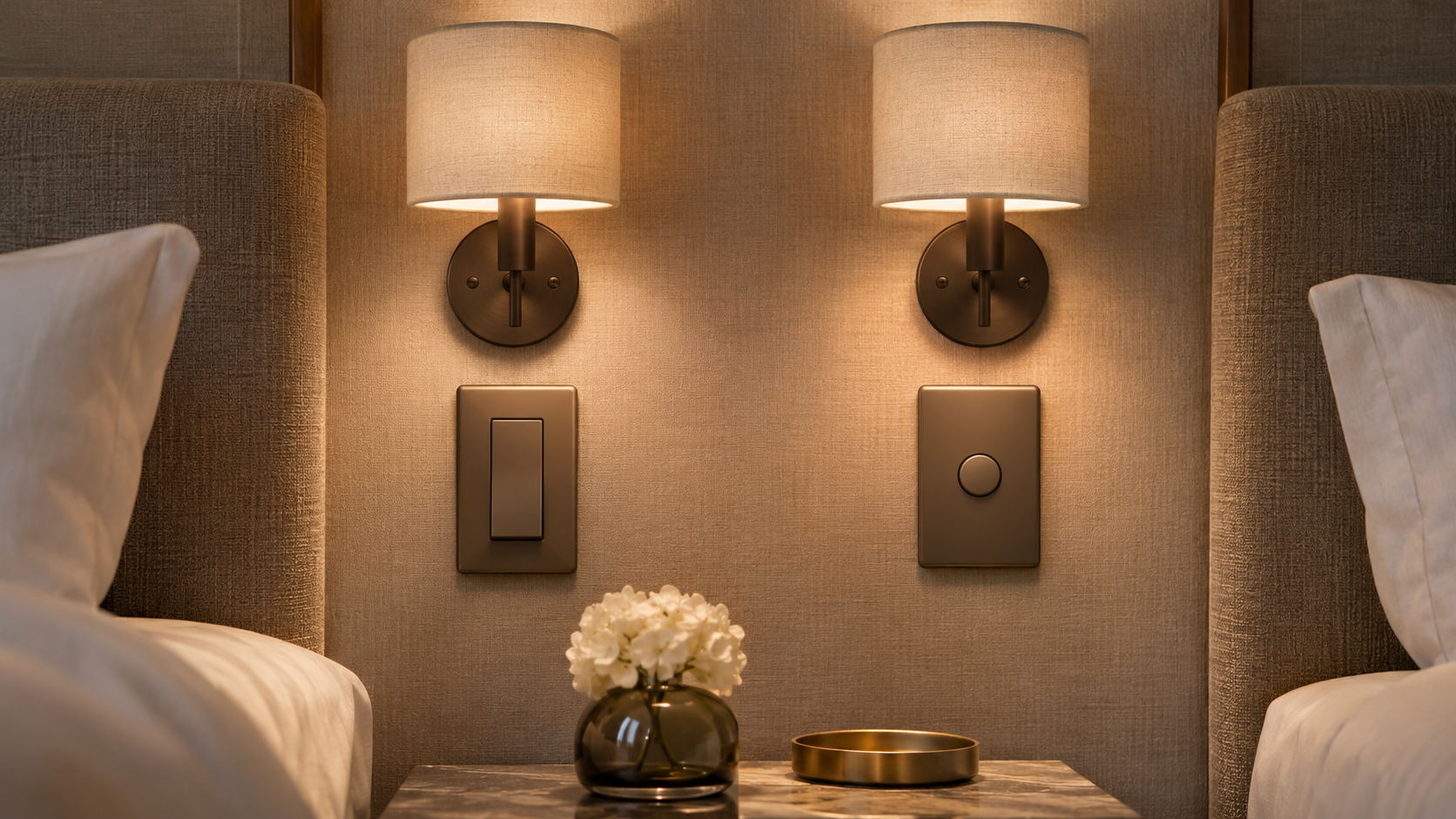
Rocker switch vs push button for hotel wall lights is a choice about both touch and control logic. A maintained rocker can give a visible physical state. A push button may send a momentary command to a relay or room controller, or it may latch mechanically in a particular product. The shape alone does not tell you which. Specify the electrical behavior, guest feedback and reach from the bed before choosing the visible control. Then test it with the exact luminaire and room system; a showroom plate cannot prove the installed sequence.
Define the command before the appearance
Write down whether the guest needs simple on/off, dimming, scene recall or independent control for each pillow. Decide what should happen at master-off and power restoration. A conventional rocker on a local circuit may be suitable for a reading head that should have an obvious on/off action. A momentary push button may suit a controller that needs a signal rather than a maintained contact. Neither is automatically more accessible or more durable; the complete switch and its mounting must be assessed.
The bedside control integration article describes how local actions and room scenes interact. If a control matrix is not written, a button can appear to do nothing after another scene has changed the state. Test with someone who has not studied the electrical drawings and observe whether they understand the feedback.
Compare guest experience at the pillow
With the final mattress and pillows in place, ask a guest to find the control in dim light. Note reach, tactile difference from adjacent buttons and whether the action is obvious. A rocker may give position feedback, but a centrally controlled circuit can make its physical position disagree with actual light state unless designed for it. A push button can avoid that mismatch but may need visual or tactile feedback. The hotel should decide which failure mode matters in its room layout.
Check noise and feel in the sample. A sharp click may be intrusive beside a sleeping guest; a very light touch can be triggered by accident. Confirm that the control is still usable during housekeeping and that an outlet or phone cable does not block it.
Keep model facts separate
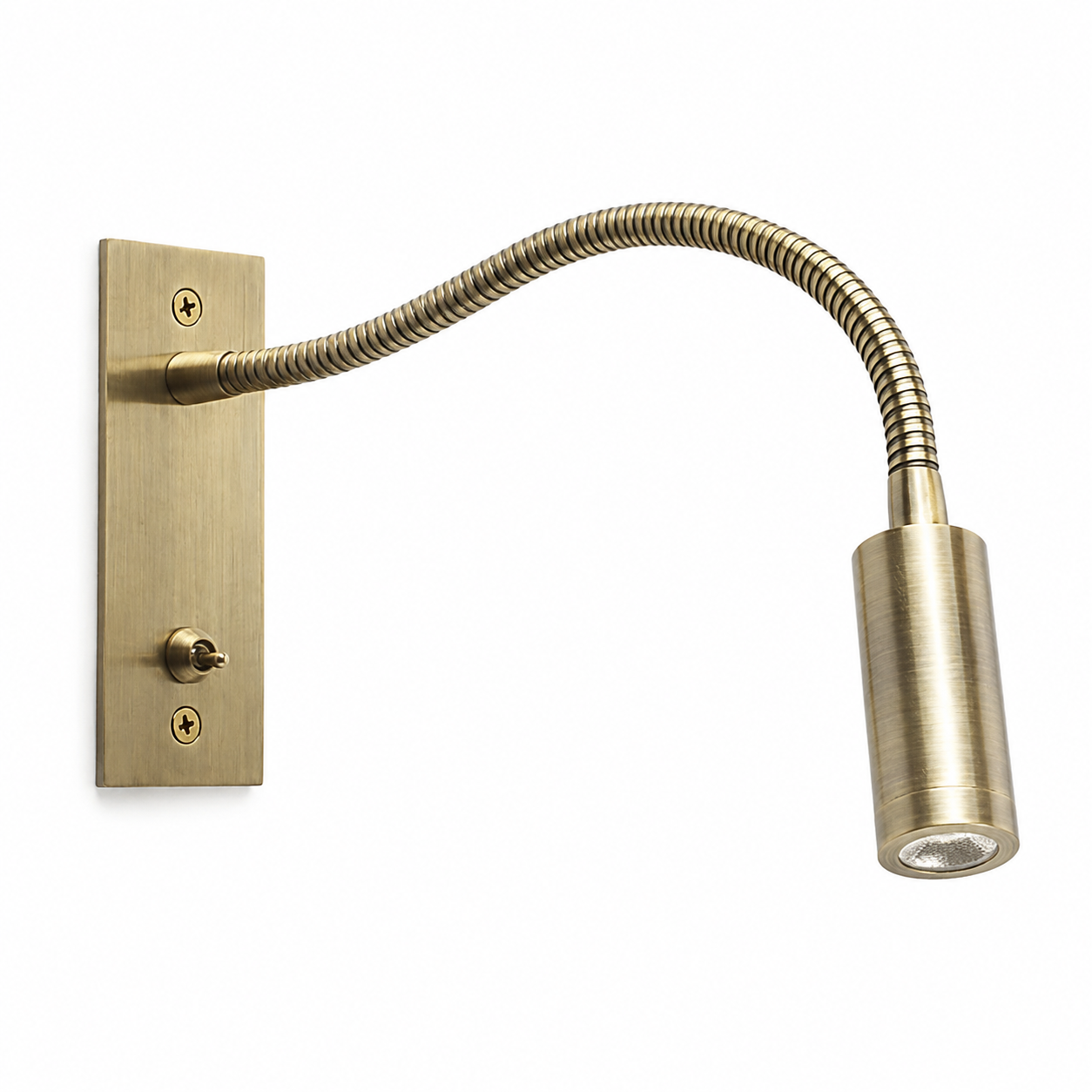
MD-WL-Y003 has a documented physical BJB toggle and is non-dimmable. It is not a rocker-versus-push-button example to be re-labeled for this comparison. MD-WL-Y092 has documented touch dimming and a toggle, but the exact relationship between those controls needs a physical sample check. Use these models to demonstrate why switch terminology cannot be inferred from a product silhouette.
If the project requires a rocker or a push button, request the exact approved control component or wall plate. Verify its rating, electrical interface and market documentation with the supplier and electrician. A control that looks similar may use a different contact type and fail to work with the selected room controller.
Record the tested sequence
Create a short matrix for arrival, left reading, right reading, all-off and power return. Show the expected light state after each button action. Run every row in the room prototype, including simultaneous use by two guests. Note the approved model, faceplate, mounting position and control-program revision. If the driver or controller changes, repeat the sequence test rather than carrying over an approval based only on switch appearance.