Quick answer
Use a small number of controlled layers to reveal material and view, then make reading, dressing and night movement easy without exposing bright sources or confusing switches.
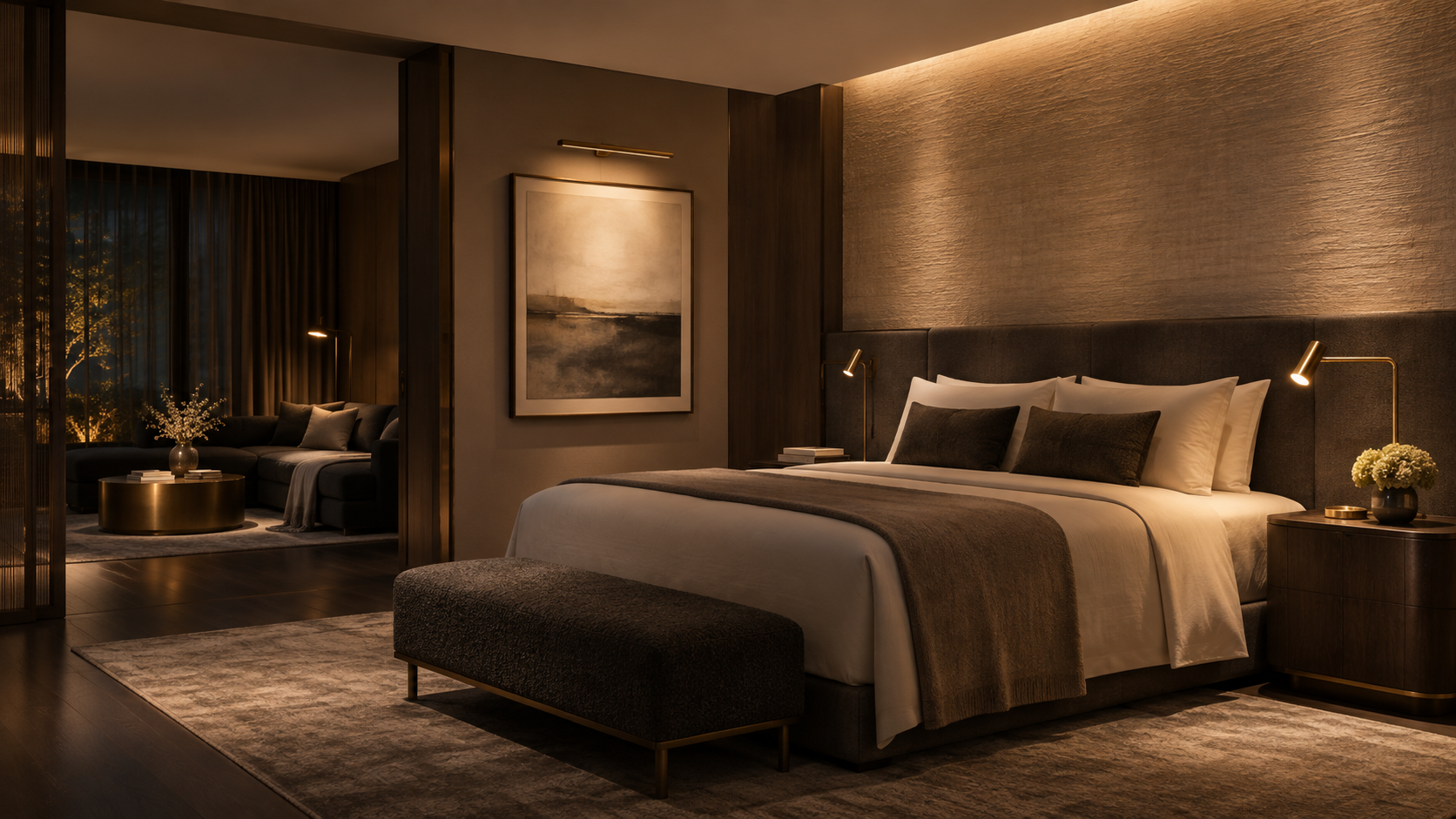
Hotel lighting ideas for luxury hotels should make a guestroom feel considered without making simple tasks difficult. Material and view can receive quiet accent light, but a guest still needs an obvious way to read, dress and find the bathroom at night. The strongest room concept usually uses controlled contrast and a small number of clear scenes. Start with what deserves attention, then decide where darkness is useful. Test the complete room at arrival, evening and lights-out rather than judging a still image of one bright scene.
Let the architecture carry the atmosphere
A textured wall can take a gentle wash; a curtain recess can reveal depth; a bedside shade can soften the transition from public space to bed. These effects need not compete. Choose the principal material or view to highlight and keep other accents subordinate. A sequence of equally bright decorative lights makes the room visually busy and gives the guest no obvious place to rest the eyes.
Check each accent from seated and reclined positions, not only standing at the door. A concealed source may appear exposed in a reflective bedside mirror. Metallic finishes can create sharp highlights. The approved finish sample and the actual light must be reviewed together. The boutique hotel room ideas address visual identity; here the emphasis is consistent ease of use in a refined room.
Protect the useful light
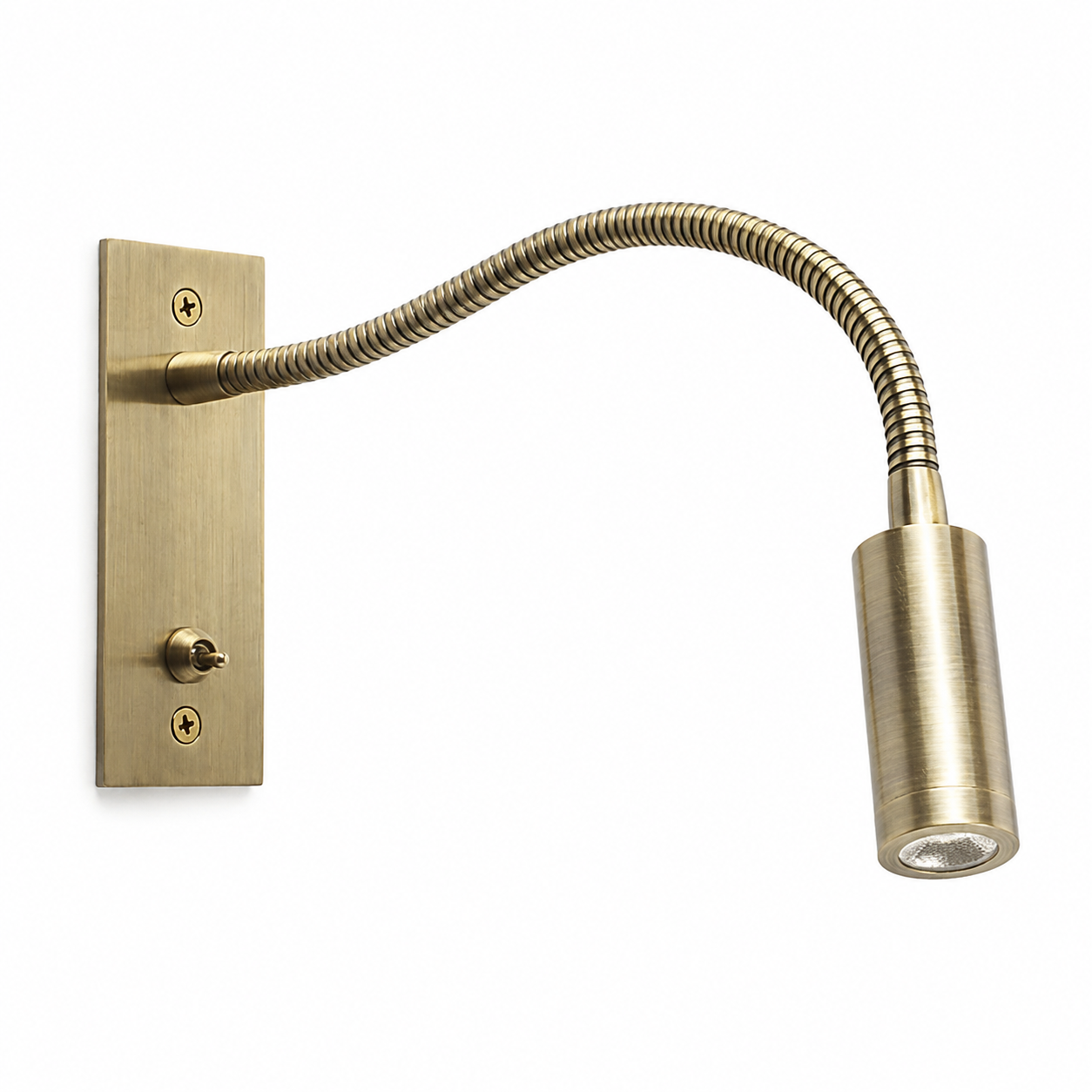
Place a dedicated reading light from the pillow and page, and a separate task light where a work or dressing surface exists. A decorative wall lamp does not automatically provide enough controlled light on a book. Nor does a downlight over the bed guarantee comfort: the source can enter the guest's eye line. The aim and shielding of the complete fitting matter more than a styling adjective.
MD-WL-Y135 is one documented recessed adjustable 3 W head with a 30° beam option in its fact pack. This identifies a possible compact reading format; it does not establish comfort in a particular suite. Obtain the approved installation drawing and sample the exact configuration. The low-glare reading-light guide explains the room test.
Make luxury feel effortless at the switch
Write an arrival scene that lets guests find the bed and luggage area. Give each sleeper a local reading action. Provide a clear route to all-off and a low-level night path appropriate to the room. If a tablet or integrated controller is used, test it with someone who has not seen the control drawing. The meaning of the buttons should be apparent without a staff explanation.
Do not put every decorative source on one undifferentiated circuit merely to simplify wiring. Conversely, avoid a wall of controls where four actions have nearly identical symbols. Ask the room-control designer to confirm how a local bedside switch behaves after master-off, power restoration and a cleaning reset. The sequence should be documented before the joinery and electrical packages are released.
Approve the actual guest experience
In a furnished prototype, view every scene with curtains open and closed. Read on both pillows, use the desk, check the mirror and walk to the bathroom at night. Note glare, shadow, mismatched colour and confusing feedback. Photograph the approved aiming and visible finish under repeatable settings. Then attach the signed sample, fixture schedule, circuit matrix and room elevation to procurement.
Luxury is a repeatable experience only when the installed product matches that decision record. Any custom optic, finish or control variation needs its own confirmation. A render can communicate intent, but it cannot verify the light falling on a page or the effort needed to switch it off.