Quick answer
Lock the ordered colour option and compare complete fittings against a retained room sample across lots.
To maintain consistent CCT across hotel rooms, specify the exact light-source option and a measurable colour-acceptance method, then preserve that choice through samples, purchasing, replacements and later production lots. Correlated colour temperature (CCT) describes a light's approximate white appearance, but matching a nominal Kelvin number does not ensure that two luminaires look identical. Tint, colour rendering, optics, dimming behaviour and the surfaces being lit can all affect perception. A hotel programme needs a controlled reference room and traceable component information, especially where many nominally identical rooms are viewed side by side.
Define which lights must match
Create groups by what guests see together: two bedside heads, the bed wall and ceiling wash, mirror lights or neighbouring corridor fittings. Decide whether the goal is an exact visual match within one pair or a coordinated warm-white family across different tasks. Different luminaires may have distinct optical materials and may appear different despite the same LED label. Do not demand an arbitrary numeric tolerance without agreeing on how it is measured and which viewing condition matters.
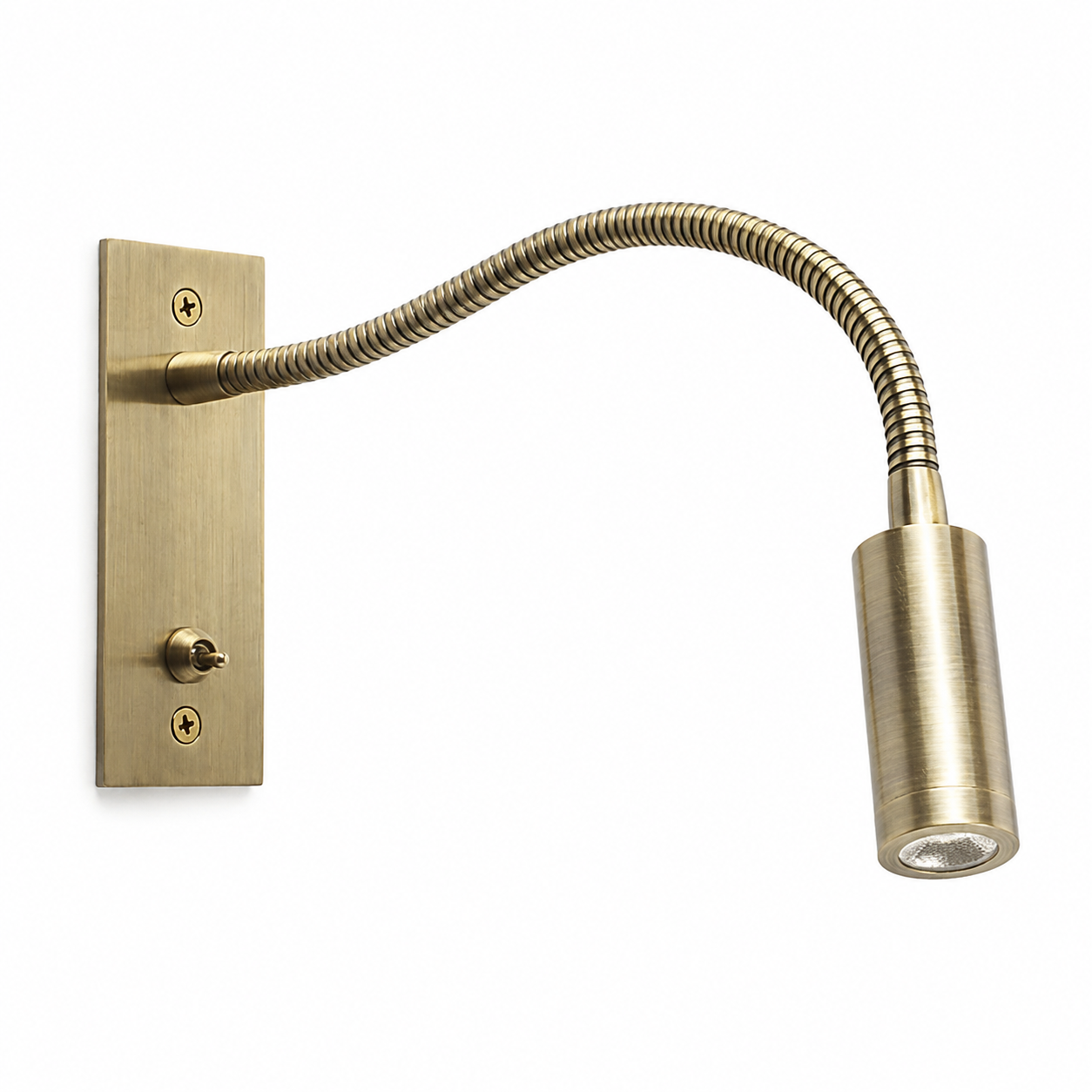
State the chosen CCT option for each ordered model in the fixture schedule. The documented MD-WL-Y135 offers selectable 2700 K, 3000 K or 4000 K order configurations; this does not mean the installed head changes between them. Confirm the exact purchased variant. The warm-white bedroom guide explains the design choice before a project locks its schedule.
Ask for chromaticity information, not just a label
For important visible groups, ask the supplier for the exact LED and optical configuration, nominal CCT, colour-tolerance description, and applicable test or measurement record. A tolerance expressed through chromaticity or an SDCM value describes a region of possible colour appearance; it is not an unconditional promise that every installed room will look the same. Verify what the stated figure covers, at which drive condition and for which production batch. The SDCM explainer provides the terminology.
Consider tint above or below the blackbody locus and the effect of material reflection. A warm light on cream fabric can feel different from the same source on grey stone. Room paint, wood veneer and window daylight also vary. Use physical samples beside the approved interior finishes. Compare a complete luminaire, not a bare LED board, because a lens or diffuser can shift visual appearance.
Control procurement and replacements
Keep the approved sample, supplier part number, LED or module identification when available, driver setting, optic, diffuser and finish in one controlled record. The purchase order should reference this record and the current drawing revision. If the project is phased, agree how later lots will be compared to the retained reference. Plan spare units or replacement components where maintenance requires visual consistency, and record the exact part used when a room is repaired.
Do not substitute a different driver or dimming protocol without testing. Output reduction can change perceived colour, and mixed dimming curves can make otherwise similar bedside pairs look unequal. Compare at the lighting scenes guests actually use, including the lowest practical reading setting. Inspect both lights simultaneously from the bed, then check the same settings in neighbouring rooms with curtains controlled.
Set a room-level acceptance method
Create a small comparison panel or prototype room with the intended finishes and two of each visible fitting. Photograph it under controlled exposure for documentation, but make the visual decision in person because automatic phone white balance can conceal differences. If measurements are required, specify the instrument, warm-up time, operating level, measurement position and tolerance in the project brief. Record any accepted difference rather than relying on a vague 'same colour' annotation.
Reopen approval when the LED module, optic, diffuser, driver or finish changes. A supplier may be able to propose an equivalent part, but the project must judge equivalence against the room reference. This is especially important when a later maintenance order is placed years after initial supply.
Handover list
- Approved room sample and visual comparison conditions.
- Exact CCT and variant code for each fitting group.
- Colour-tolerance and component information linked to the supplied lot.
- Dimming scene and replacement-part records.
- Named decision owner for substitutions and phased deliveries.
The result is a reproducible acceptance process, not a claim that a nominal Kelvin number alone controls installed colour.