Quick answer
Control direct source visibility from both pillows while preserving useful light on the page.
Anti glare optics for bedside reading lights must control where the bright source can be seen while still putting useful light on a book. A narrow beam, recessed aperture or dark baffle may help, but none is a guarantee of comfort by itself. Judge the complete fitting from the reader's eye, the neighbouring pillow and the room's normal approach path. The right solution depends on mounting position, aim, page size, bed geometry and the brightness of surrounding surfaces. Ask for the exact optical configuration and inspect it in a furnished room before approving repetition.
Start with the two viewing positions
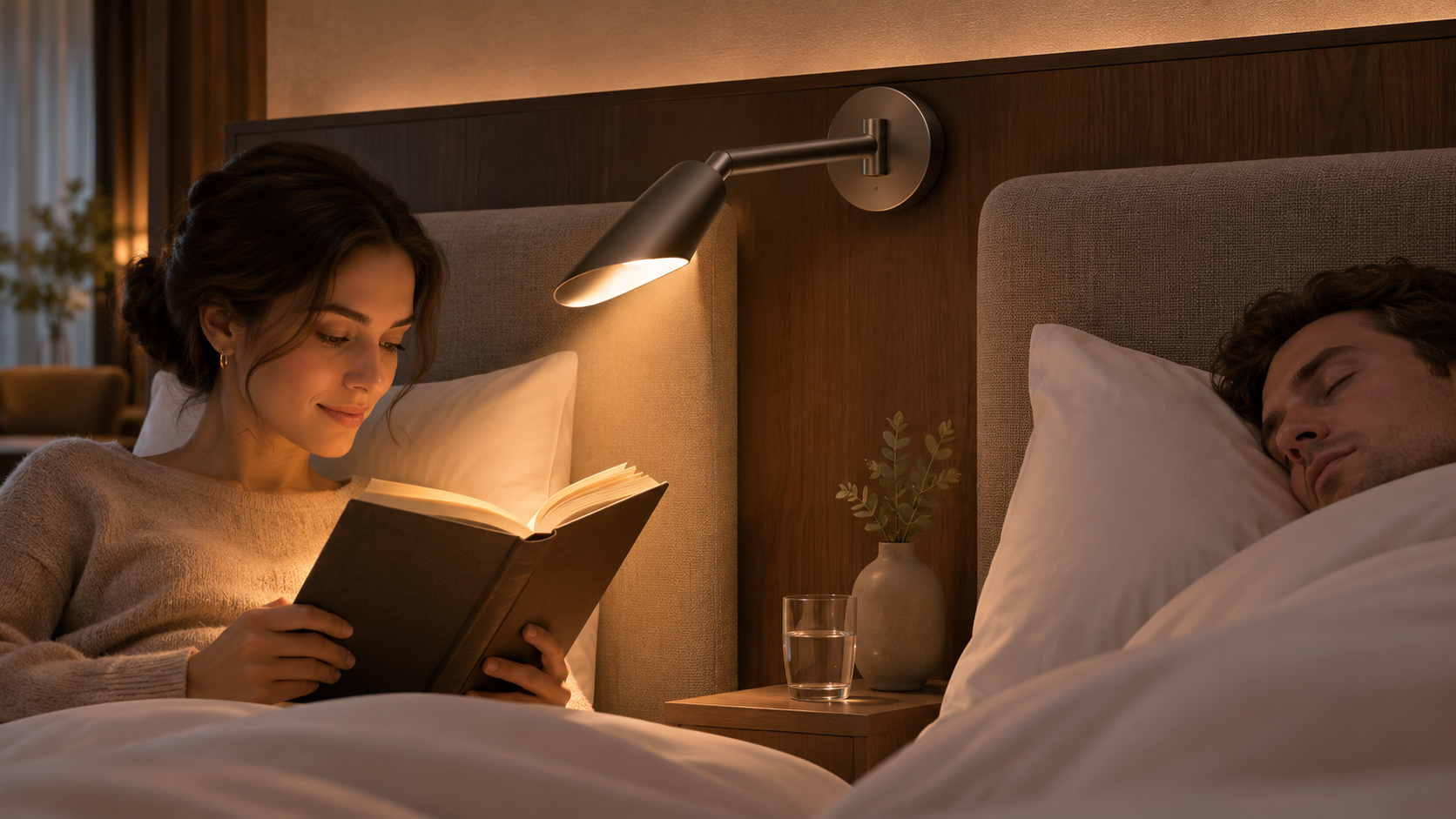
The reader needs an illuminated page without looking directly into the emitter when turning a head or adjusting a pillow. The neighbour needs a calmer field and limited spill. Mark both eye positions on the room elevation, then test with the mattress and headboard that will actually be installed. A fitting can have an impressive catalogue glare label and still expose its source when the arm is moved or the guest sits higher than the illustration assumed.
Do not test only a vertical wall sample. Hold the luminaire at the proposed height and setback, aim it at a book, and check the view from the opposite pillow. Repeat with the room's likely bed linen and reflective finishes. A glossy headboard panel or pale page can produce a different perception from a dark showroom. The beam spread comparison addresses coverage; this guide focuses on source visibility and visual comfort.
Understand what each optical part can change
A recessed light source can hide the emitter at some viewing angles, while a baffle or louvre may block direct lines of sight. A lens can shape distribution and a diffuser can soften the appearance of the aperture, often with a trade-off in beam control. These elements need to be reviewed as one assembly. Ask for photometric data for the exact optic and finish, but use it as a planning input rather than a replacement for a room test. Different finishes inside a bezel can affect how bright the opening appears.
The mounting detail matters as much as the optic. A shallow recess in a thick headboard may expose an unexpected side view, while an articulated head can direct light toward the wrong pillow if its movement range is unrestricted. A narrow beam may reduce spill when accurately aimed yet create a small, unforgiving pool on a large book. A broader distribution can be easier to use but must be controlled at the adjacent pillow. No beam-angle figure alone answers the glare question.
Request evidence that matches the ordered variant
Request the luminaire drawing, optical option, aiming range, photometric file when available, driver and dimming behaviour, and a physical sample. Confirm that the laboratory data corresponds to the proposed LED, optic, output and housing rather than a related variant. If a supplier quotes a unified glare rating, ask whether the calculation method and application suit a close-range bedside task; a room-wide office-style number should not displace the eye-position test.
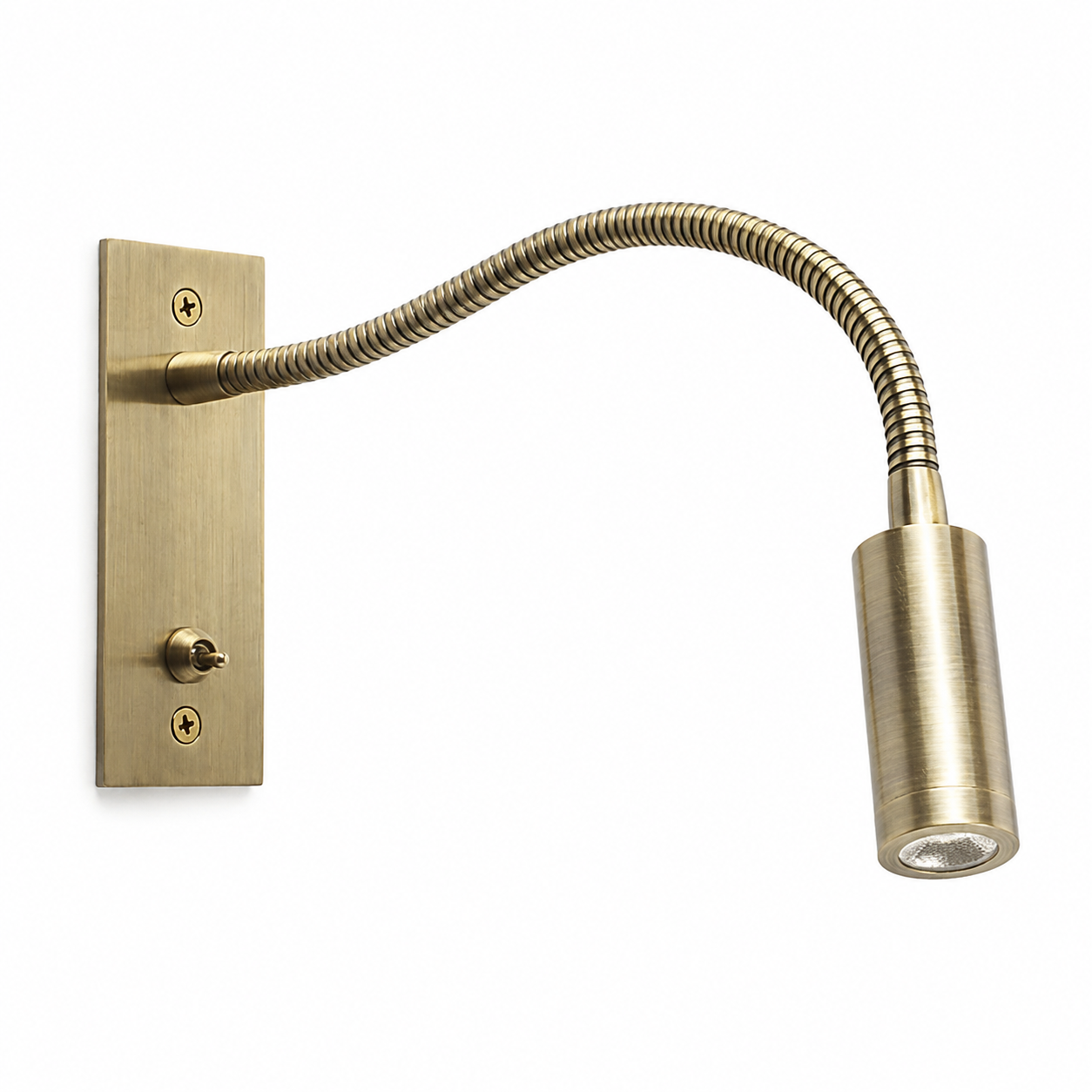
For MYDE selection, the documented MD-WL-Y135 is a recessed adjustable reading head with a 30° beam option. That is a model-specific ordering fact from its product brief, not evidence of a measured glare outcome or a claim that the fitting suits every room. A designer should still request the current approved drawing and sample, confirm the ordered CCT, and check the completed headboard assembly. The recessed reading-light guide gives the mounting context.
Run a repeatable mock-up review
Place a book at a comfortable reading distance, set the light at the intended output and adjust it as a guest would. Observe the aperture while sitting, reclining and turning toward the neighbour. Note whether the page edge is lost, whether the beam lands on the pillow, and whether a control can lower output without flicker or abrupt jumps. Repeat after switching off ambient light; high contrast can make an exposed source much more distracting.
Record the mounting datum, aim, selected optic, output setting, room finishes and observation points with each decision. If a lens, bezel, driver or head location changes later, reopen the glare review rather than assuming the first sample still applies. This keeps an apparently minor substitution from altering the guest experience.
Decision checklist
- Can either guest see a bright emitter from a normal pillow position?
- Does the book remain usefully lit across the intended reading area?
- Is spill onto the neighbouring pillow acceptable in the dark room scene?
- Does the exact ordered optic match the tested physical sample?
- Are installation depth, aim range and control behaviour documented?
Use the accepted room sample as the practical reference. Do not represent an illustration or a manufacturer's beam value as an installed measurement.