Quick answer
Locate the reading plane from each pillow first, then resolve the fitting body, aim, switch, cable route and removable access with the headboard drawing.
A headboard reading light placement guide should resolve five connected questions: where the book sits, where the guest's eyes are, how the fitting moves, where the switch can be reached and how the assembly can be serviced. Place the reading task on a furnished bed first. Only then put a centerline on the headboard elevation. A visually symmetrical pair of lights may fail if pillows, mattress dimensions or the headboard panels differ from the drawing. The approved result is a working position in the assembled room, not a universal spacing formula.
Draw the reading position before the fixture
Mark each pillow, seated eye line and expected book plane on the headboard elevation. Check both upright and reclined posture. Determine whether guests use paper books, tablets or both. The fitting's light-emitting head must reach that plane without projecting into a normal head movement path. A flexible arm can be moved, but it also needs a neat parked position.
For a double room, switch on one reading light and observe the other pillow. A bright source in the neighboring guest's eye line may require a change in aim, shield or mount. Check the same room with ambient light low. The bedside light height guide isolates the vertical datum; this article treats the full headboard assembly.
Coordinate panel seams and structure
Put the chosen fitting on the exact joinery section. A seam, upholstered button or internal frame can interrupt a mounting flange. Confirm the material that carries the fixings; a thin decorative skin should not be assumed to support the lamp. Plan a cable entry that can be protected and accessed without tearing upholstery. The service route must still work after the wall and bed are complete.
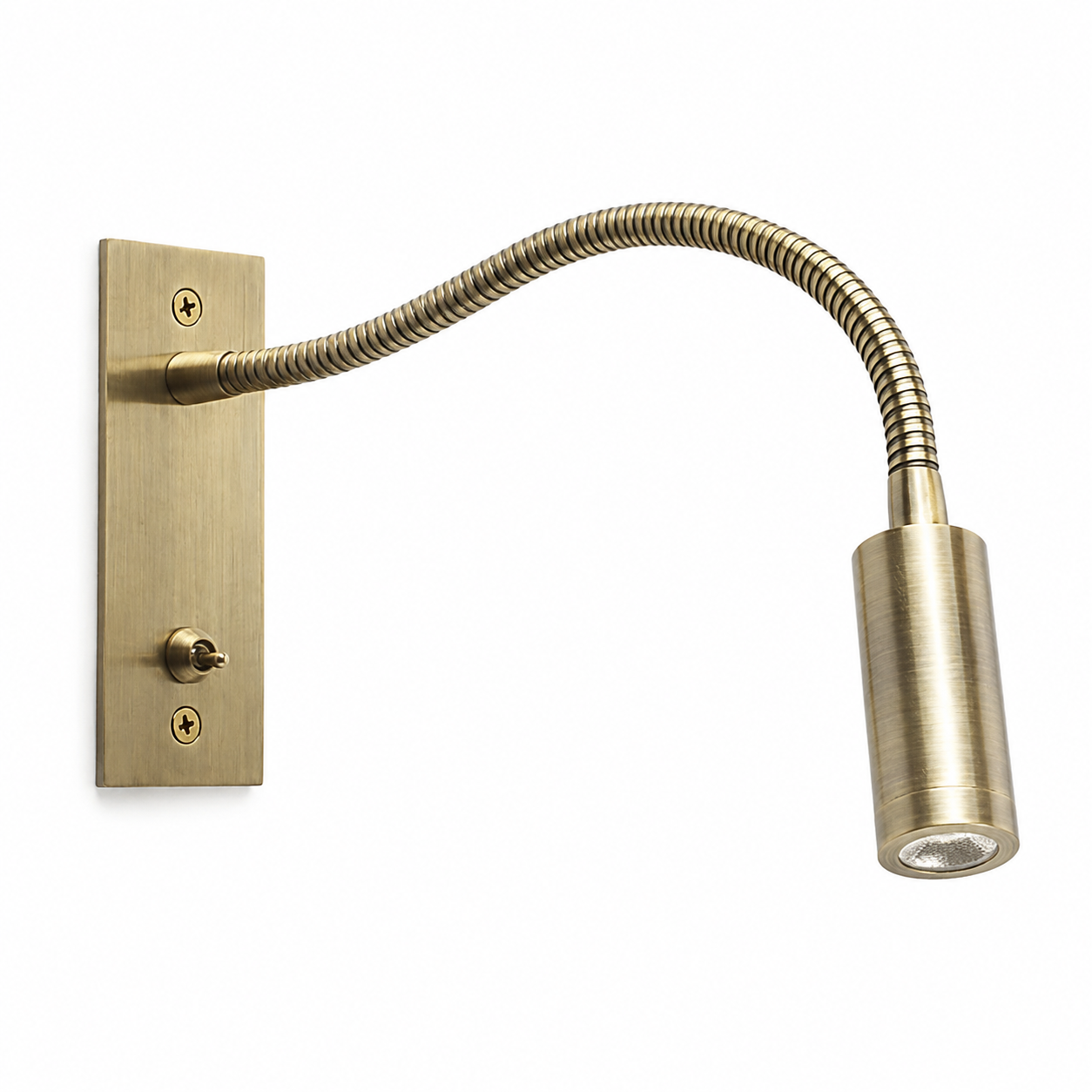
MD-WL-Y135 is a documented recessed adjustable 3 W reading head with a 30° beam. Its fact pack does not establish the exact cut-out, so request the approved installation drawing before releasing a panel opening. MD-WL-Y003 is surface mounted with a physical toggle and one USB-A port. Its backplate, power and guest cable position create a different joinery interface. Do not translate one model's dimensions or electrical behavior to the other.
Put the control where a guest can find it
Test reach while sitting against the real pillows. If the switch is on the fitting, confirm the guest can operate it without touching the light source or pulling a charging cable. If the control is on a separate bedside panel, label its relationship to the reading head clearly in the room control schedule. Ask how it behaves after room master-off and power restoration.
A wall lamp can look centered in a drawing but be hidden behind a high pillow. Mock up the switch position with the final mattress and bedside table. Invite a person unfamiliar with the room to operate it in dim conditions. Record any confusion while changes are still inexpensive.
Approve the assembled sample
The joiner and qualified electrician should agree on the bracket or opening, supply, strain protection and removal path. Assemble one representative headboard, fit the actual ordered light and test both sides. Photograph the approved aim and parked state. Note the drawing revision and any shim or finish adjustment needed. The headboard coordination article sets out the broader trade interface.
Before repeating rooms, inspect the first installation for alignment, movement, glare and serviceability. Any substitution in mattress, panel thickness or fixture requires the placement decision to be checked again.