Quick answer
Locate each twin-bed light from its pillow and reading plane, then test both beds independently and check spill toward the neighboring guest.
Bedside wall light spacing for twin beds should be set from each guest's pillow and reading plane, not from a single dimension between two decorative fittings. Twin beds may move apart or be joined, and the central table may change width. Mark the supported furniture configurations first. Then place and test an independently controlled light for each sleeper so one guest can read without exposing the other to an unwanted bright source. A fixed spacing copied from a residential photograph cannot account for the real beds, headboard and wall construction.
Plot both guest positions
Draw the mattresses, pillows, center table and any shared headboard at their installed dimensions. Mark likely seated eye lines and book positions. If beds are movable, draw the nearest and farthest permitted positions. Check whether a light placed for one configuration still reaches its own reading plane in the other.
The twin hotel bed lighting guide addresses the full two-person scene. This page focuses on the horizontal relationship between wall lights and beds. A pair of wall fittings that looks symmetrical on an elevation may not be symmetrical to the readers if the beds or tables shift.
Check reach, spill and the middle zone
In a mock-up, sit on each bed and aim the light at a book. Then lie on the neighboring bed and look toward the source. Record visible glare and spill on the second pillow. Test with the actual headboard upholstery and wall finish, which can reflect light differently from a blank studio wall.
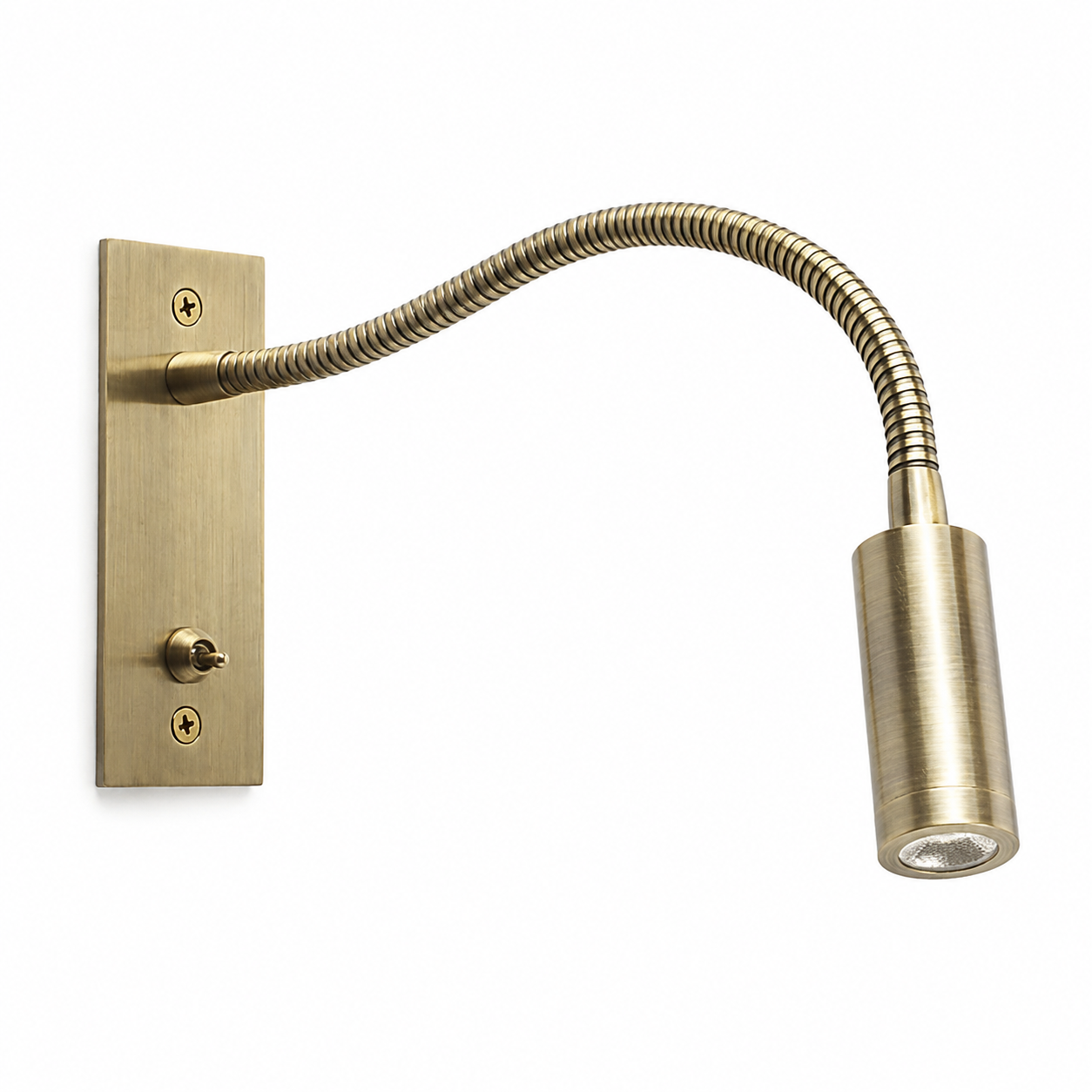
If the central table is wide, avoid moving both reading lights inward merely to frame it. A decorative central fitting may be appropriate for atmosphere, but it does not replace independent task light. Confirm that the guest can reach the switch without crossing to the other bed. The documented MD-WL-Y092 has a flexible 3 W reading head and touch dimming; its actual aiming range and control sequence still need a sample check in this layout.
Coordinate mounting and controls
Check each backplate or cut-out against wall studs, joinery seams and cable entries. A change in bed spacing may move the desired light directly onto a joint or behind a pillow. Resolve the mounting detail with the joiner and electrician before fixing the electrical points.
Give each side a distinct control state. Test left reading only, right reading only, both on and all-off. If a room master is used, confirm its effect on both fittings. Do not infer that a decorative wall sconce or reading head includes a compatible dimming interface without documentation for the exact variant.
Approve the configurations the hotel will sell
Photograph and record the approved positions for every permitted twin-bed arrangement. Include the mattress, pillow and center-table dimensions, not just the centerlines of fixtures. If the property converts twin rooms to doubles, test that conversion separately; a successful twin arrangement does not prove the joined-bed reading positions.
Keep the accepted fixture and furniture versions with the drawings. After installation, check a sample of repeated rooms for alignment and independent operation. The useful spacing is the one that survives real furnishing and real guest use, not a universal number expressed without context.