Quick answer
Assign ambient, task, route and accent lighting distinct jobs and controls, then verify the combined scheme in a furnished room.
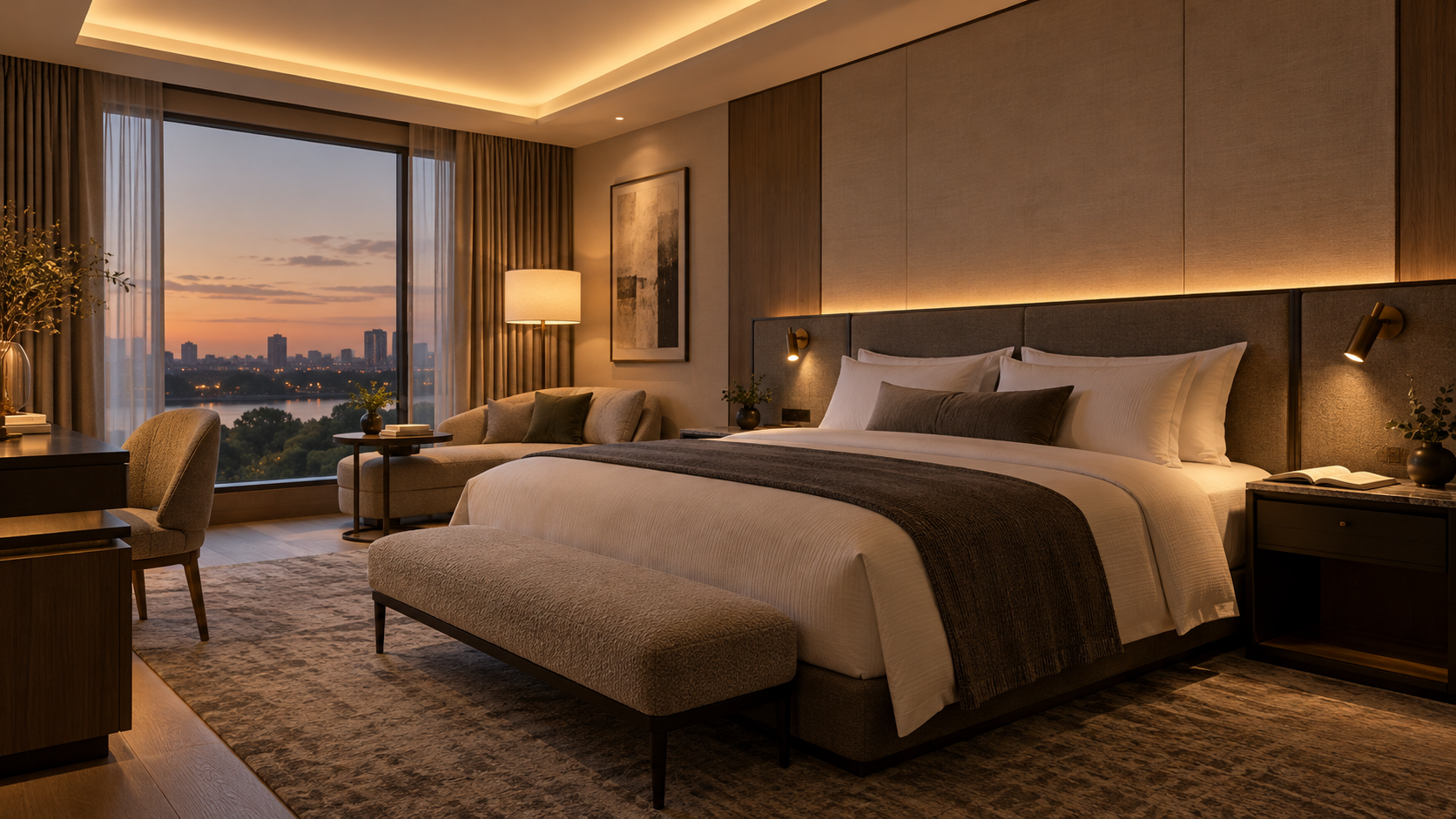
To create layered lighting in a hotel room, give each guest task its own light and control. Begin with safe, comfortable general light, then add focused light for reading and work, a low-level route for moving at night, and accent light only where it serves the room. Draw those layers on the furniture plan before choosing fittings. A decorative wall light can contribute to the atmosphere, but its appearance does not prove that it can illuminate a book or a desk. Test the combined scheme in a furnished room with the final controls.
Assign a job to every lighting layer
The ambient layer should let someone enter, unpack and understand the room without searching for a switch. It need not do every task. A task layer puts useful light on a specific surface: a book, desk, mirror or luggage area. A route layer helps a guest move between bed and bathroom without suddenly activating the full room. Accent and decorative layers give visual depth but should not be counted as task lighting until tested.
Make a room schedule with one row for each layer. Record the location, guest task, fitting type, control, and what happens when the master switch is used. If two fittings are expected to perform the same task, write down why. This exposes unnecessary duplication before procurement.
Draw the scene from the guest's positions
Use the actual bed, desk, wardrobe and bathroom door. Mark the seated reading position and the desk work surface. Consider who sees the source from the other pillow. An attractive photograph can hide glare, dark corners and awkward controls. The hotel guest room lighting design guide covers the wider room plan; this page focuses on how the layers interact.
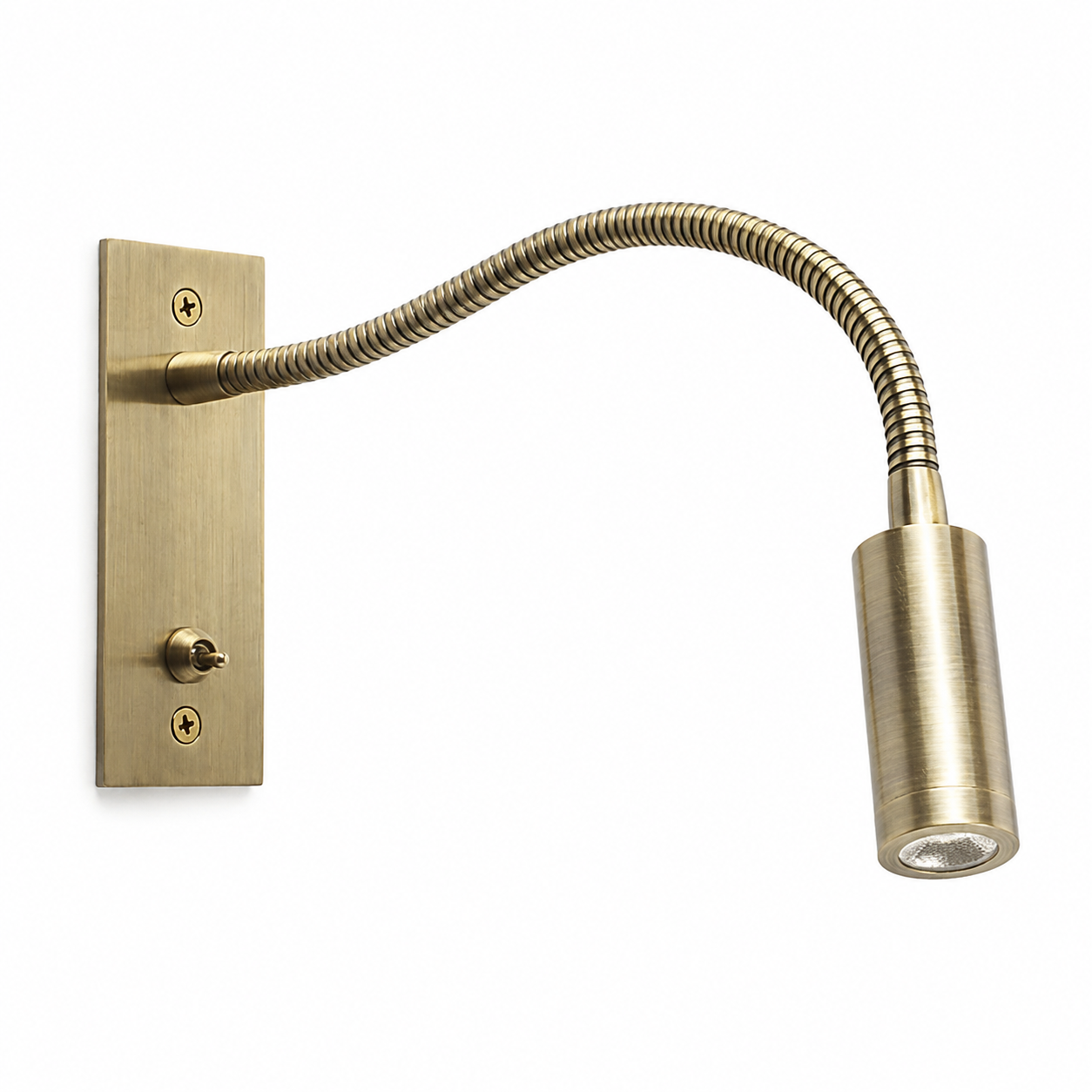
At the bedside, distinguish a reading head from a decorative sconce. For example, the documented MD-WL-Y135 is a recessed adjustable reading head with a 3 W light. Its confirmed format may serve a focused reading layer, but the pack does not establish its performance in your room. Ask for the exact photometric data and test the selected configuration at the proposed mounting point.
Give guests a clear control sequence
The guest should be able to find a useful light on entry, turn on one reading side without disturbing the other, and leave the bed without using full brightness. Check the interaction between local switches, the room master, any dimmer and powered charging ports. A control diagram is more useful than a list of fixtures because it shows which light is available in each state.
Avoid assuming that every fitting is dimmable. The documented MD-WL-Y003 has a physical toggle and is non-dimmable. If a layered scene requires dimming, choose and verify a compatible fitting and controller rather than adding an untested control to the schedule.
Approve the layers together
Build a full-size mock-up with the intended finishes, window treatment and furniture. Check entry, unpacking, reading, working, television viewing and a night route. Observe the room from both pillows and the doorway. Record which lights are on for each task, whether a source is visible in the eye line, and whether the guest can understand the switches without instruction.
Photograph the approved scene and record the exact sample versions. If a finish, optic, driver or control changes, repeat the relevant test. The room mock-up approval process provides a separate sign-off path for repeating the approved scheme across rooms.