Quick answer
Assign each hotel light a job before choosing its appearance. Decorative fittings can establish character, while ambient, bedside and task layers need to support the guest's actual activities. Review the combined scene and each layer separately in a room mock-up.
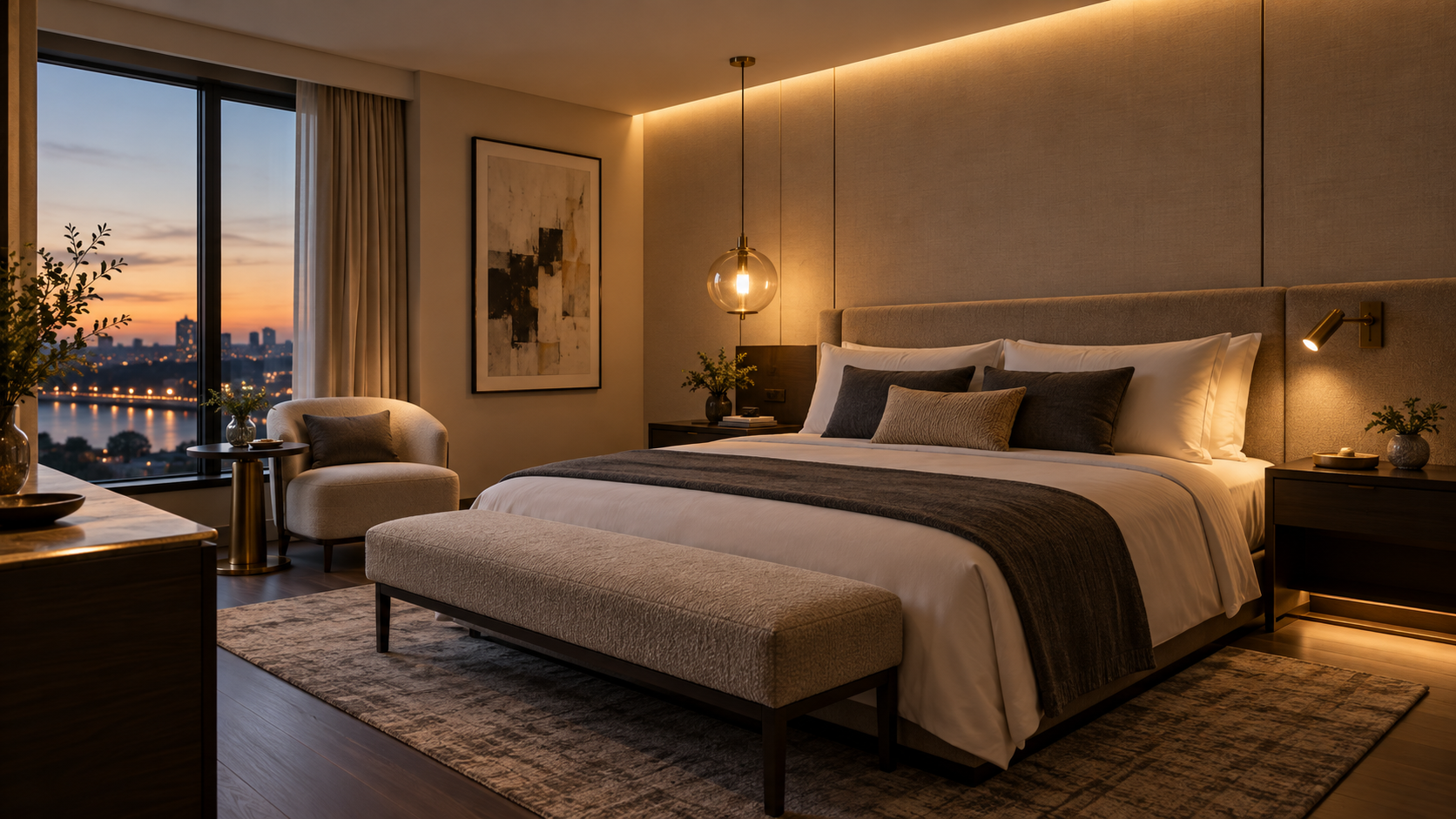
To balance decorative and functional hotel lighting, give every fitting a clear purpose before choosing a visual style. A sculptural pendant or glowing headboard can establish a room's character. Guests still need comfortable light for reading, finding belongings, using a mirror and moving through the room at night. Plan those tasks as separate layers, then review the combined scene in a full-size mock-up.
List tasks before selecting decorative features
Walk through a guest's arrival, evening and departure. Where does a suitcase open? Where does a person read, charge a device, dress, find the bathroom or use a desk? Mark those positions on the plan. A decorative fitting may also help one task, but its appearance is not evidence that it does so.
An ambient layer gives the room general orientation. A task layer serves a specific surface or activity. Accent and decorative layers draw attention to materials and shape. The useful mix depends on room layout, finishes and daylight, so avoid a fixed formula or universal light-level promise. Have the project lighting designer set measurable targets where needed.
Keep the bedside function independent
The bed is where poor layering becomes obvious. A dramatic wall sconce can look excellent from the door while throwing too much light toward the neighbouring pillow. Give the reader an aimable, reachable task light and evaluate the decorative layer separately. If one fixture must do both, its exact optic and control sequence need a sample test.
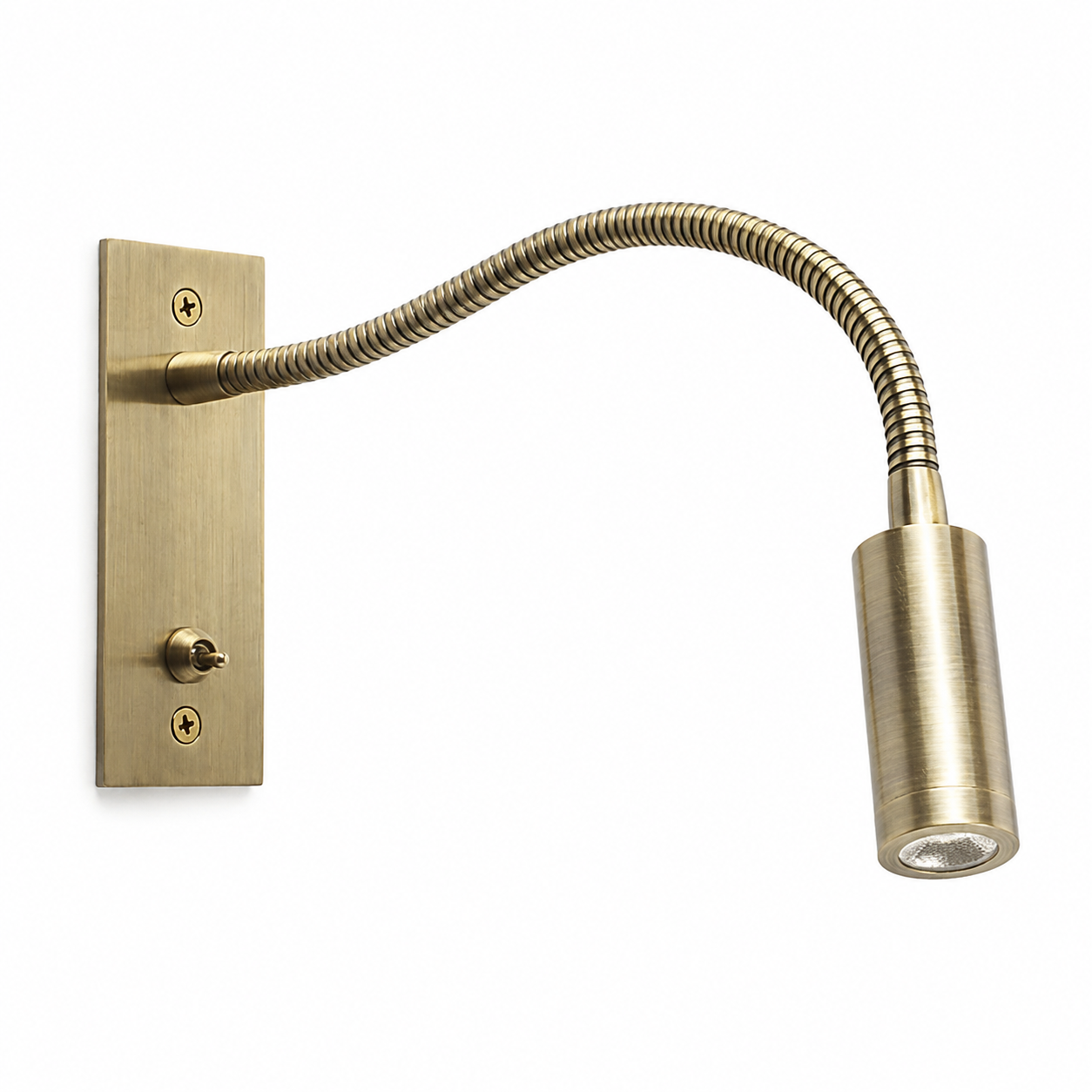
The MD-WL-Y135 recessed reading light illustrates a compact task-light direction, not a complete decorative scheme. Its documented adjustable head can be evaluated at the proposed bedside location. Ask for the exact product drawing and measured data before integrating it into a headboard package.
Build scenes around use
Write the expected state of each circuit for arrival, evening, reading and night movement. In a shared room, one person's reading scene should not unexpectedly illuminate the other side. Check what the master switch does, what returns after a power interruption, and whether the control labels make sense to a first-time guest.
Avoid making every source operate together at one level. That removes the benefit of layering and can make reflective surfaces uncomfortable. Test each layer alone, then test the intended combinations from the doorway, bed, desk and bathroom approach. Use a real sample of the wall, fabric and metal finishes; renderings cannot show every reflection.
Review visual comfort and operations
Look directly toward each fitting from the guest's normal positions. A light source visible in the eye line may need shielding, a different aim or a new location. Check mirrors, polished surfaces and dark television screens for distracting reflections. Test the room with curtains open and closed.
Operations matter too. A decorative fitting with difficult cleaning or a fragile projection can create work in a repeated room. Record how staff reach it and how a replacement is handled. If a custom fitting is proposed, the approved sample and drawings must describe the exact build rather than relying on a mood image.
Sign off the hierarchy
Give the team a concise schedule stating the job of each luminaire, its control group, finish, service method and approval evidence. Photograph a mock-up in each agreed scene. The final question is whether a guest can complete ordinary tasks while the room retains the desired atmosphere. The hotel lighting design mistakes guide offers a further check before the layout is repeated.