
Quick answer
USB-C is a connector; USB Power Delivery is an additional negotiated power capability. Verify profiles before making a charging promise.
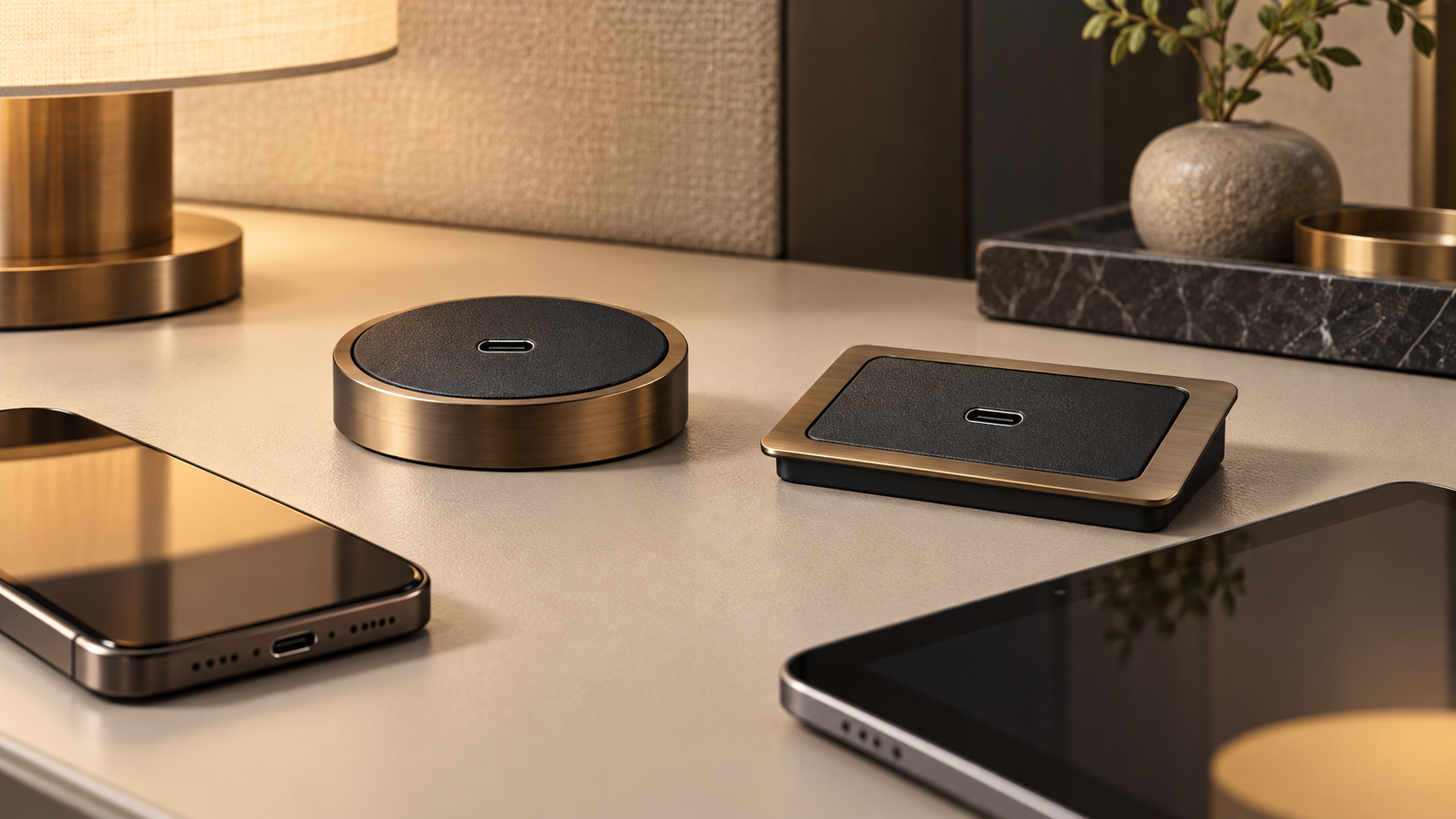
USB-C PD versus standard USB-C for hotel rooms is a distinction between connector shape and negotiated power capability. A basic USB-C port may charge some devices, while a port supporting USB Power Delivery can offer defined power profiles to compatible equipment. The presence of a USB-C socket does not reveal its supported profiles, maximum output or behavior when more than one device is connected. Ask for the module specification and test representative guest devices before promising fast charging or laptop support.
Separate connector from protocol
USB Type-C describes a reversible connector and related interface. USB Power Delivery is a separate protocol for negotiating power. USB-IF's product-language guidance states that the terms are not interchangeable. A product can have a USB-C opening without supporting the PD capability a particular device expects.
For a hotel brief, say what the guest can reasonably charge under documented conditions. “USB-C available” is a connector statement; a higher-power promise needs specified output profiles, cable conditions and suitable device compatibility. Avoid a universal fast-charge claim.
Compare the same use case
List representative phones, tablets and any laptop class the hotel intends to serve. Ask suppliers for output voltage and current profiles, total power budget, port sharing, idle behavior and test documentation. A quoted maximum for one empty port may fall when a second port is occupied. Test the actual wall module with appropriate cables and devices, then document the observed behavior.
If a port is primarily a convenience for phones, the specification may differ from a desk workstation requirement. Separate those needs on the room schedule. Do not buy a higher-rated port solely because its number is larger; confirm that it fits the electrical design, guest tasks and maintenance plan.
Check the room system
Verify whether the port stays active when local lights are off, when the room master is used and when an energy-management device changes state. Test the physical reach from bed and the resting place for a connected device. An excellent electrical profile offers little benefit if the outlet is hidden behind a side table.
The documented MD-WL-Y003 offers USB-A at 5 V/2 A, not USB-C. Its existence does not imply that any current MYDE wall-light variant supports PD. Ask for an exact approved configuration before linking a charging claim to a product page. The broader USB-C requirements guide explains the procurement record.
Approve wording as carefully as hardware
Put the connector and supported PD profiles, if any, in the product schedule and guest-facing description. Keep a copy of the exact module document with the signed sample. If a production substitution changes that module, repeat the device tests and update the claim. The useful decision is the verified guest outcome, not the appearance of the receptacle.
For procurement comparison, ask vendors to fill in the same matrix: connector, supported profiles, output with one and two devices, protection evidence, replacement method and tested cable. This keeps the decision on observable capability rather than a vague label such as “premium USB-C.”