Quick answer
Choose a bedside connector from guest needs and the exact unit's verified output. USB-C describes the connector, not guaranteed Power Delivery. Test cables, light-switch behavior and service access in the room mock-up.
USB-A vs USB-C for hotel bedside lighting is a decision about guest cables, rated charging output, electrical design, and future replacement. The connector shape alone does not establish charging speed. Specify the port type and documented output for the exact bedside unit, decide whether charging must stay live when the reading light is off, and test representative guest devices in a room mock-up. If a proposed luminaire only has a verified USB-A port, do not relabel it as USB-C or assume Power Delivery support from a similar product image.
Separate connector type from charging capability
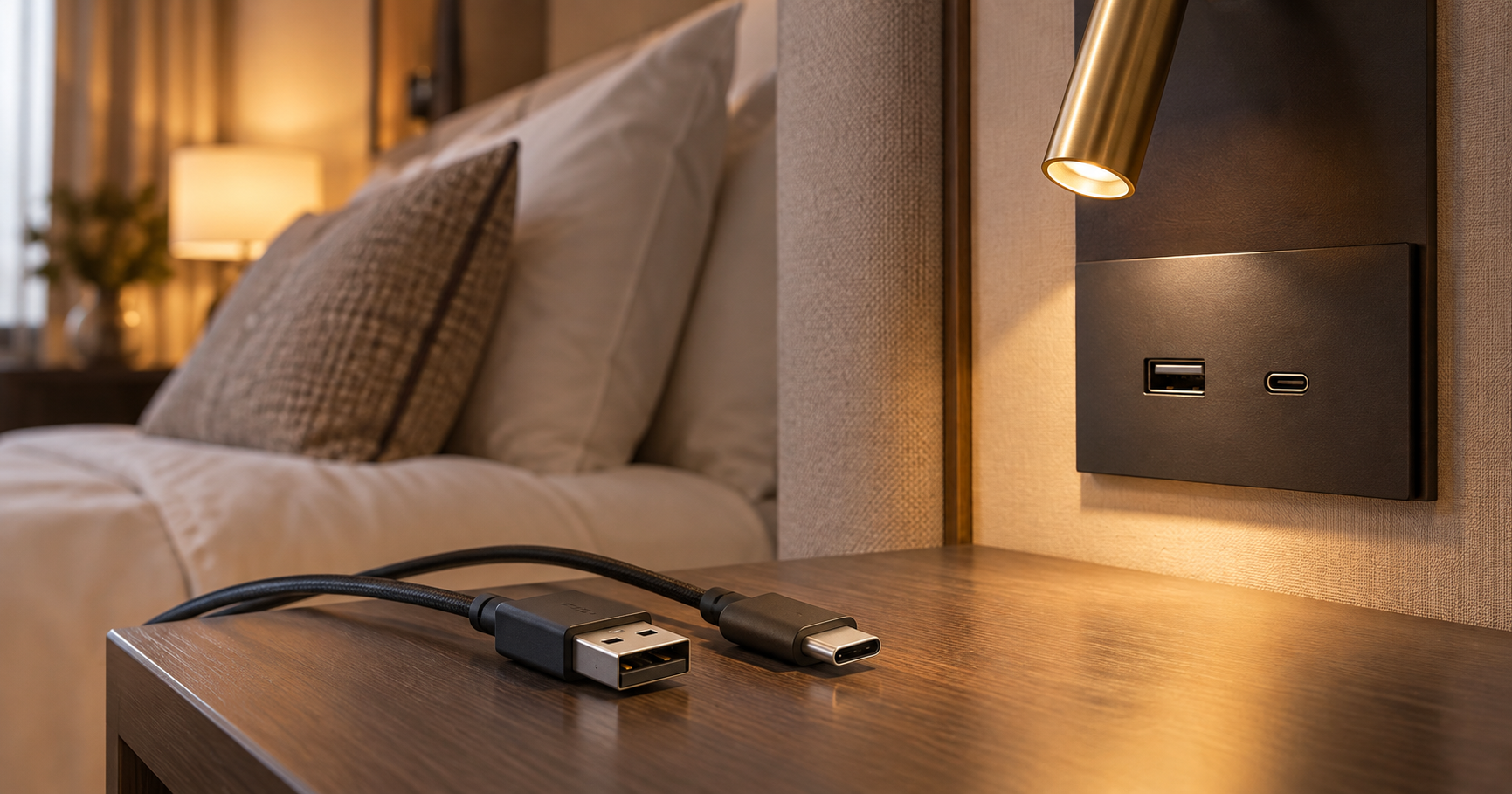
USB-A is the older rectangular connector many existing guest cables still use. USB-C is reversible and is common on newer devices. But USB-C describes a connector; it does not automatically mean high-power charging or USB Power Delivery. USB-IF's product language guide explicitly separates Type-C from Power Delivery and says power capabilities vary by product.
The procurement schedule therefore needs more than “USB-C socket.” Ask for the rated voltage and current or power, supported charging protocol, behavior with two ports in use, and the supply required by the exact unit. Confirm which tested cable and device combination produced any advertised result. Do not write “fast charging” without a defined protocol and verified rating.
Decide what guests need at the bedside
Map the room's likely use: phone charging overnight, a tablet beside the bed, or a guest who travels with an adapter. Consider whether a separate accessible AC receptacle is also needed. A USB port in a light should not become the only power point by accident. Ask the electrical designer to confirm destination-market requirements and the hotel operator to review guest needs.
If both connector types are considered, compare the actual available products and their documented outputs rather than assuming a dual-port unit fits the approved headboard. A change in charging hardware can affect faceplate size, electrical supply, heat, serviceability, and the controls. Reserve space and access before joinery is finalized.
Write a testable control requirement
State what happens to the port when the reading light switch is off, when a room master or key-card control is off, and after power is restored. A guest may expect charging overnight after turning off the bedside light. The behavior has to be tested on the proposed wiring and fixture, not inferred from the port's position on the faceplate.
Check whether one guest can reach the port without moving an arm or pulling a cable across the reading light. Look for cable snagging at the pillow and bedside table. Test the port with representative cables and devices and record any compatibility limits observed in the sample. These are user checks; they do not replace electrical approval.
Keep MYDE model claims separate
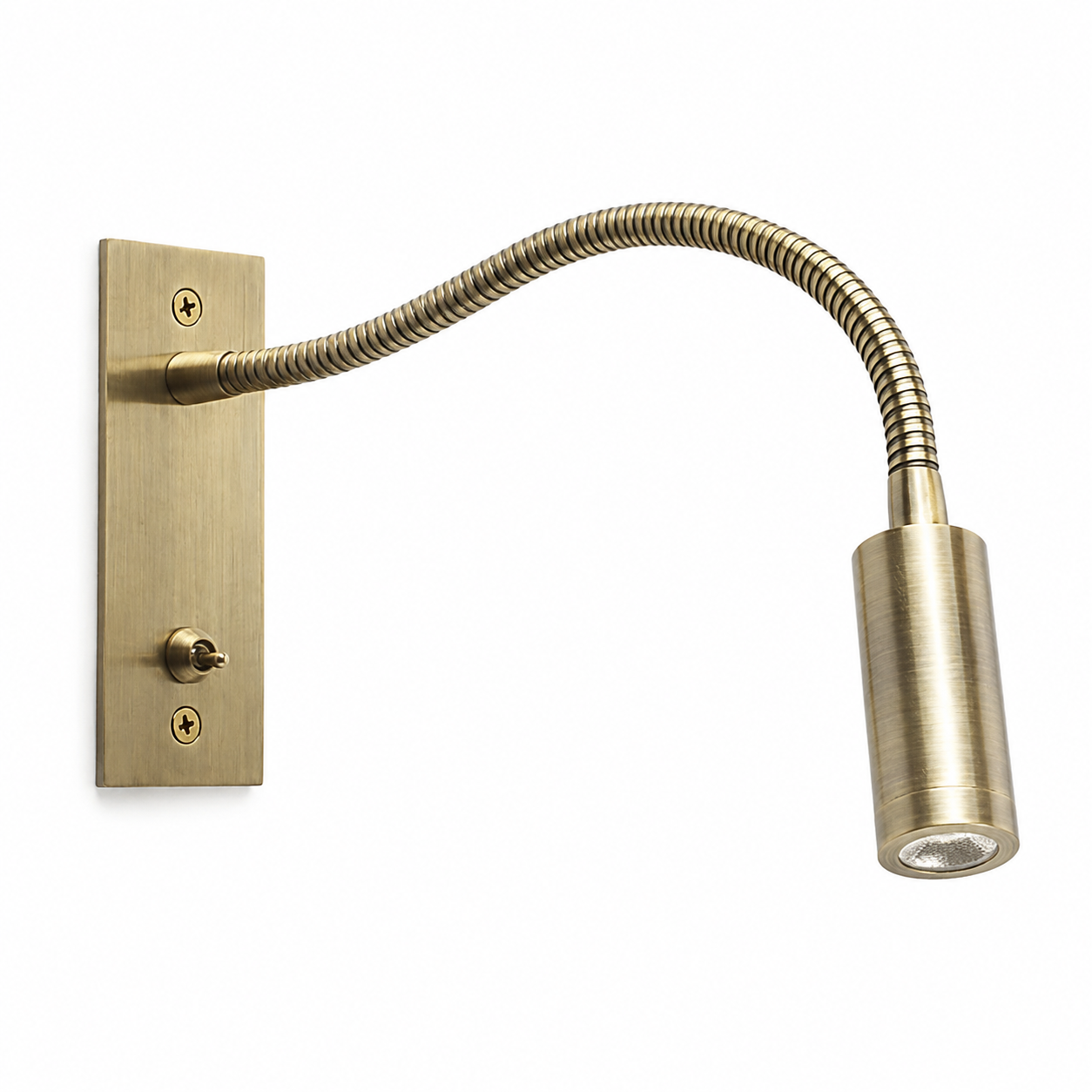
MYDE MD-WL-Y003 has one confirmed USB-A port rated 5 V/2 A and a separately controlled, non-dimmable 3 W reading light. Its source pack does not establish USB-C or Power Delivery. The MD-WL-Y093 technical specification also documents a USB-A output and wireless charging, but its upper interface type remains unconfirmed. It should not be counted as a verified USB-C example.
A USB-C category or marketing image is not evidence for a particular model's connector and power rating. Request a current product sheet, backplate and wiring drawing, and destination-market documentation for the exact configuration. If the offered unit changes during quotation, repeat the checks.
Plan for service and later replacement
Charging electronics may need replacement on a different cycle from the light head. Ask whether the charger is a replaceable module, how it is accessed, and what happens when it fails. Record the module or whole-fixture replacement path without assuming that a port can be upgraded in place. Include the approved connector, electrical rating, and finish in the spare-part record.
Approve the complete bedside assembly in a mock-up: guest reach, cable route, light switch, master circuit, charging behavior, and service access. The purchase order should name the exact port configuration and supporting documentation. That is the defensible comparison between USB-A and USB-C for a repeated hotel-room package.