Quick answer
Set a project-specific illuminance target with the lighting designer and measure lux at the actual page, in realistic reading postures. Check page coverage and glare as well as the number.
How much lux is needed for reading in bed depends on the reader, print size, page position and surrounding light. Lux measures illuminance arriving at a surface, so the relevant measurement is on the book or other reading material, not at the lamp or floor. Choose a project target with the lighting designer using the applicable guidance for the market, then test it in a full-size guest room. A universal number printed in an article cannot guarantee comfortable reading.
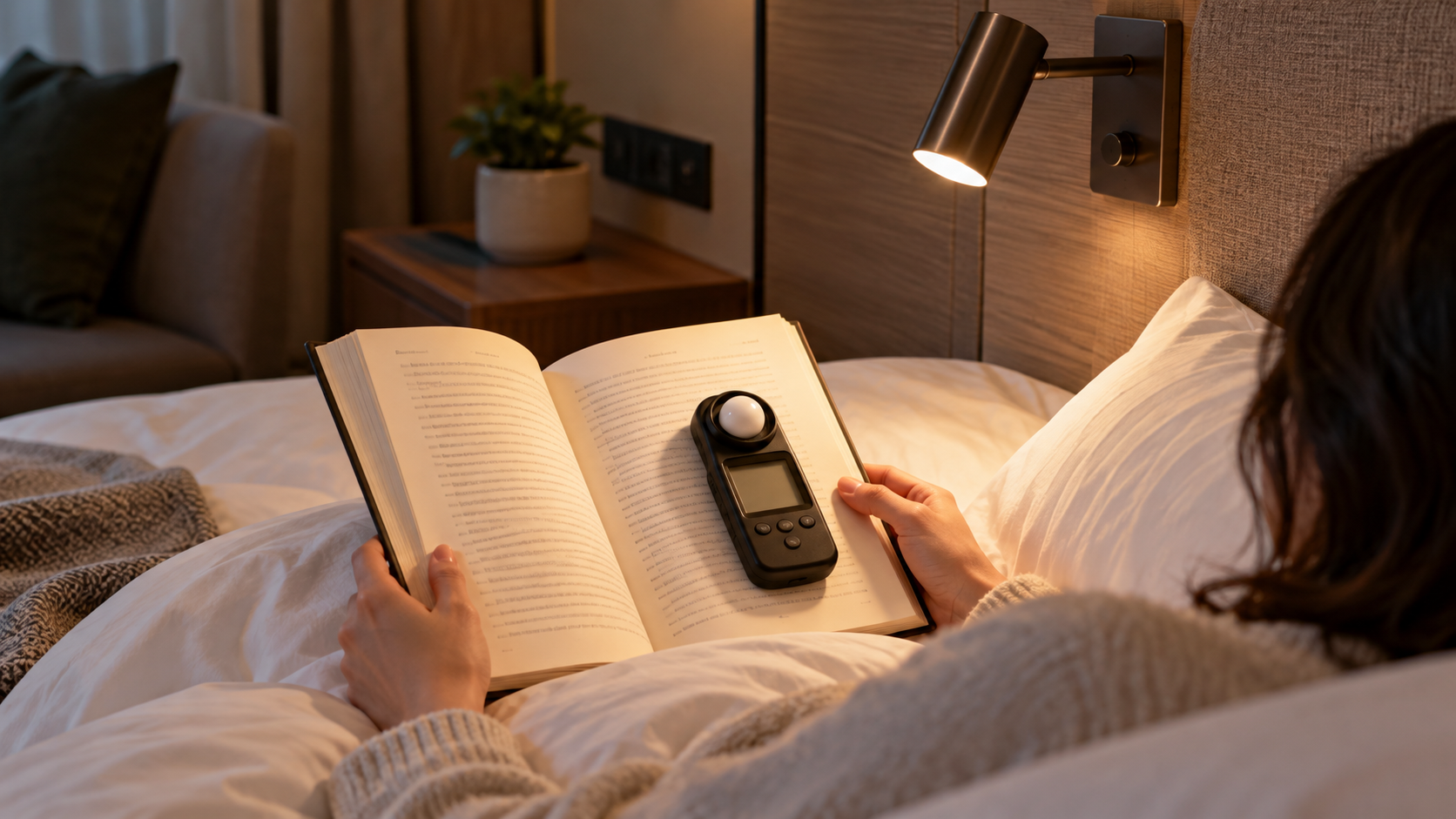
Define the measurement plane
Place the book where a guest actually holds it while sitting against the pillows. The page is often tilted and moves between upright and reclined positions. Measure or calculate at that plane, then check the darkest useful part of the open page, not only a bright central spot. Record the instrument, ambient lighting state, fixture aim and position. A lux reading without those conditions is hard to reproduce.
The US Department of Energy hotel guest-room demonstration cites IES reading recommendations for a bedroom desk, including differing values by age. A desk criterion is not automatically a bedside-book criterion. Use the project's adopted standard and task definition, and distinguish a reference recommendation from a measured MYDE product result.
Balance level with distribution and glare
More lux at one small point can create a harsh patch while the rest of the page remains dim. A well-placed beam should cover the material the guest reads, without a direct view of the LED or strong spill into the adjacent pillow. Test both people in a double room. Check the page with the room's ambient layer off and on; the reading head should still perform its task when the room is otherwise dark.
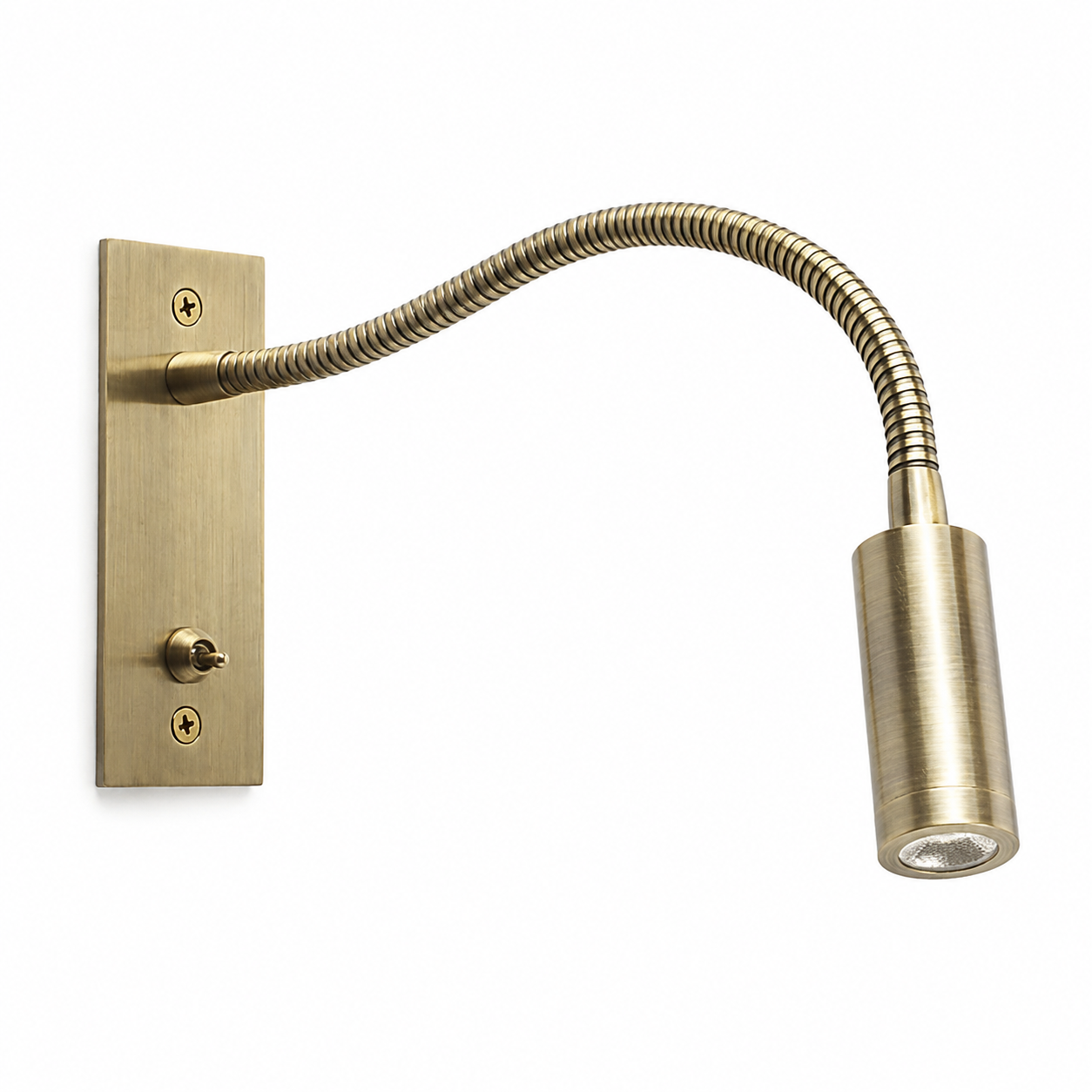
Wattage is electrical input, not delivered lux. A 3 W reading light can produce different page illuminance depending on optical design, mounting distance and aiming. The MD-WL-Y135 product pack documents a 3 W adjustable head, but it does not provide a verified bedside lux result for a particular room. Request the exact photometric data and perform a room test before claiming an illuminance figure.
Make the target project-specific
Ask the lighting designer to state the selected target, assessment area, reading positions and any criteria for uniformity or glare. Include users with different visual needs in the mock-up where the project brief calls for it. A dimming control may make the room flexible, but confirm the measured output at the actual settings and check that its low end remains usable.
Keep a diagram of measurement points and a photograph of the setup with the signed sample. If the mattress height, headboard, optic or driver changes, repeat the measurement. The beam-angle selection guide explains why distribution can change page coverage even when the nominal lumen output looks similar.
A useful acceptance record includes
- The adopted project criterion and its source, not an unlabeled number.
- The exact product, optic, control setting and aiming position.
- Page size, tilt, pillow posture and room-light state.
- Measurement points, instrument and observed results.
- A check from the adjacent pillow for direct view and spill.
Approve the combination that meets the adopted target and feels usable in the room. Keep the evidence with the room schedule so later substitutions can be judged against the same test.