Quick answer
Aim from the page backward with the actual pillow and fixture in place. Check upright and reclined reading, direct view of the source and spill onto the second pillow.
A comfortable bedside reading light angle directs light onto the page while keeping the source out of the reader's eyes and reducing spill toward a sleeping partner. Choose the angle in the installed room, not from a beam diagram alone. Start with the real pillow and book positions, aim the selected head, then check the effect from both sides of the bed with other room lights off. The correct setting depends on mounting location, optic and how the guest sits.
Separate head tilt from beam spread
The mechanical angle of an adjustable head describes where it points. Beam angle describes how the optical distribution spreads around that direction. A narrow beam can miss the page if the head is poorly placed; a wider beam can cover a book while lighting the neighbouring pillow. The two choices should be reviewed together, using the actual fixture and the actual reading distance.
Ask for the exact product's photometric file or distribution if a simulation is part of the project. The Illuminating Engineering Society explains that an IES file describes measured light distribution; it does not replace checking the installed view. A rendered cone on a drawing is only a prediction until the mounting and room materials are confirmed.
Aim from the page backward
Place a book at the position guests naturally use, then adjust the head until the text is evenly usable. Move through upright and reclined positions. Watch for hand and head shadows, a bright patch on the page, and a visible LED or lens in the reader's eye line. Next sit on the other side and check direct view and spill. Test with light coloured and dark bedding if those are part of the room palette; reflected light changes the impression.
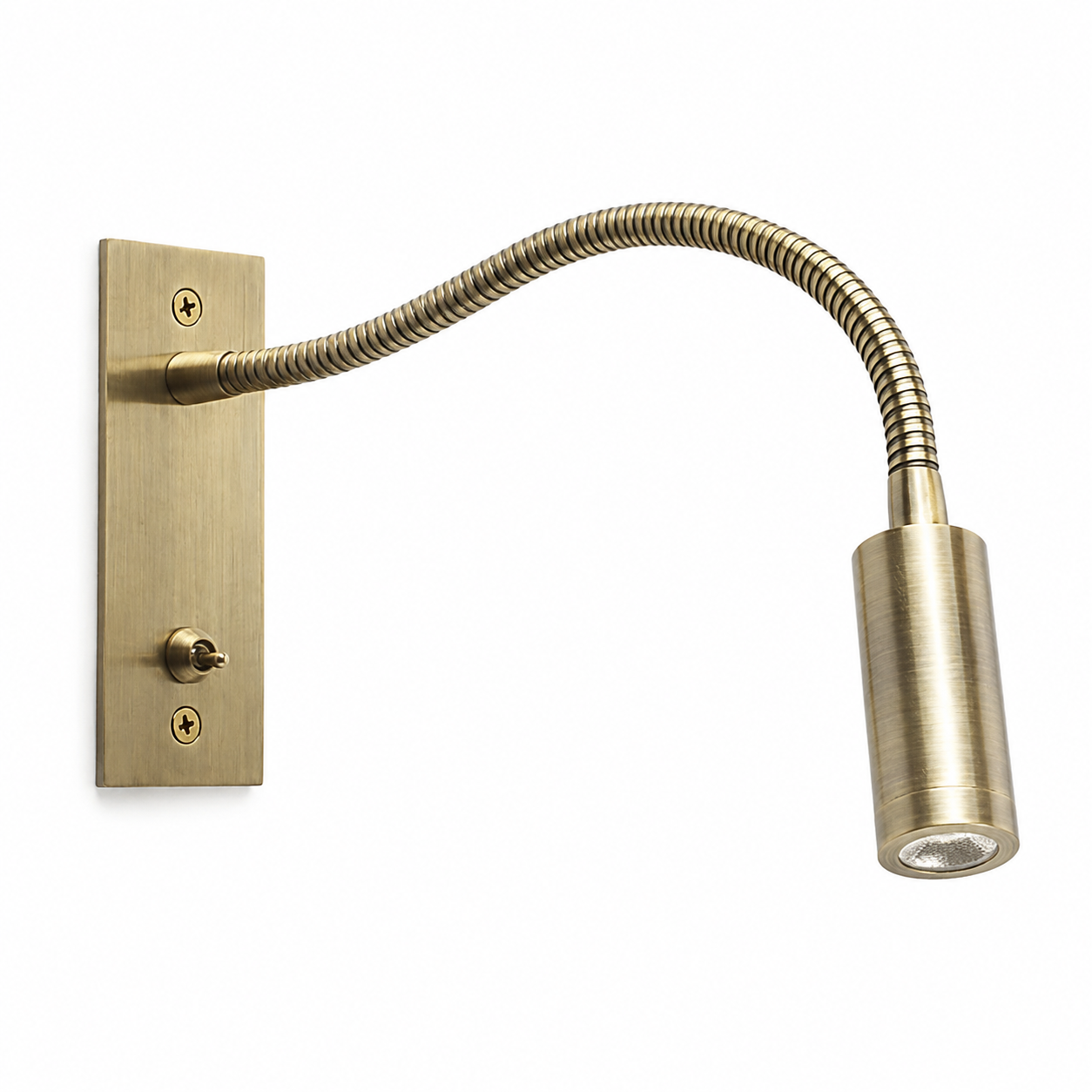
If the fixture has a flexible neck, confirm that the aimed position does not intrude into the pillow area or become easy to knock during bed-making. The MD-WL-Y092 flexible reading head is a model direction, but the current pack does not establish a universal aiming angle or reading-plane illuminance. A mock-up remains necessary for the ordered configuration.
Keep the angle usable after handover
Guests should understand how to adjust the head without force. If a fixed installed aim is intended, mark it in the approval record. If guests may reposition it, check that useful light can be regained easily and that the head does not expose glare at its travel limits. Test controls from a natural seated position; a light that needs two hands or a reach behind the headboard will be frustrating in use.
Do not use an attractive photo as evidence of light distribution. Photograph the accepted page view and the adjacent pillow view, and record measurement results if the lighting brief specifies a target. Coordinate any change to mounting height with the mounting-height guide, because distance and aiming interact.
Mock-up acceptance questions
- Is the whole typical page readable in upright and reclined positions?
- Can either guest see a bright source from normal eye positions?
- Does the beam disturb the other pillow with room lights off?
- Can the head be adjusted, parked, cleaned and serviced safely?
- Are the accepted fixture, mounting point and aim recorded together?
An angle is approved only for that combination of fixture, position and room geometry. If any of those change, repeat the bedside test.