Quick answer
There is no dependable single lumen figure for every bedside reading light. Lumens describe output; useful light on the page depends on the optic, distance, aim and room. Set a task-plane target with the lighting designer, then test the exact fitting at both pillows.
How many lumens does a bedside reading light need? There is no dependable universal number. Lumens describe how much visible light a lamp or fitting emits; they do not tell you how much reaches an open book. At the page, the result changes with mounting distance, aiming, beam distribution and any lens or shade. In a hotel room, the useful test is whether the selected fitting lights the page comfortably while limiting glare and spill to the other pillow. Set a task-plane requirement with the lighting designer, then verify the exact product in a room mock-up.
Separate output from light on the page
The important quantities answer different questions. Lumens describe total emitted light. Lux describes illuminance on a surface. A watt value describes electrical input and cannot be treated as either lumens or lux. Two fittings with similar lumen output can produce very different reading results if one has a concentrated optic and the other spreads light widely.
Ask whether a quoted lumen value refers to the LED source, the lamp or the complete luminaire after optical losses. Identify the tested colour temperature and driver setting. A marketing number without those conditions is a poor basis for comparing samples.
Define the reading task before choosing a number
Mark the actual page position for an upright and a reclining guest. Include mattress height, pillow position, headboard depth and the user's reach to the lamp. Decide whether the room brief calls for a focused book light, a wider bedside task light or a general bedside glow. These are different jobs. The project lighting designer can then set a suitable maintained illuminance target and measurement method for the intended users and market.
Measure or model the page at the intended light position, not a convenient point directly below the fitting. Check several points across an open book to see whether the page is usable beyond a single bright spot. Review the neighboring pillow and the reader's eye line at the same time. More light is not automatically more comfortable if the source creates glare.
Use photometric evidence for the exact configuration
An IES or LDT photometric file describes a luminaire's measured light distribution for use in lighting calculations. Request a file whose model, optic, light source, colour temperature and driver match the proposed order. Record any difference. A calculation can compare positions and likely page coverage, but it still needs realistic room geometry and surface assumptions.
The United States Department of Energy describes manufacturer photometric files as inputs to lighting simulation; the IES LM-63 standard defines a common electronic file format. Neither source turns a generic lumen recommendation into a guaranteed bedside result. Our photometric file guide gives a practical file check.
Compare the sample from both sides of the bed
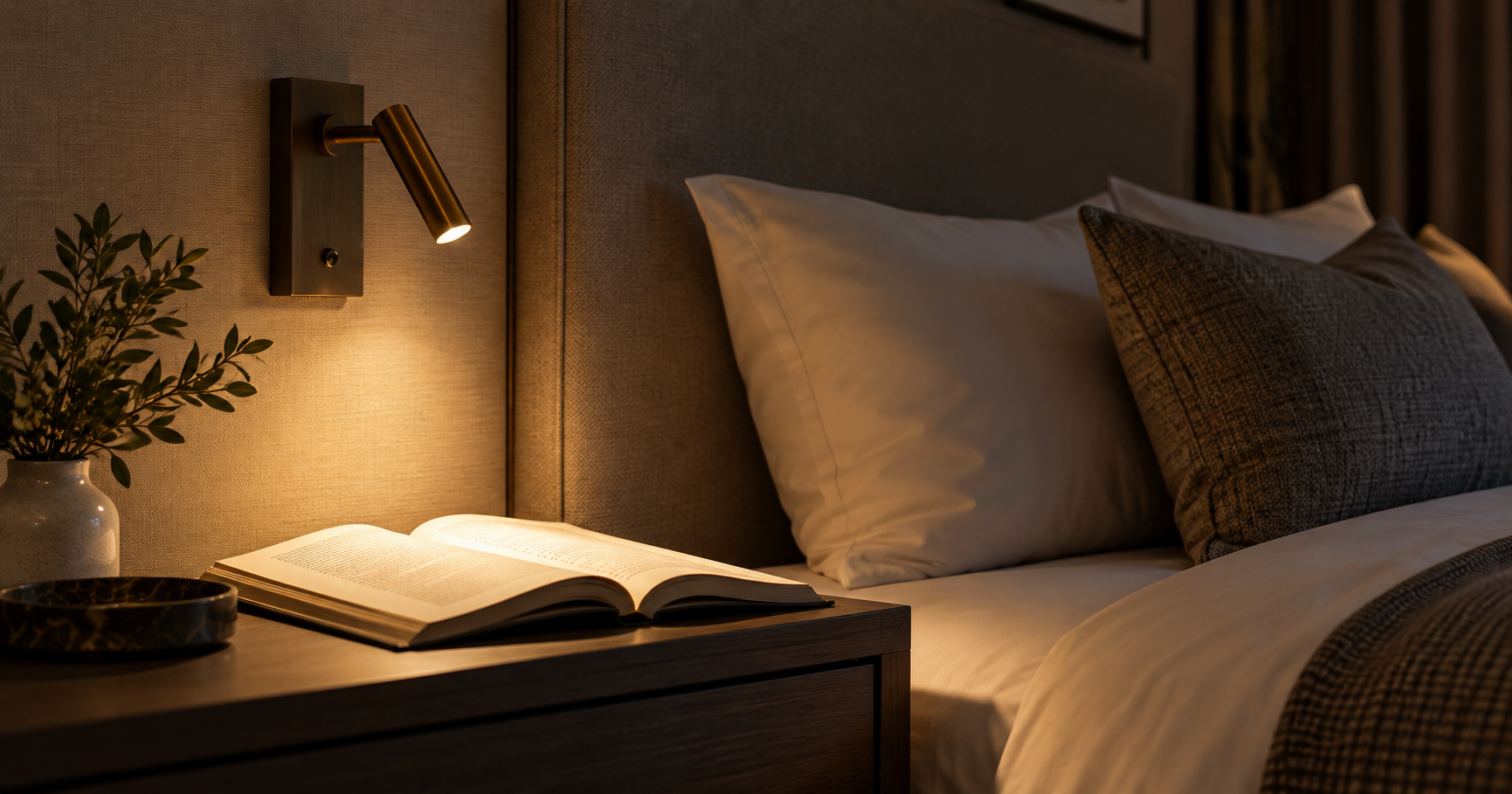
Mount the candidate at the planned height and aim it at the book. Read from each side while the other reading lamp and the general room lights are off. Repeat with ambient light on. Look for a readable page, harsh contrast, visible LEDs, reflections from glossy pages and spill across the bed. Try the intended dimming levels if the exact fitting supports dimming; do not assume dimming from a room control schedule alone.
If the page is too dim, first check position and aim. If the source is distracting, consider shielding or a different optic before simply increasing output. Record the accepted setup and its product revision so a repeated-room order uses the same basis.
Keep MYDE model facts separate
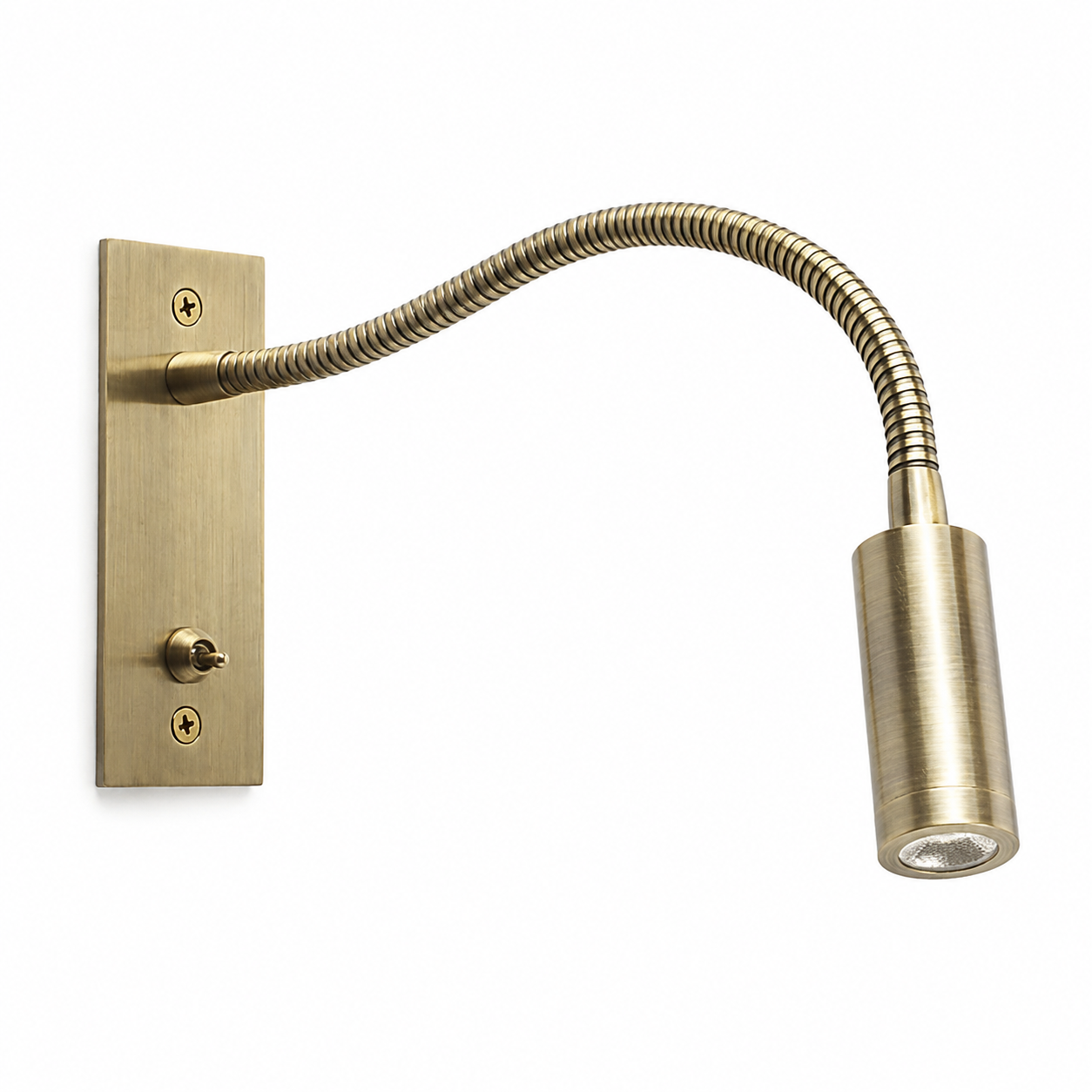
MD-WL-Y135 and MD-WL-Y003 both have a documented 3 W reading head. Their launch information also lists a 30° beam, but neither wattage nor nominal angle establishes a page-plane lux result in a particular room. Y135 offers selected 2700 K, 3000 K or 4000 K configurations; Y003 is documented at 3000 K and is non-dimmable. Do not transfer a laboratory file or output claim from one model to the other.
Before a purchase decision, request the complete-luminaire light-output data and photometric file for the exact ordered configuration. If those are unavailable, leave the quantitative performance entry open and use a physical sample to assess the room. The reading-light beam-angle guide covers distribution in more detail. Contact MYDE with the room geometry and target to ask which verified data are available for the proposed model.