Quick answer
Compare the complete fitting: a louver can block oblique views while a recessed lens hides the source by depth; both can alter useful light.
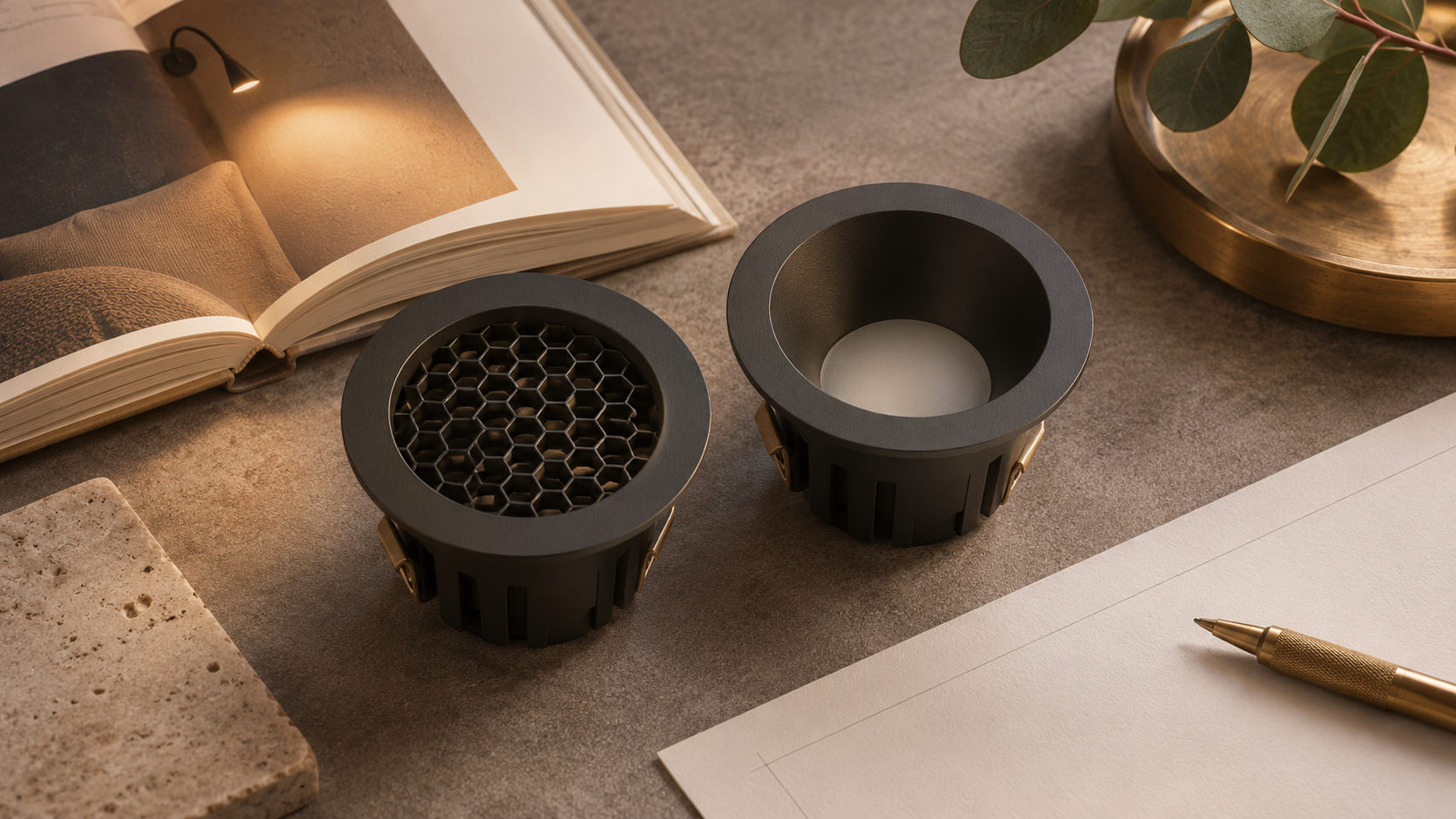
Honeycomb louver vs recessed lens for glare control is a comparison of two ways to limit views of a bright light source. A honeycomb screen uses small cells to block oblique sight lines. A recessed lens places the emitting surface deeper inside the fitting so its housing creates a cut-off angle. Neither method is automatically better for a bedside book: the chosen optic can change transmitted light, beam pattern, cleaning access and appearance. Compare complete fixture samples at the intended hotel-bed geometry rather than deciding from accessory names.
Understand what each part changes
A dark honeycomb can reduce a side view of the source, but its cells may absorb or redirect some useful light. A recessed lens may hide the source from common eye lines while leaving a cleaner face, yet it can require greater housing depth. The actual effect depends on dimensions, material and the underlying LED optic.
Manufacturer literature from iGuzzini describes a honeycomb accessory as a glare-reduction device, while WE-EF's optical accessory note shows that the accessory can change center-beam brightness. Those are examples from those manufacturers, not performance data for any MYDE model.
Compare at the guest's eye and book
Build a small evaluation with the same mounting position and book plane. Check the source from the reading pillow, opposite pillow and doorway. Then compare page visibility and spill on bedding. A screen that blocks glare but leaves a dark book is not a suitable solution; a brighter lens that is uncomfortable from the next pillow is also incomplete.
Inspect the beam edge on a real fabric and wall finish. A honeycomb can create a different visual texture, while a recessed face may appear dark from some views. The low-glare reading-light guide covers the broader room test. This page stays with the two optical components and their practical trade-offs.
Check fit and service before specifying
An accessory has to be approved for the exact fixture. Confirm mechanical retention, thermal limits, cleaning method and whether it can be replaced without removing the whole headboard. The installation depth of a recessed lens also has to fit the joinery. Do not assume an accessory shown on a generic luminaire can be added to a compact reading head.
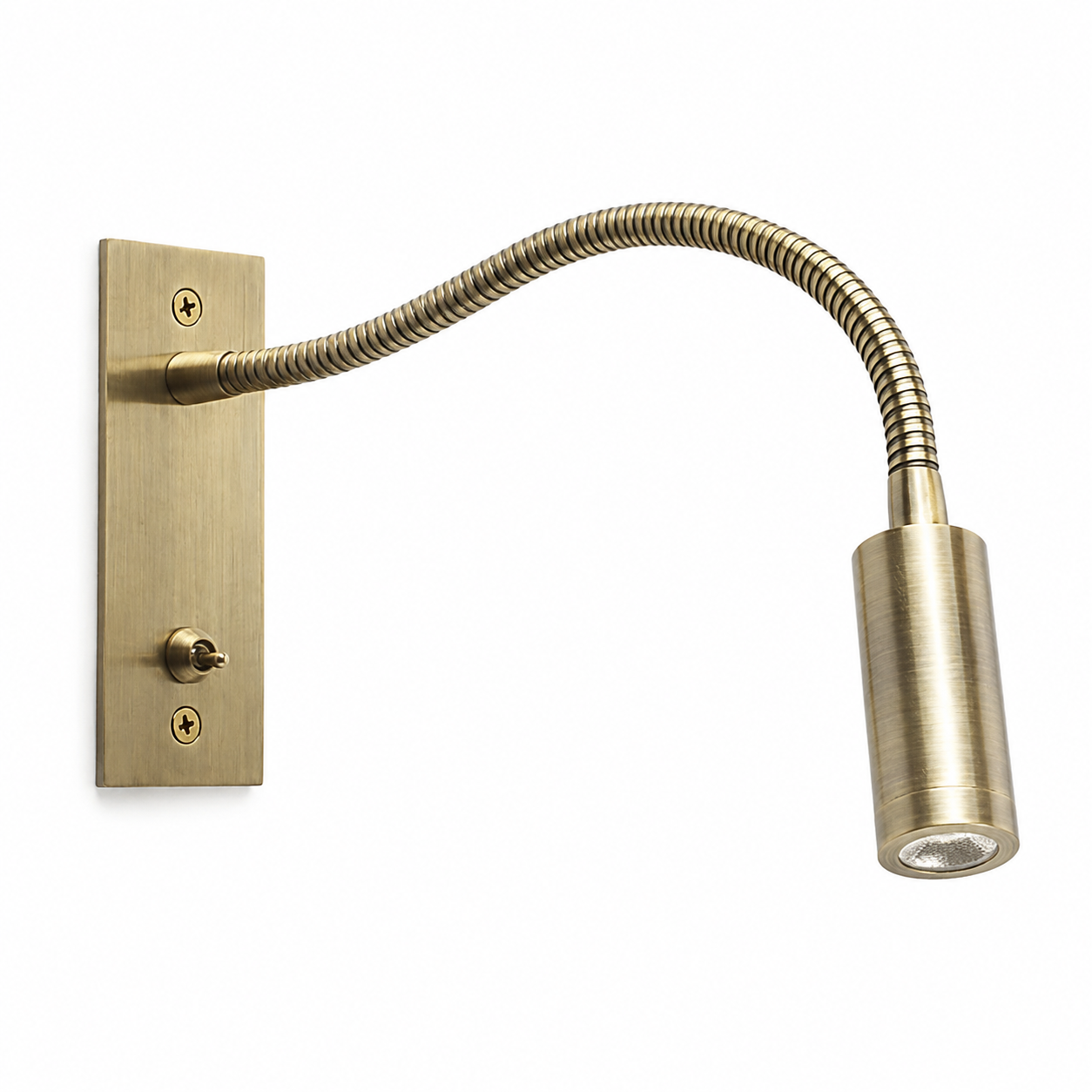
The documented MD-WL-Y135 has a recessed adjustable 3 W head and a 30° beam option. Its source pack does not establish a honeycomb accessory or a particular recessed-lens design. Treat either option as a proposed configuration requiring supplier documentation and a sample. Avoid presenting the illustration on this page as a MYDE component photograph.
Record the comparison result
Ask the supplier for the exact photometric file, optic identification and installation drawing for each candidate. In the mock-up, record book visibility, direct and reflected source views, aiming range and cleaning access. Keep the accepted sample and drawing revision with the room schedule.
If a supplier substitutes a lens or louver later, rerun the eye-line and page checks. Similar-looking optical parts can change the distribution. The decision is a trade-off among comfort, useful light and maintainability, validated on the delivered configuration.