Quick answer
Choose bedside reading-light colour temperature by testing the exact source on a book and beside the room's ambient light. Kelvin alone does not determine readability or glare.
The best color temperature for bedside reading lights is the one that makes text comfortable to read and fits the rest of the hotel room's evening scene. Warm-white options such as 2700K and 3000K are common comparison points, but colour temperature alone does not determine readability. Aim, illuminance on the page, glare and the source's colour quality also matter. Test the actual fitting at the pillow before choosing a final order option.
Keep the reading task separate from room ambience
A guest may want a calm room while still needing clear light on a book. Give the reading head its own task brief. State where the page is, what other lights are on, and whether the partner may be asleep. A warm source placed too far from the page can still fail the task; a brighter source aimed into the eye can be uncomfortable regardless of CCT.
Compare the two candidate colour temperatures with identical mounting, optics and output conditions where possible. Read printed text in upright and reclined positions, then look at the opposite pillow. Ask whether the page remains legible, whether the bedding and headboard look coherent, and whether the source itself is conspicuous. Avoid evaluating only a brightly lit showroom sample.
Understand what the Kelvin value does not tell you
Correlated colour temperature describes the broad white appearance. It is not a measurement of light reaching the book and not a guarantee of accurate colour rendering. Compare the selected source's colour-quality data and physical appearance with the room's materials. If a dimming system is proposed, inspect the actual low-level setting because different source and driver combinations can behave differently.
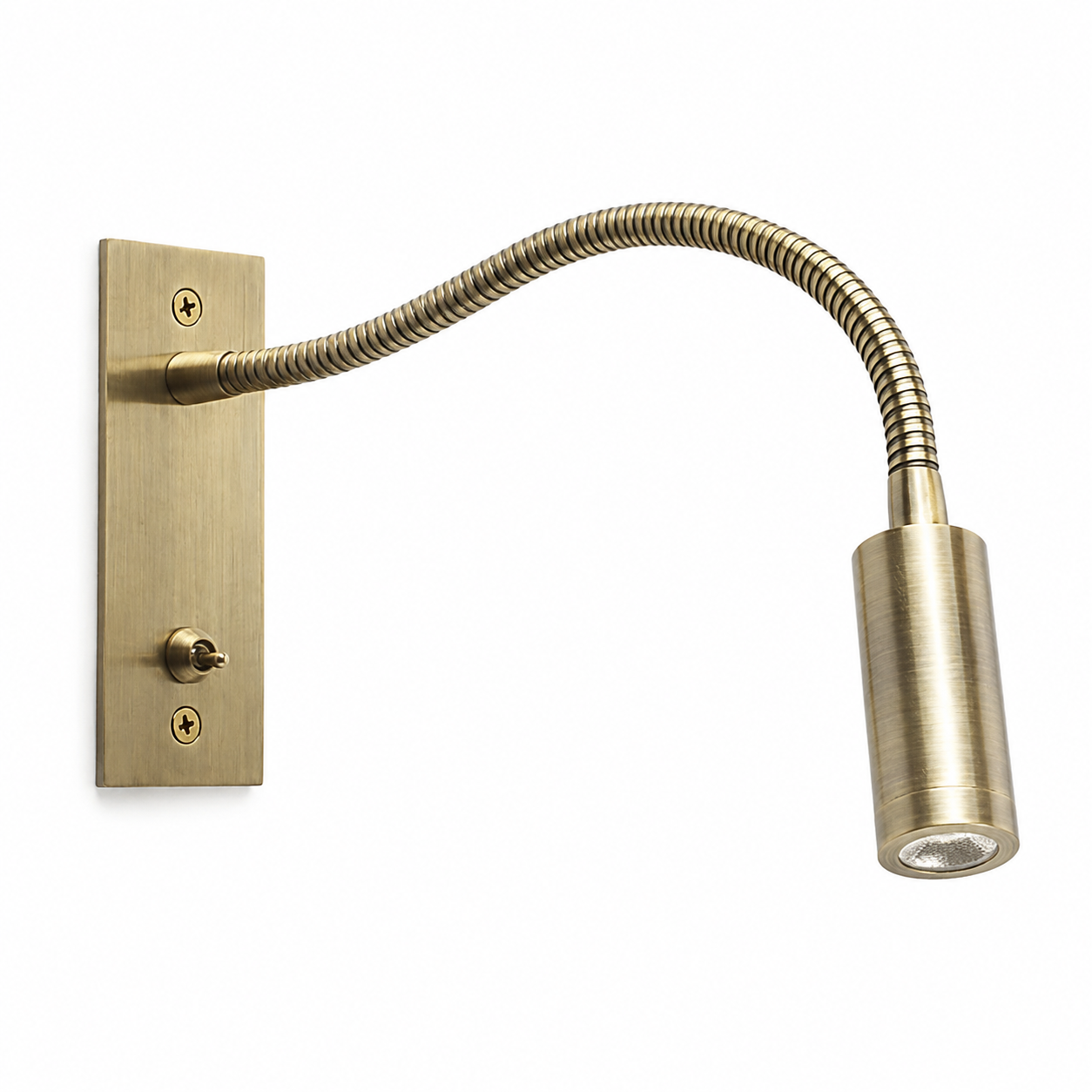
The MD-WL-Y135 recessed reading light fact pack lists 2700K and 3000K among its order options, so those configurations can be sampled for a room. Do not assume the same options for another model. The exact product's photometric information and approved sample are needed to judge the page, while the room-wide 2700K versus 3000K guide covers matching the broader layer scheme.
Define a repeatable acceptance test
Set up a full-size headboard with final mattress height, bedding and wall finish. Turn off other room lights, aim the reading head at a typical book and have someone read for a practical interval. Test both sides and both main reading postures. If the brief includes a target illuminance, measure at the page with the chosen configuration and record where and how the reading was taken. Then switch on the intended evening scene and compare the visual balance.
Make a decision record that identifies the product variant, CCT, optical configuration, control setting and sample date. Keep a physical reference if repeat orders are likely. A nominal Kelvin figure on a schedule without this context will not tell a future buyer which light was actually approved.
Questions to resolve before purchase
- Is the selected Kelvin option confirmed for this exact model and order?
- Does the book receive useful light without glare at either pillow?
- Do the reading and ambient sources look coherent together?
- Is the low-level control behaviour acceptable if dimming is used?
- Can replacement stock be matched to the approved room sample?
The practical answer is a tested room configuration, not a universal Kelvin threshold. Document the result so the same reading experience can be repeated.