Quick answer
2700K generally looks warmer than 3000K, but neither is universally right. Compare exact fittings with the room materials and all intended evening scenes before specifying a value.
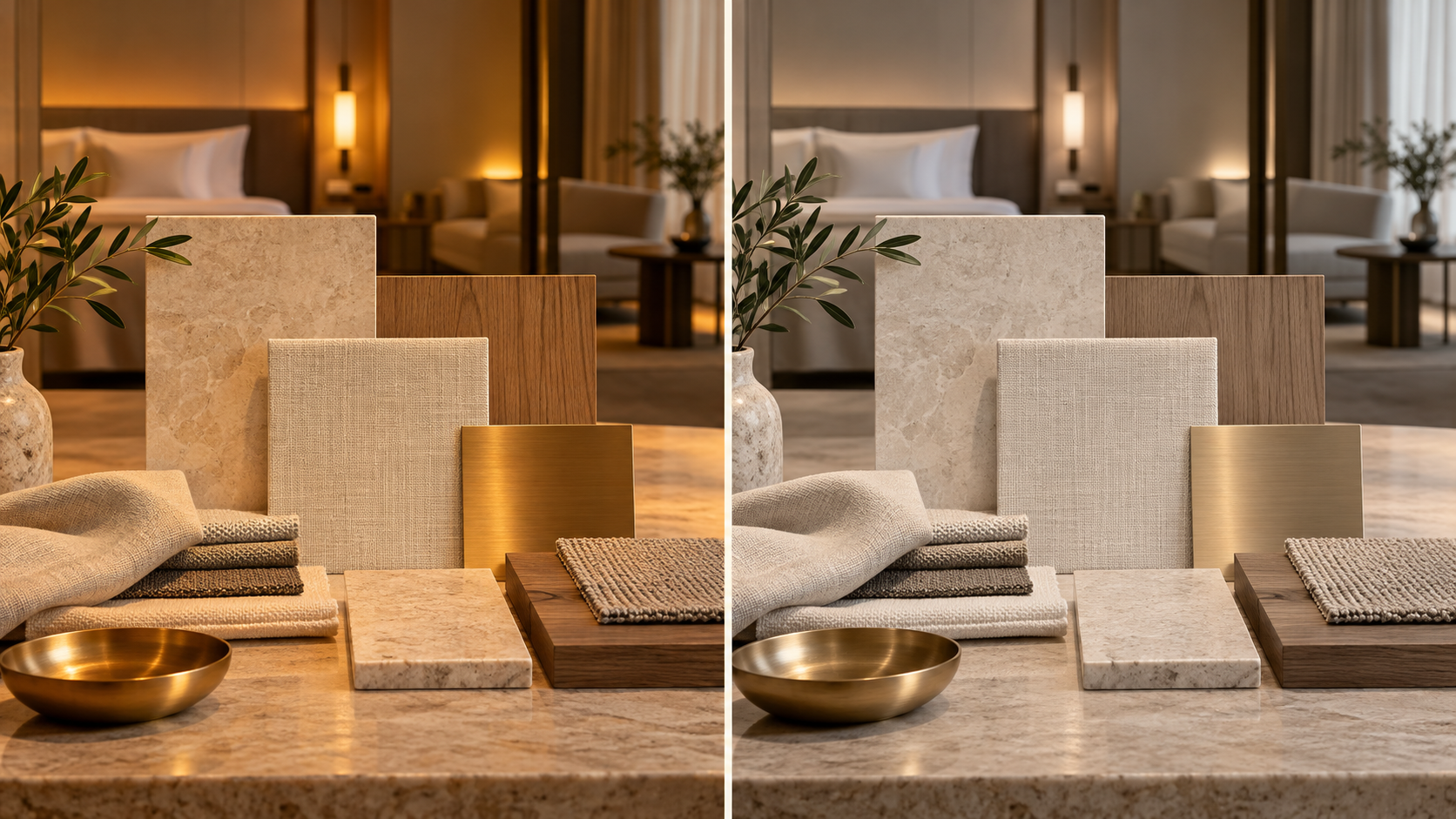
For 2700K vs 3000K in hotel guest room lighting, neither number is automatically the right answer. Both describe warm-white correlated colour temperature, with 2700K generally appearing warmer and 3000K somewhat less amber. Choose against the actual finishes and the role of each light, then compare physical samples in a full-size room at normal evening levels. A catalogue swatch cannot predict how a textile, timber or guest's face will look in the finished scheme.
Decide by layer and material
Start with the room's intended mood and tasks. A decorative headboard glow may be judged differently from a reading head or desk task light. If multiple warm-white sources operate together, compare them at the same time; a small difference can become more obvious on a common wall. Do not select a cooler CCT simply to compensate for too little light. Colour appearance and delivered illuminance are separate questions.
Place the actual fabric, timber, paint and metal samples under both options. View them with daylight excluded and again with the normal window condition. Note whether the ambient, reading and bathroom approach layers feel coherent when each is on alone and in a combined scene. A 2700K label does not guarantee that two different LED products match; colour consistency and spectral quality also matter.
Use the exact ordered configuration
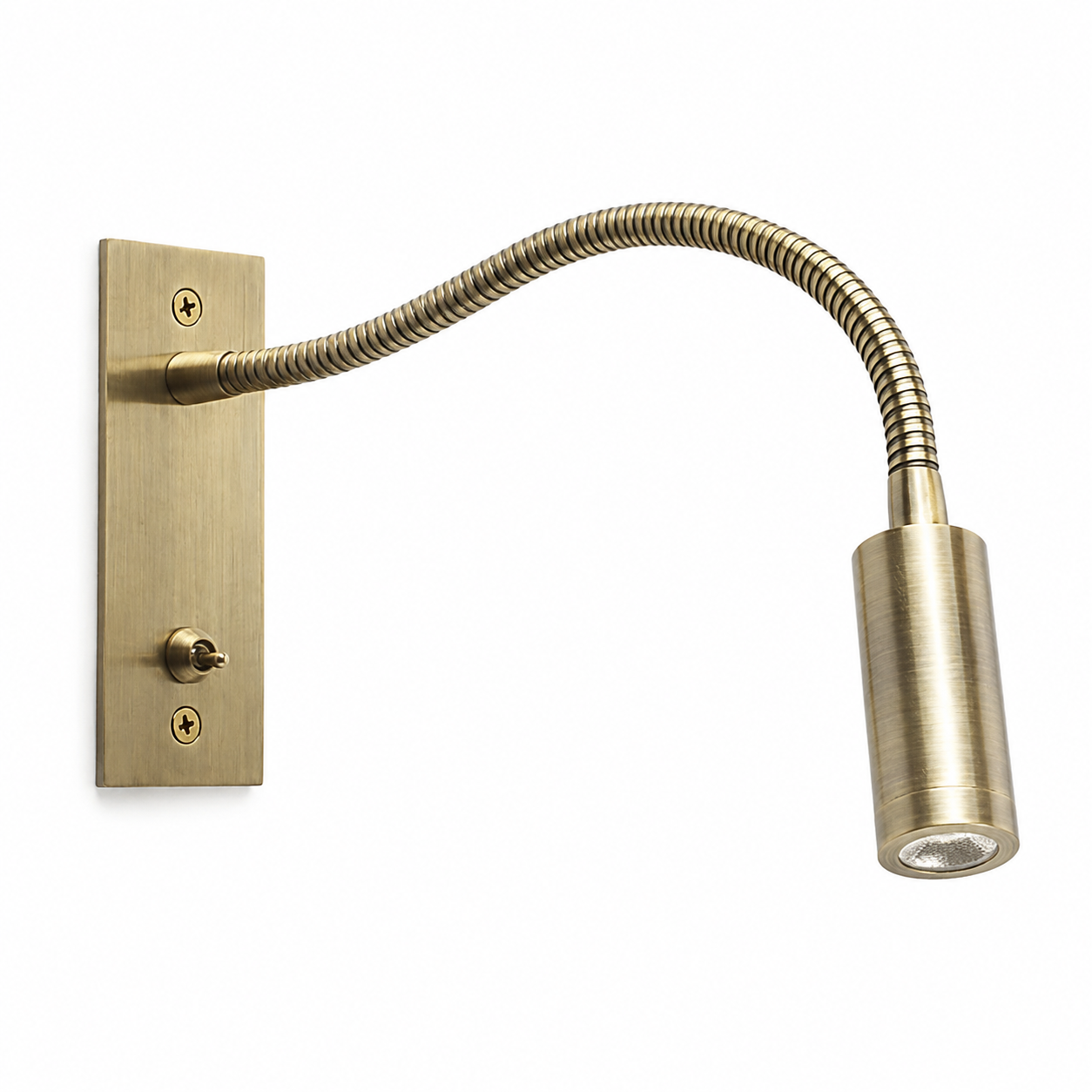
The MD-WL-Y135 product fact pack lists 2700K, 3000K and 4000K as order options for its recessed reading head. That makes it a useful physical comparison candidate; it does not prove a performance difference between batches or a universal hotel standard. Request the current sample, photometric data and colour specification for the chosen configuration. If another model is proposed, verify its options separately instead of transferring this fact.
The US Department of Energy's high-performance lighting guide explains the colour-temperature scale, but its recommendations are context-specific. Treat published colour examples as a starting point for evaluation, not a replacement for a room mock-up. For a focused reading-task decision, see the bedside colour-temperature guide.
Check dimming and replacement consistency
If the room has dimming, inspect the selected driver and source at the low setting guests will actually use. Some systems change apparent colour as they dim and some do not; confirm the exact behaviour rather than assuming an incandescent-like shift. Test a replacement sample beside the accepted reference as well. If the project has repeat orders, specify the acceptable colour range and keep the approved sample or measurement record.
Use consistent nomenclature in the luminaire schedule: source, nominal CCT, colour-quality criterion, driver/control pairing and approved sample ID. Photographing two samples with an automatic phone camera is weak evidence because camera white balance can change. In-person comparison and measured data serve different purposes and are strongest together.
Approval questions
- Which layers are expected to operate together in each guest scene?
- How do 2700K and 3000K affect the approved material palette?
- Does the exact luminaire configuration offer both options?
- Does its dimmed appearance remain acceptable at the low setting?
- How will later replacement units be compared with the signed sample?
Choose one documented room scheme, not a Kelvin number in isolation. If the finish palette or other luminaires change, review the colour decision again.