
Quick answer
Confirm the shade material and maker’s care instructions, remove dust gently and keep moisture away from the electrical fitting.
How to clean fabric shade hotel wall lights depends on the shade material, coating, construction and manufacturer's care instructions. A method safe for one textile can stain, shrink or deform another, and moisture near an electrical fitting adds risk. Hotel housekeeping should identify the exact approved shade and use a tested, documented routine rather than a universal solvent or steam treatment. Switch the fitting off and follow the site's safe-access procedure before cleaning. This guide is a care-planning checklist, not permission to disassemble a luminaire or use liquid around live components.
Identify the shade before choosing a method
Record the model, shade fabric, lining, diffuser, finish and whether the shade is removable. Ask the supplier for the current cleaning instructions and any prohibited chemicals. A decorative textile may have a stain-resistant treatment, but that must be verified for the ordered version. A white shade can show water marks; a dark shade can reveal dust or abrasion. Examine a retained sample under room lighting before approving a whole-property routine.
If the product's care information is missing, pause wet cleaning and ask the supplier. Do not infer safety from another hotel's procedure. The broader hotel lighting maintenance-cost guide explains why easy cleaning should be evaluated during specification.
Control dust without damaging form
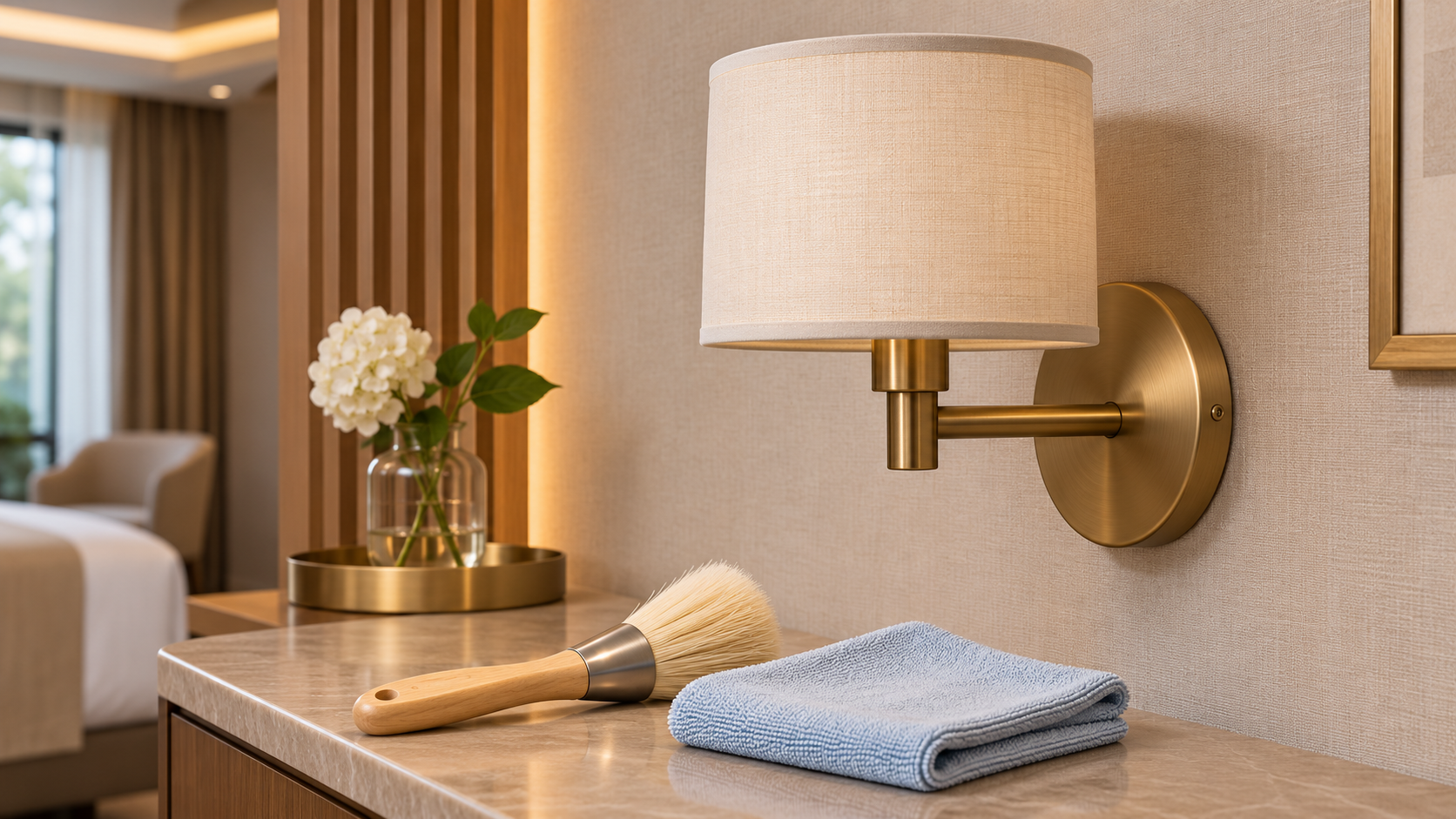
For routine care, use only the dry method approved for the particular fabric and fitting. Housekeeping may be able to remove loose dust with a soft tool, but pressure can crease the shade or disturb a joint. Keep the tool away from fragile trim, switchgear and the light source. Inspect for snagged threads, discoloration and loose supports while the room is being serviced. Record a recurring mark instead of rubbing harder; the cause may be a guest product, water leak or contact with the bed.
Establish where staff can safely reach the shade. A high wall light or a fixture behind a wide headboard may require a controlled access method. Moving furniture against a light can damage both. A cleaning routine that depends on awkward access is a design issue to raise before the next renovation.
Handle stains as a controlled exception
Do not apply a spot remover, detergent, bleach or steam unless the manufacturer approves that product and method for the exact textile. Test any proposed method on an inconspicuous sample, not on an occupied room's only shade. Some stains can spread or leave a tide mark. An electrical component, diffuser or backing material may be damaged even if the fabric surface appears unaffected. Ask whether the shade can be replaced as a part and whether a spare will match the original colour.
If a stain cannot be treated within the approved care method, replace the shade or escalate to the supplier rather than improvising. Keep a reference sample so a new piece can be compared under the room's actual warm lighting. A slightly different fabric tone may be conspicuous beside a matching second bedside lamp.
Document a workable housekeeping standard
Give staff a one-page instruction with model photo, safe access, approved tools, cleaning frequency based on observed dust, prohibited methods and a defect-reporting path. Note when a shade must be removed from service because of exposed wiring, loose mounting or heat damage. A qualified technician, not housekeeping, should assess electrical concerns.
Review the instruction after operating experience. If the finish soils quickly or cannot be cleaned without damage, feed that evidence back into future fixture selection. The spare-parts guide helps plan matching shades for later replacement.
The aim is a consistent, manufacturer-supported care method that protects appearance and guest safety, not a promise that every fabric shade is washable.