
Quick answer
Identify the exact coating and approved care method before wiping, polishing or applying any chemical to a visible finish.
How to maintain metal finishes on hotel wall lights begins with knowing what the visible surface actually is. Brushed brass, plated steel, painted aluminium and powder-coated metal can look similar in a photograph yet require different care. Obtain the exact finish code, substrate and manufacturer cleaning instructions for the ordered fitting. Test the approved method on a sample, then train housekeeping to avoid abrasive tools and unapproved chemicals. This is a maintenance decision about an installed finish; it does not claim a particular MYDE coating or corrosion performance without evidence.
Separate appearance from material
An apparent brass tone may be solid metal, plating, a lacquered surface or paint. Each can respond differently to moisture, fingerprints and cleaning agents. Ask the supplier what is exposed at the surface and whether the finish has a protective layer. Note where guests touch the fitting and where water or cosmetics may reach it. A bathroom-adjacent wall light may face conditions unlike a dry bedroom sconce, even when both share a catalogue colour name.
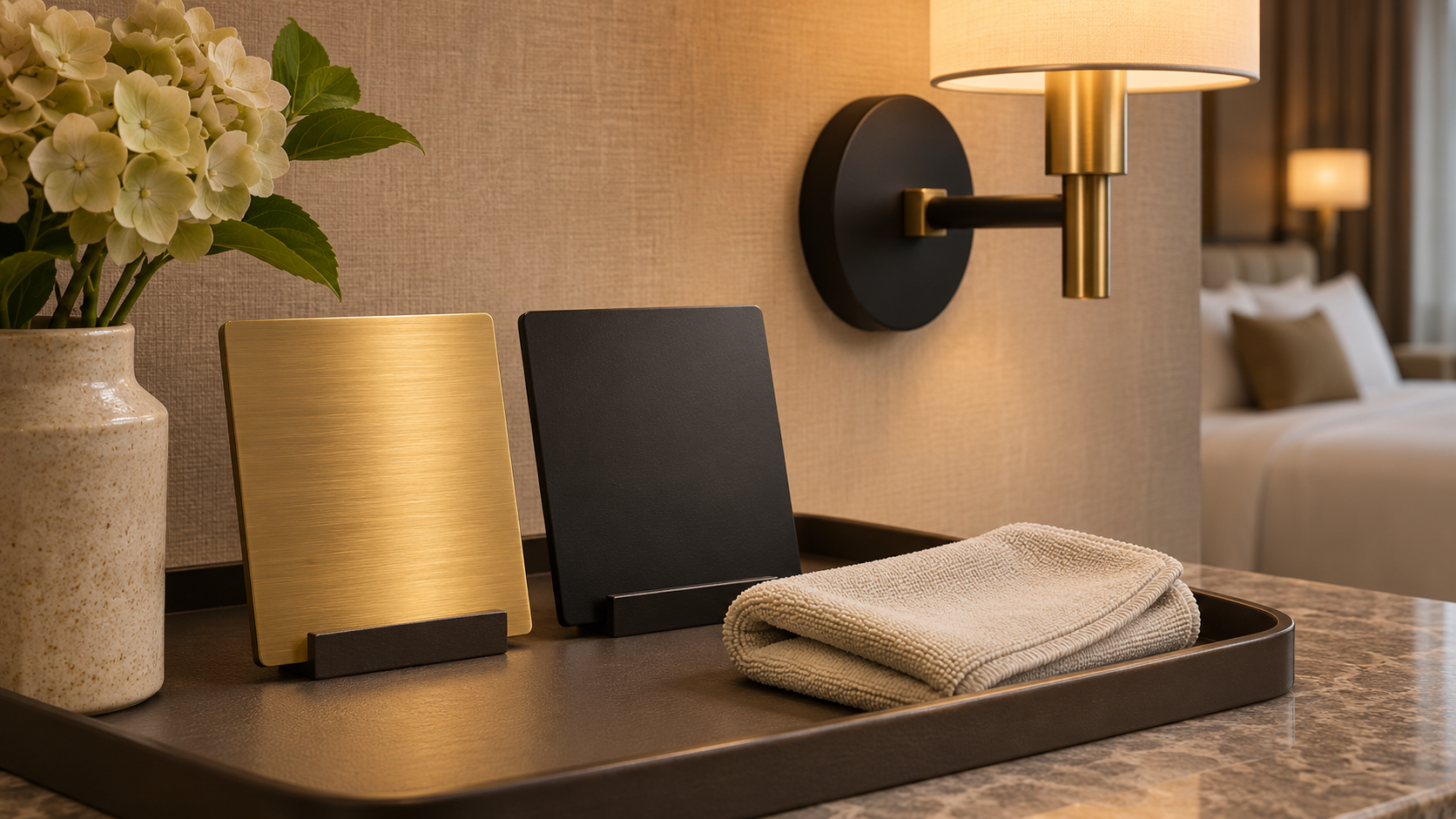
Keep a signed physical reference under controlled storage. Compare it with an installed sample in the actual room lighting. The finish-consistency guide covers production approval; maintenance uses that reference to recognize damage or an unmatched replacement.
Set a conservative routine
Follow the product-specific method and cloth type. Avoid assuming that a general metal polish is safe: it can remove coating, change sheen or leave residue in joints. Never spray liquid into a switch, diffuser or electrical opening. Isolate and refer electrical damage to qualified staff. Housekeeping should know which marks are normal fingerprints, which require supplier advice and which indicate a failing finish or water ingress.
Try the routine on a sample subjected to the hotel's actual approved cleaning programme. Inspect after repeated cycles under the room's normal light. A method that looks harmless once may gradually change texture. Record the tested product and concentration if the supplier permits it; do not replace the written method with an informal instruction to 'wipe clean.'
Protect high-contact details
Switch plates, adjustable arms and backplates see different handling. A reading head may be touched daily, while a decorative sconce is mostly dusted. Check whether the finish wears at moving joints or catches fabric at an edge. If a joint becomes loose or damaged, do not hide the problem with polish. Ask maintenance to inspect the mechanical and electrical assembly using the approved service method.
During renovation, protect fittings from plaster dust, paint and adhesive. A finished light should not be used as a handhold or tool rest. If damage occurs, ask whether the supplier allows on-site repair and how a repair will look beside the original finish. A replacement part may be more reliable than an unverified touch-up.
Plan for matching replacements
Record the visible finish name, code, supplier, production revision and room location. Retain a few approved samples or spare parts where the operator needs continuity. If a later batch differs, compare a physical sample in the room before mixing old and new lights in one visible pair. The warranty checklist helps clarify whether cosmetic changes are covered and what documentation a claim requires.
Use maintenance observations to inform future specifications. Recurrent abrasion at guest touchpoints may call for a different detail, finish or operating instruction. A coherent appearance over time comes from verified care and controlled replacements, not a generic 'durable finish' claim.