Quick answer
Place the port within natural reach from the finished bed and verify output, switching behavior and electrical details for the exact module.
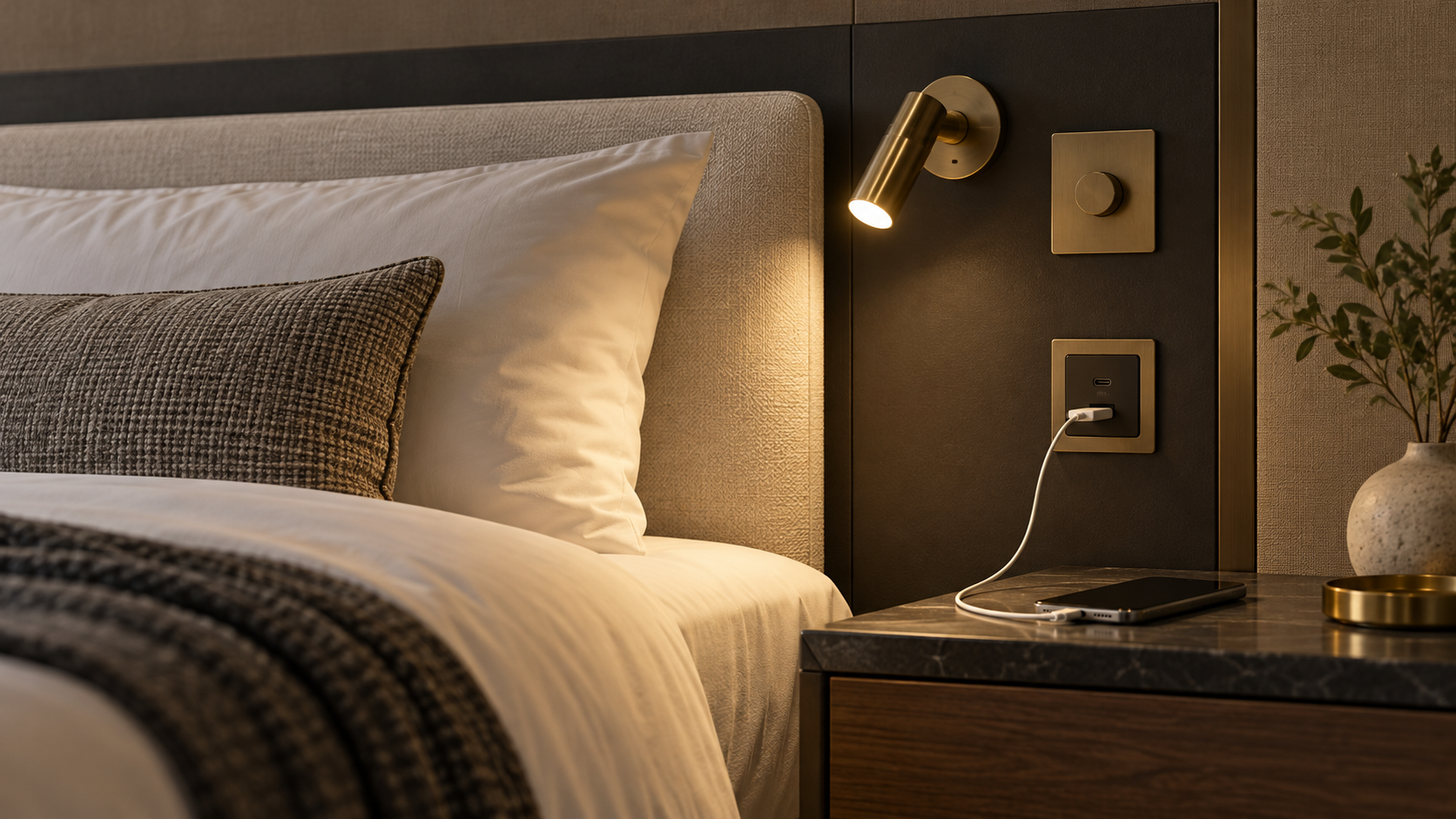
USB outlet placement at a hotel bedside should be decided from the guest's reach, furniture and charging task. Put the port where a person can find and plug in a cable without moving the bed, reaching behind a headboard or leaving a device on the floor. Test from the finished mattress with the actual side table and common cable lengths. Then verify the connector, output, power behavior and electrical compliance for the exact ordered assembly. A visible port in a rendering is not enough to specify its position or capability.
Decide what guests will charge
List the intended devices in the room brief. A phone charging point and a laptop-capable station may need different outputs and connectors. USB-C describes a connector, not a guaranteed Power Delivery capability. Do not promise a wattage or fast charge without the exact module documentation and applicable cable test. The USB-C decision guide covers the broader port-selection question.
If the hotel provides a mains receptacle as well, distinguish its purpose from the USB outlet. Local socket type and electrical protection depend on the destination market and qualified design. Do not use an unverified universal outlet as a substitute for local review.
Mock up the reach zone
Set the final bed height, mattress, pillow and bedside furniture. From a normal resting position, ask a tester to find the outlet and connect a cable with one hand. Check whether the side table blocks the port, whether the device has a safe resting place, and whether the cable crosses a circulation route. A dimension from the floor is less useful than this completed-room test.
Observe both sides of a double bed. A symmetrical faceplate drawing can still leave one port harder to reach because a wall, chair or drawer obstructs it. In a twin room, check each bed independently.
Separate charging and lighting controls
Record whether the outlet remains powered when the reading light is off and when the room master is used. The guest should not have to keep a bright light on just to charge a phone. Test the actual control sequence, including after power restoration. If an energy-management system disconnects unused circuits, confirm its charging policy with the hotel operator.
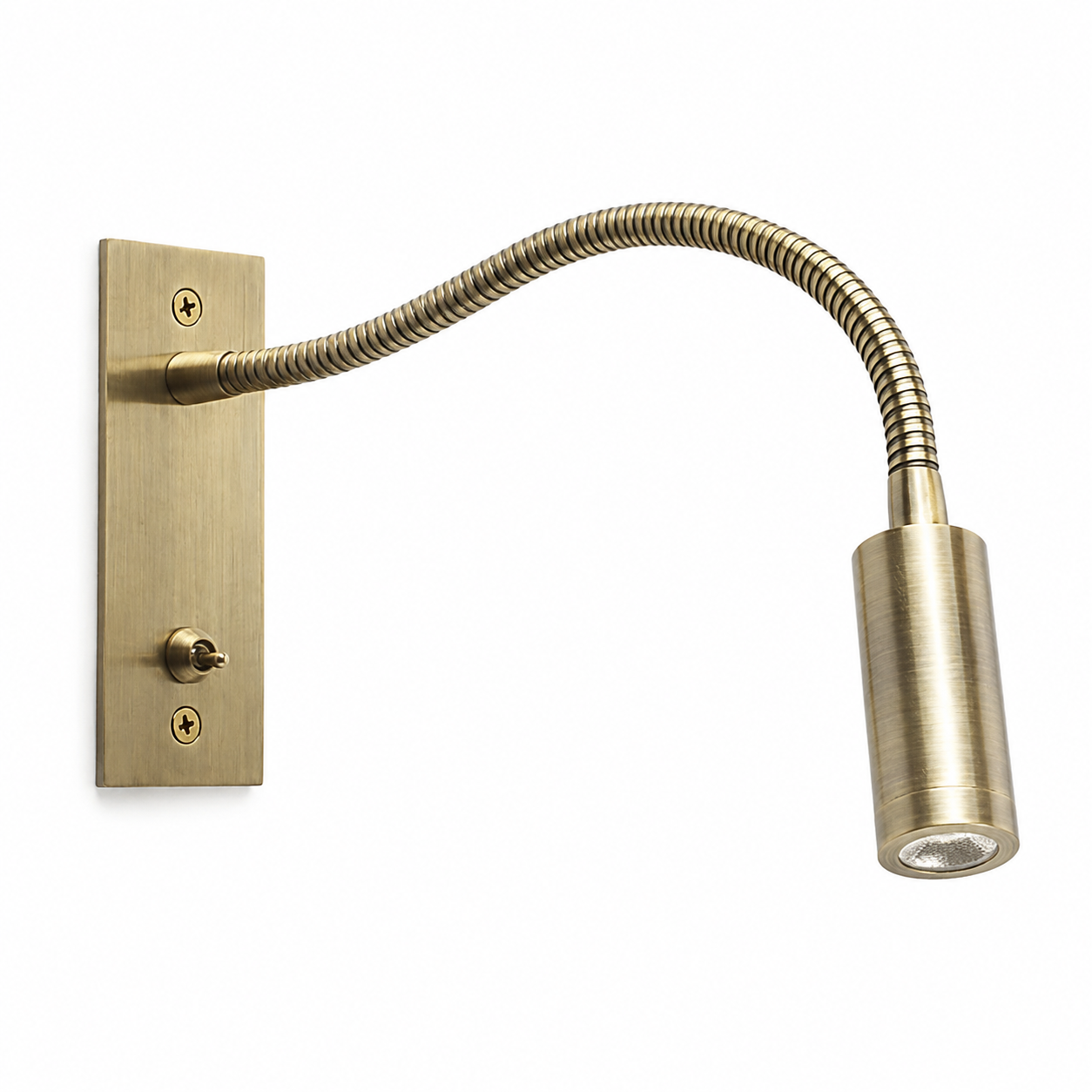
The documented MD-WL-Y003 has one USB-A port rated 5 V/2 A beside a surface-mounted 3 W reading head and physical toggle. Those facts do not make it a USB-C or laptop charging solution. Its exact project wiring and siting still require an approved drawing and sample.
Specify and inspect the final position
Put connector type, verified output, physical mounting coordinate, power policy and service access on the schedule. Include cable entry and a maintenance route for replacing the module. Ask the electrical designer to confirm destination-market safety requirements. Sign off one furnished room with the final port and furniture before repeating the layout. Later substitutions should be checked again for fit, output and guest reach.
Do a cleaning and maintenance walk-through as well. A port beside a spill-prone surface or behind a movable table can become difficult to inspect. Ask the operations team how dust and damaged connectors will be identified, and keep the replacement part number with the room record.