Quick answer
An integrated bedside assembly can combine task light and charging, but each function needs its own specification. Verify the exact port, rated output, supply behaviour, guest reach and replacement path before treating a combined fixture as the room's charging solution.
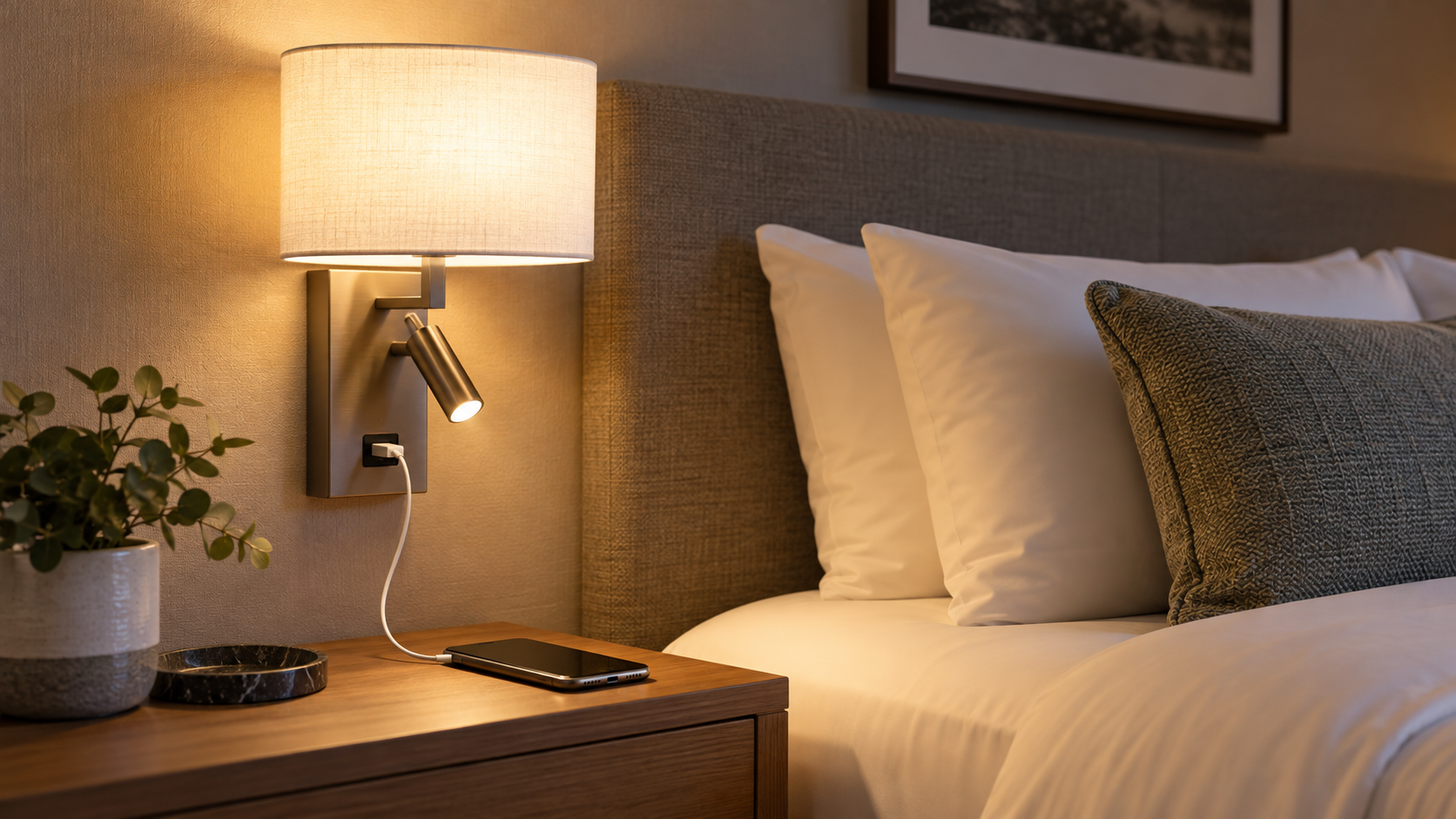
Hotel bedside lighting with integrated charging can clear the nightstand and put two guest functions within reach. It also joins a reading light and an electronic charger in one assembly. Specify those functions separately: the light needs appropriate aim and switching, while the charger needs a verified connector, output, supply behaviour and service route. Test the complete unit at the real bedside position.
Write two requirements, not one product label
The reading requirement should state where the guest reads, how the head moves, what the control does and whether dimming is needed. The charging requirement should state connector type, rated output, where a phone can rest, and whether the port is expected to work while the light or room master switch is off.
Do not infer modern fast charging from the appearance of a USB socket. USB-A, USB-C and USB Power Delivery are different terms. A guest can use an adapter cable, but the port's actual rated output still governs the available power. Ask the supplier to identify the exact configuration and supporting documentation.
Test the combined layout
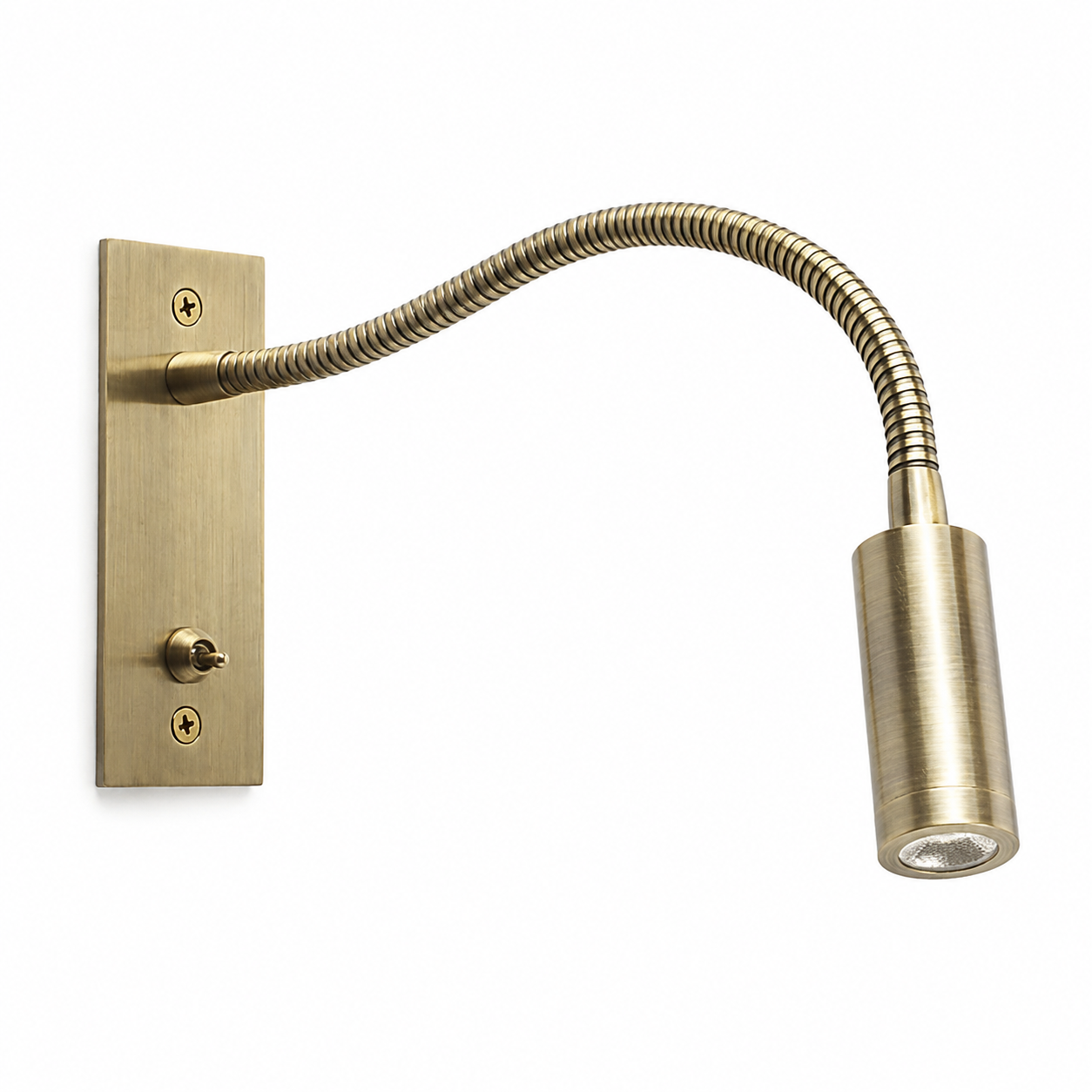
The MD-WL-Y003 surface-mounted reading light has a documented 3 W reading head, physical toggle and one USB-A port rated 5 V/2 A. Its product information states that the reading head is non-dimmable. These are model-specific facts; they do not describe every MYDE wall light or prove compatibility with a particular hotel control system.
Place a sample at the proposed headboard position. Can a guest adjust the light while a device is connected? Does the cable lie across the book, pillow or walking route? Is there a stable place for the device? Can housekeeping reach the faceplate without snagging the cable? These details are easy to miss in a flat elevation.
Define power and safety evidence
The electrical designer should decide whether charging stays live when the guest turns off the light, when the room enters an energy-saving state, and after power returns. Document the agreed sequence. A supplier photograph or an unqualified “always on” label is not enough.
Ask for the applicable electrical safety documentation for the complete ordered assembly in the destination market, plus installation instructions for the actual supply and mounting method. A USB connector standard or logo is not a substitute for whole-product electrical evidence. If a proposed product has no verified document, hold the compliance claim and seek the correct configuration or alternative.
Plan for replacement
Charging connectors are repeatedly handled and can become a maintenance issue independent of the LED. Ask whether the charger and light can be serviced separately, what access is needed and how an exact replacement will be identified later. Do not promise field replacement until the manufacturer provides instructions.
Record the port type, output, wiring, fitting finish, control behaviour and approved sample in the room schedule. The USB-A versus USB-C guide covers connector selection; the room team must still verify the chosen integrated assembly.
Where multiple room types use different bedside assemblies, identify each charging provision separately in the guest information and maintenance record. A label or instruction should reflect the port actually installed, not a future option shown in a brochure. Retest the guest experience after changing the nightstand or headboard because a small furniture change can make a previously reachable port awkward.