
Quick answer
There is no reliable universal mounting height. Draw the finished mattress, seated eye line and reading plane, then test the exact light from both pillows. Dimension its source, backplate and wiring point from stated datums.
Hotel bedside reading light mounting height has no single reliable number for every room. Set it from the finished mattress, pillow, sitting eye line, and expected book position, then test the exact fitting in a mock-up. Measure from a stated datum, such as finished floor level, and record the height of the light source and backplate separately. This avoids a common error: copying a height measured from a bedside table or an uncompressed mattress in a different room. The approved position should illuminate the page while keeping the source out of both guests' direct view.
Establish a measurement datum
Start with the room elevation. Mark finished floor, top of the installed mattress, typical pillow stack, headboard edges, and the actual mounting substrate. Put a seated reader in the bed and locate the eye line and likely page plane. Guests vary in height and posture, so check an upright and reclined position rather than designing for one photograph.
Record exactly what a dimension refers to: center of the light head, center of the backplate, top of a shade, or wiring outlet. A single number labelled “bedside light height” can be interpreted four ways on site. Add horizontal offsets from the bed or headboard joint as well as the vertical dimension.
Some online guides give a broad height range. Those ranges can help form an initial mock-up, but they are not installation instructions for a particular luminaire. The Covetstar bedside specification guide also starts with the bed, headboard, reach, and viewing position. The final dimension belongs to the project's own bed and fixture combination.
Use the page and both eye lines as the test
With the candidate installed temporarily, put a book or tablet where the guest will actually hold it. Aim the light. Check whether the page is evenly usable and whether the reader's hand or pillow casts a persistent shadow. Repeat from the other side of the bed: one guest's reading light should not shine into the neighboring face.
Look toward the fixture from both pillows with the ambient light on and off. If the source is exposed, a change in mounting height may help, but so may a different aiming angle, optic, or shielding. Do not lower a fitting so far that it clashes with the pillow or raises a head-contact risk. Do not raise it so high that the guest loses reach or the beam misses the page.
Check switch operation in a reclined posture. A correctly lit page is not enough if the guest must sit up or reach behind an arm to turn the light off.
Compare mounting formats before freezing a height
A recessed head may sit within the headboard and need verified cavity depth, cut-out, cable route, and access. A surface-mounted plate can need a different centerline and fixing position. A flexible arm can change its reach and parked position, so the installed height should be checked across its useful movement.
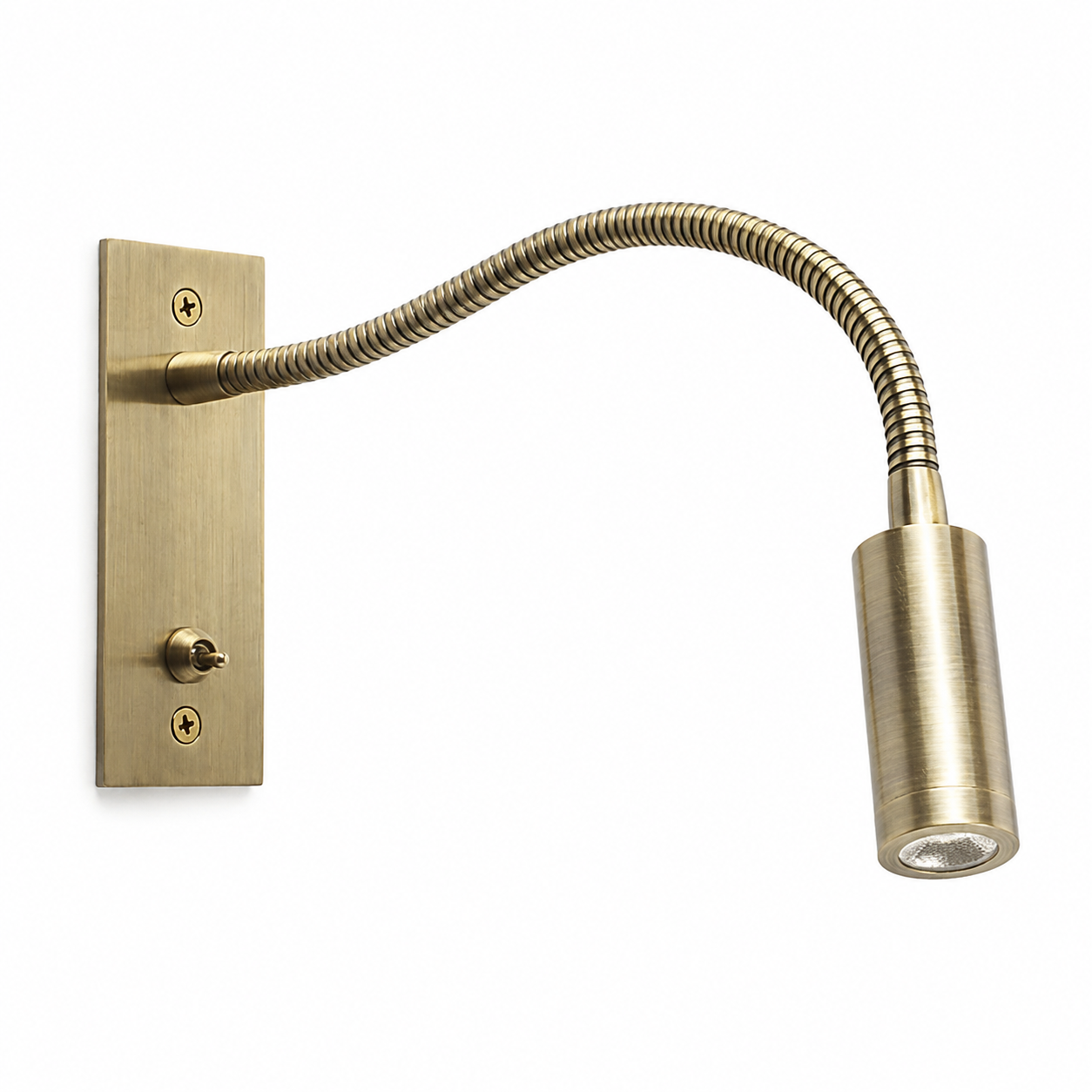
MYDE MD-WL-Y135 is a recessed 3 W adjustable reading light. Its documented overall size is 168 × 68 × 52 mm, but the cut-out and the axes of those dimensions remain unconfirmed. Do not derive a mounting opening from them. MD-WL-Y003 is a surface-mounted 3 W adjustable reading light with a physical toggle. Its backplate and cable-entry details still require the project installation drawing. MD-WL-Y092 uses a flexible gooseneck; test that arm fully extended and parked before setting a backplate centerline.
These examples have different physical interfaces. A height approved for one should not be copied to another merely because both are called reading lights.
Issue an installable drawing
The final elevation should name the room type, bed size, mattress and headboard revisions, mounting datum, horizontal offset, fixture model, exact configuration, and drawing revision. Pair it with a section showing the recess or backplate, fixings, wiring, and driver access. Ask the electrical designer or qualified installer to verify local requirements for the destination market.
In a renovation, measure a representative existing room before ordering. Differences in upholstery, wall cavities, and previous wiring can change the available location. Photograph hidden conditions and identify rooms that need a variant detail.
Sign off a repeatable mock-up
Ask a reader to sit upright and reclined at both sides. Test page visibility, source glare, switch reach, pillow clearance, and night-time use. Record the accepted aiming and parked positions with photos. If the mattress, headboard, luminaire, or control changes, repeat the affected checks. The mounting height is complete only when the drawing and the actual room test agree.