Quick answer
Place each control where its guest can find and use it from bed. Test with the finished mattress and pillows, then verify independent, master and charging behaviour together.
Hotel bedside light switch placement should let each guest find and operate their own light from a normal resting position. Fix the position with the bed, mattress, pillows and headboard in place, then test it with someone who has not seen the drawings. The control also needs a clear relationship to the room master switch, charging supply and any night route. An elegant switch hidden behind a pillow is a design failure even if the circuit works.
Draw reach before drawing the plate
Mark the occupied pillow positions on the elevation and ask where a hand naturally reaches while sitting and lying down. Check the position with different users in a full-size mock-up rather than applying one assumed reach dimension. If the project has accessible rooms, confirm the applicable local reach and operability requirements separately; a typical-room sample cannot prove accessible-room compliance.
Give each bed side an understandable independent action. A switch on a shared centre panel may be visually balanced but confusing in the dark. The independent switching guide explains how to write the left/right operation sequence. Labels or symbols should correspond to the fitting actually controlled, especially when decorative and reading layers sit together.
Decide whether the control belongs on the light
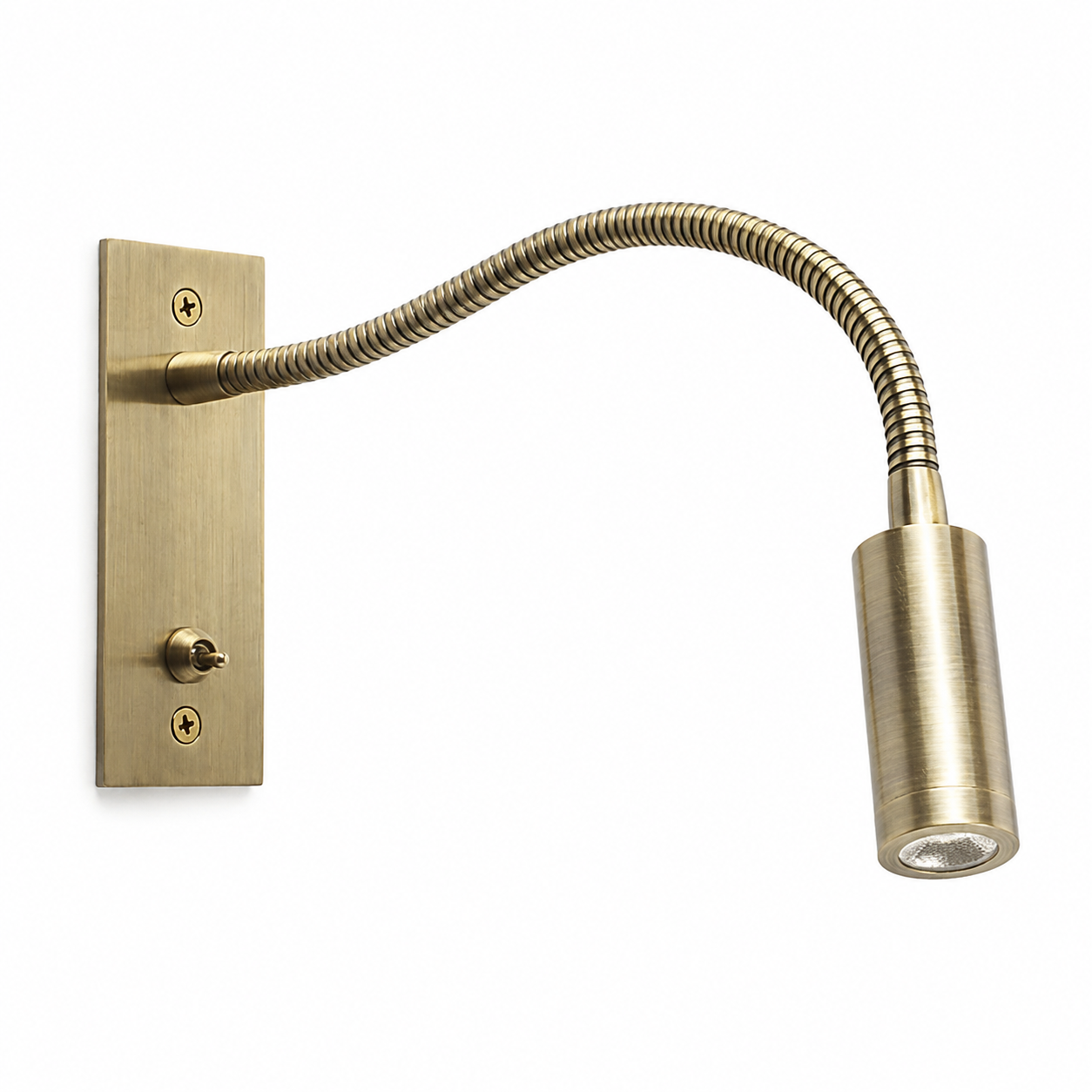
An integral switch can reduce separate wall hardware, but its location moves with the fitting. Check whether a guest can reach it when the head is parked or aimed. The MD-WL-Y003 surface-mounted light has a confirmed physical toggle. This is a real feature, but the mounting location still determines whether it is easy to use. The selected product's electrical instructions must also confirm how it interfaces with the room circuit.
A separate switch can be positioned for reach independently of the luminaire, but it adds a plate and wiring coordination. For touch control, test response with a guest who does not know where the sensing area is. For a docking or automatic switch, test the exact on/off sequence and how it behaves after a power interruption. Avoid promising behaviour that is only shown in a concept sketch.
Test the complete room sequence
Walk into the dark room and try the entrance control. Sit at both pillows and turn on only one reading light. Turn it off, operate the room master, then repeat after power is restored. If a USB port or outlet is near the light, verify whether charging remains powered in each mode. Record this as a project-specific requirement, not an assumed property of the fitting.
Check that a person moving toward the bathroom can find a suitable light without turning on both reading heads. Consider cleaning and bed-making: the switch should not be regularly struck by bedding or hidden by furniture. Photograph the approved reach test and record the final switch centreline on the coordinated joinery and electrical drawings.
Release checklist
- Test reach from both normal rest positions and each room type.
- Name every controlled circuit in the room schedule.
- Verify master, bedside and charging behaviour together.
- Confirm local accessibility requirements for designated rooms.
- Freeze the accepted position only after a full-size sample test.