Quick answer
Independent bedside switching means each guest can operate their own reading light without changing the other side. Define the desired behaviour in the room controls schedule, then test the actual fittings, wiring and master switch together.
Independent switching for dual bedside wall lights means each guest can control their own reading light without changing the other side. It sounds simple, but the final behaviour depends on the chosen luminaires, local switches, room master control and wiring. Define the sequence in the room-control schedule and test it with both guests in a mock-up before repeating the installation.
Write the operation sequence
Describe what happens when the left guest turns on, dims or switches off the left light, and repeat for the right side. State what the entry switch, master-off control and any occupancy or energy-saving system do to both. Include restoration after a power interruption. These statements let the electrical designer and supplier check a real arrangement rather than interpret “independent” differently.
In a twin room, the bed positions may change. Confirm that each switch remains on the expected side after an approved layout change. A control located at a shared nightstand can be ambiguous if two identical buttons sit together without clear association.
Choose fittings with verified controls
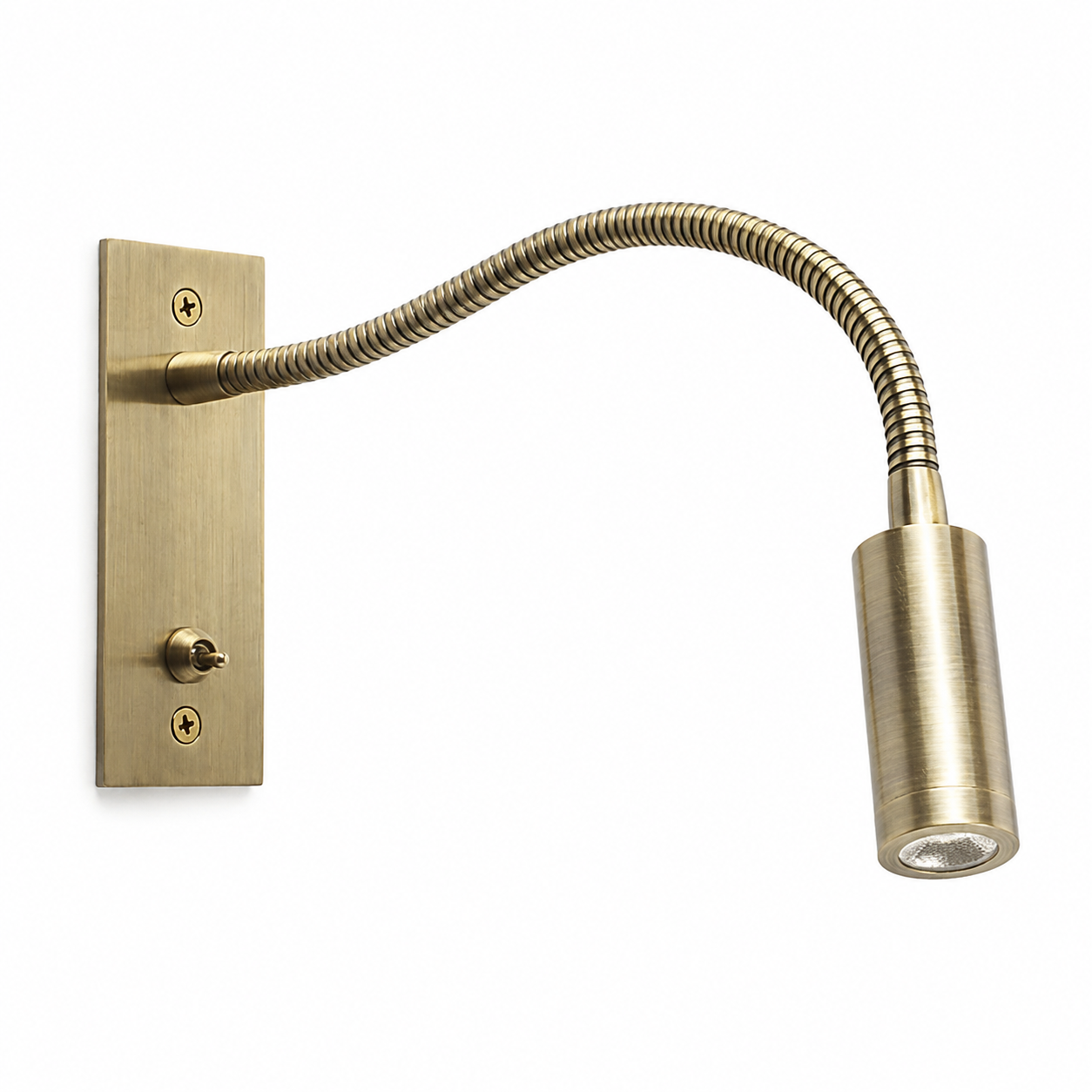
The MD-WL-Y003 surface-mounted reading light has a documented physical toggle and non-dimmable head. The MD-WL-Y092 flexible reading light has documented touch dimming and a toggle, but the precise relationship of those controls needs sample verification. Neither model's local switch alone proves how it will interact with a hotel-wide master circuit.
If the room brief calls for remote scenes or central dimming, ask for a system diagram tied to the exact fitting and driver. Do not promise a control protocol from the appearance of a switch. The electrical design must show which circuits remain separately controlled and how the guest can still operate the light from bed.
Test from occupied positions
Put two people in the sample room. Have each find and use their light without instruction, then ask one person to read while the other rests. Check light spill as well as switch independence. Test with pillows in ordinary positions and charging cables connected where provided. A technically independent circuit can still be poor guest design if the switch is hidden or the beam crosses the other bed.
Try the master-off and power-return sequence. Record unexpected behaviour and have the electrical designer resolve it before approving the repeated room package. If a fixture or controller is substituted later, repeat the control test.
Record the room schedule
Identify left and right fitting models, switch locations, circuits, driver or controller references and the accepted operating sequence. Include a photograph of the mock-up and a simple user test record. The twin-bed lighting guide covers the bed geometry that makes this control plan useful.
Independent switching is successful only when a guest experiences independence. Review the electrical drawing, real controls and light distribution together, then keep the signed sample as the installation reference.
Make a short defect log during the sample test. If a switch controls the wrong side, a scene overrides a guest setting, or the control is hidden by bedding, record the responsible drawing or component and retest after correction. The final schedule should reflect the corrected system rather than the first proposed diagram.