Quick answer
Compare switch types by what an unfamiliar guest can find and operate from bed. Document the exact on/off sequence, room-master interaction and maintenance path for the chosen fitting.
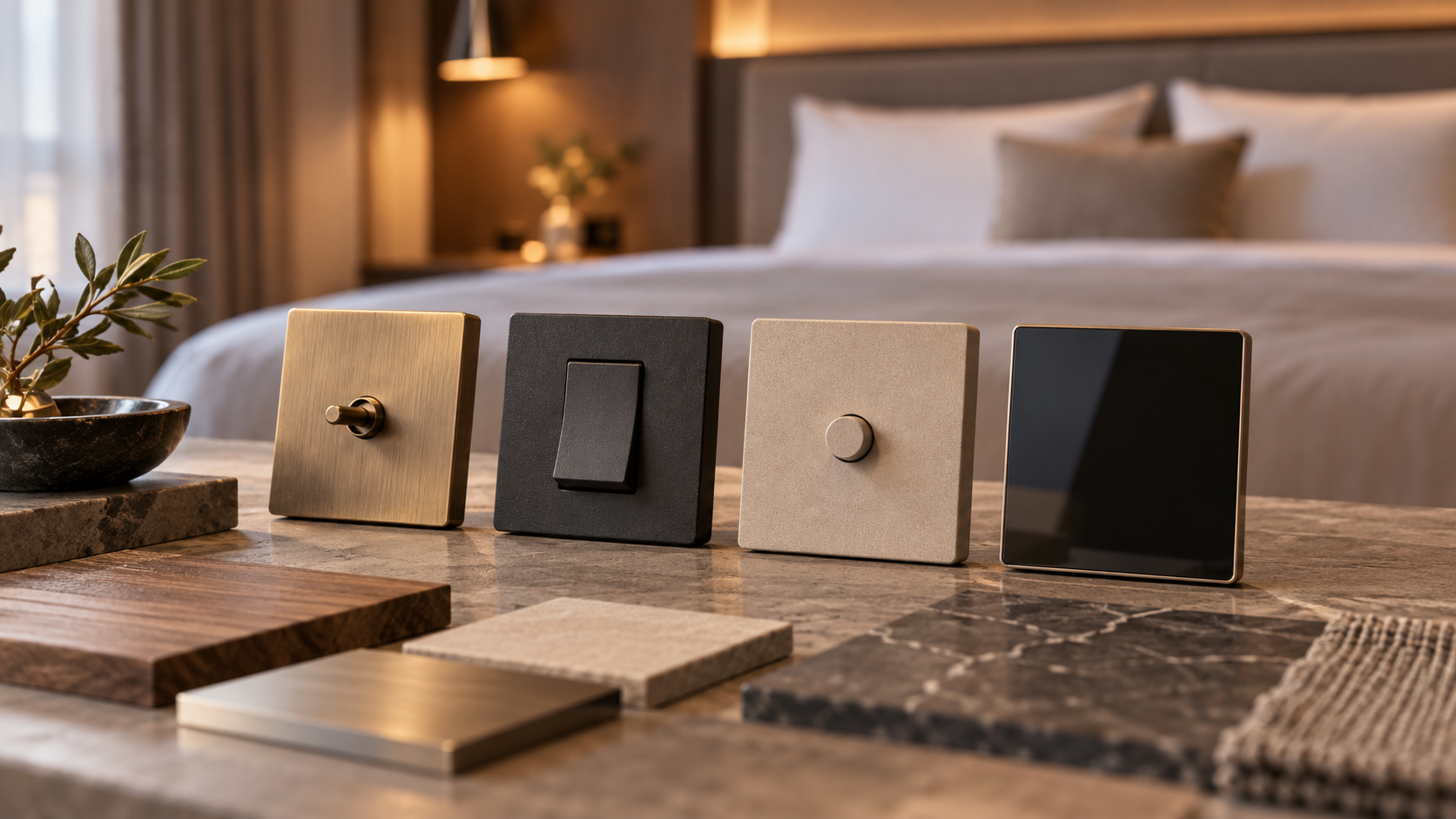
Hotel bedside switch types include mechanical toggles, rockers, push buttons, touch controls and integrated head-position or docking mechanisms. The best choice is the one guests can find and understand from bed, with the operation documented for the exact luminaire and room circuit. Appearance alone is a weak selector. A switch may feel good in a sample yet become awkward when the mattress, pillow and headboard are installed.
Compare the user action
A mechanical toggle or rocker gives a visible, tactile movement. A push button may use a momentary action, but its on/off or dimming sequence depends on the electronics behind it. A touch control can keep the surface quiet, yet guests need a clear cue for the sensing area and feedback after an action. A docking mechanism can switch when a reading head is moved, but the exact parked and power-restoration behaviour must be tested.
Do not assume all products within one switch category work identically. Ask for a simple operation sheet: first press or movement, repeated action, dimming sequence if any, memory after power loss and how the room master affects it. Test with someone who has not read that sheet. If a guest cannot discover a basic off action, the control needs revision even if its technical sequence is correct.
Match control to bed and electrical plan
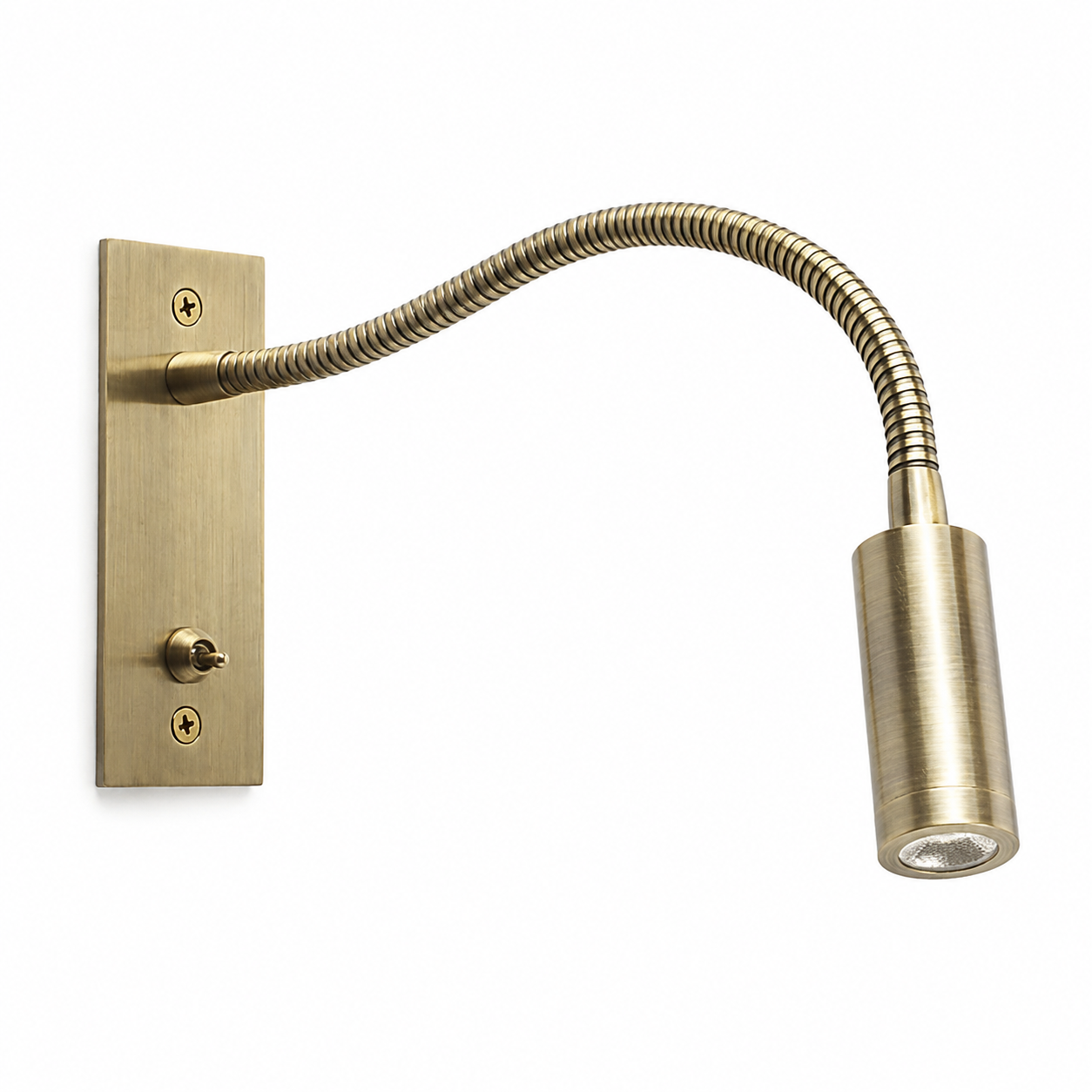
Locate the control within natural reach from both sitting and lying positions. Decide whether each bed side needs independent control and whether any decorative layer is switched separately. A fitting-mounted switch moves with the fitting, while a wall plate can be placed independently. Both need the joinery and electrician to agree on cable route, service access and circuit labelling. The switch-placement guide covers the room geometry in detail.
The MD-WL-Y003 pack confirms a physical BJB toggle and a non-dimmable 3 W light for that configuration. The MD-WL-Y092 pack describes touch dimming and a toggle, but the exact interaction sequence needs confirmation for the ordered variant. These are examples for a comparison brief, not interchangeable controls or proof of a shared wiring method.
Check accessibility and operations
For designated accessible rooms, consult the destination market's current requirements for reach, operating force and identification. A nominal switch type does not prove compliance. In any room, test in darkness with the selected finish: a low-contrast touch surface or hidden toggle may be difficult to locate. Ask housekeepers whether bedding or cleaning will operate the switch accidentally.
Facilities teams also need a clear fault route. A replacement luminaire or driver must reproduce the signed control sequence; changing to a new switch technology during maintenance can make rooms inconsistent. Record the chosen variant, circuit and behaviour in the room asset schedule.
Mock-up questions
- Can an unfamiliar guest find and turn off each reading light from bed?
- Is the control reachable with the head in its normal parked position?
- Does the action remain clear with the room dark and a partner asleep?
- What happens after the master switch or a power interruption?
- Can maintenance replace the control without changing guest behaviour?
Choose the switch from a tested interaction, then make its appearance and placement work with the room design.