Quick answer
Place a swing arm where its head reaches the page, the guest can control it and the parked arm clears the pillow and furniture.
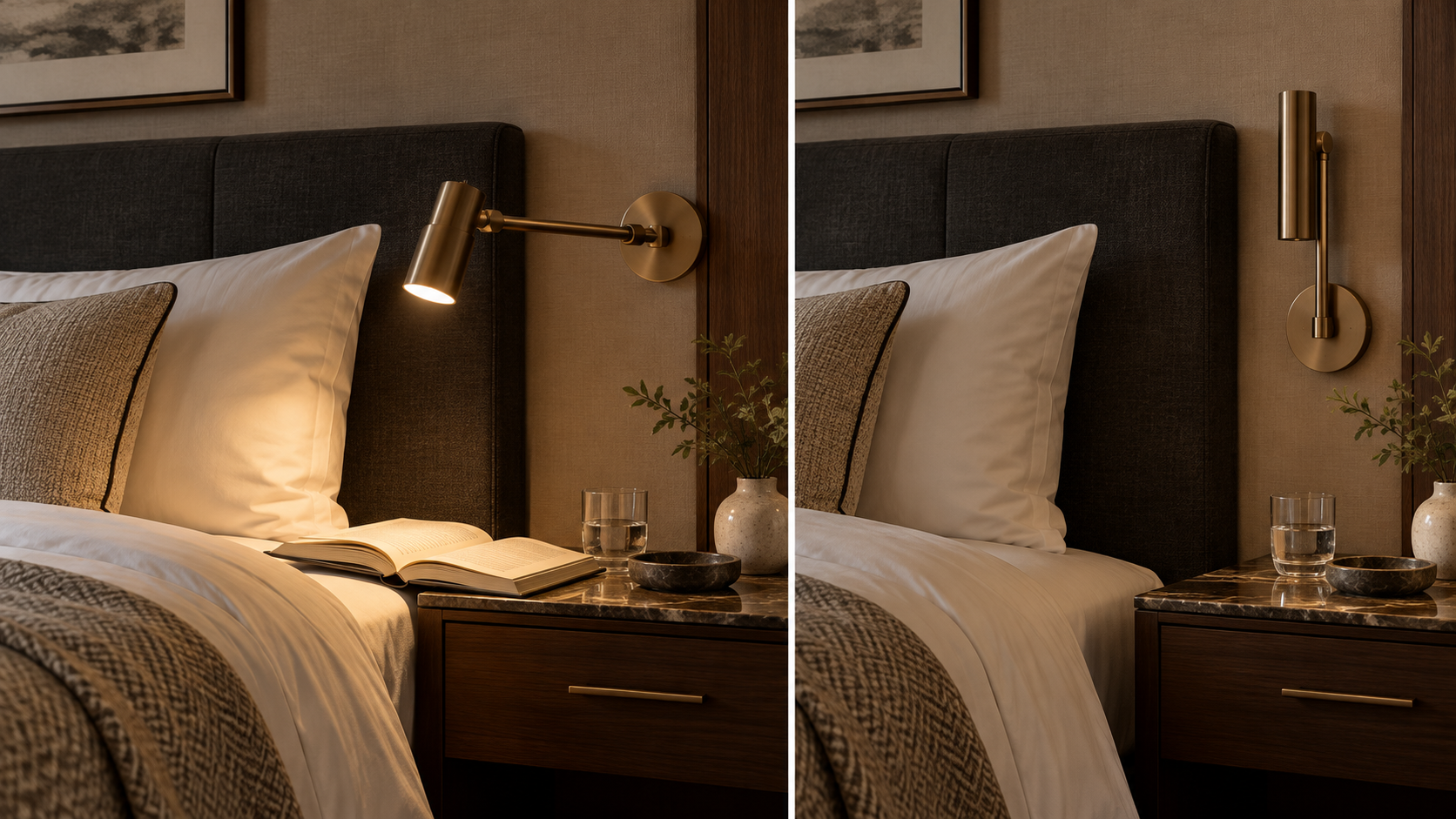
The best position for swing-arm reading lights is the point where the arm can bring a shielded beam onto the book, remain reachable from bed and park clear of the guest. Begin with a full-scale bed and headboard mock-up rather than a stock mounting dimension. Swing the selected sample through its complete travel, read upright and reclined, and look from the neighboring pillow. The preferred wall point depends on arm length, joint friction, bed width, side table and wall construction.
Start from the reading plane
Mark the likely book position on the plan and section. Hold the sample so its head can reach that plane without requiring the arm to run at its mechanical limit. Check whether the guest can adjust it from a natural posture. A reach that works only with an empty pillow arrangement is not a useful room setting.
Aim the light at the page and inspect the source from the reader's eye line. Then inspect it from the other side of the bed. If the head exposes the LED or throws light onto the second pillow, test a different wall point or shielding. The bedside reading-light angle guide discusses aiming after the mounting point is chosen.
Make room for the parked arm
Move the arm to the position in which housekeeping and guests will leave it. Does it hit the headboard trim, curtains, bedside shelf or wall art? Does it protrude into the pillow space or toward the guest's face? Check a seated guest getting out of bed. A comfortable working reach can still be a poor choice if the lamp is awkward when stowed.
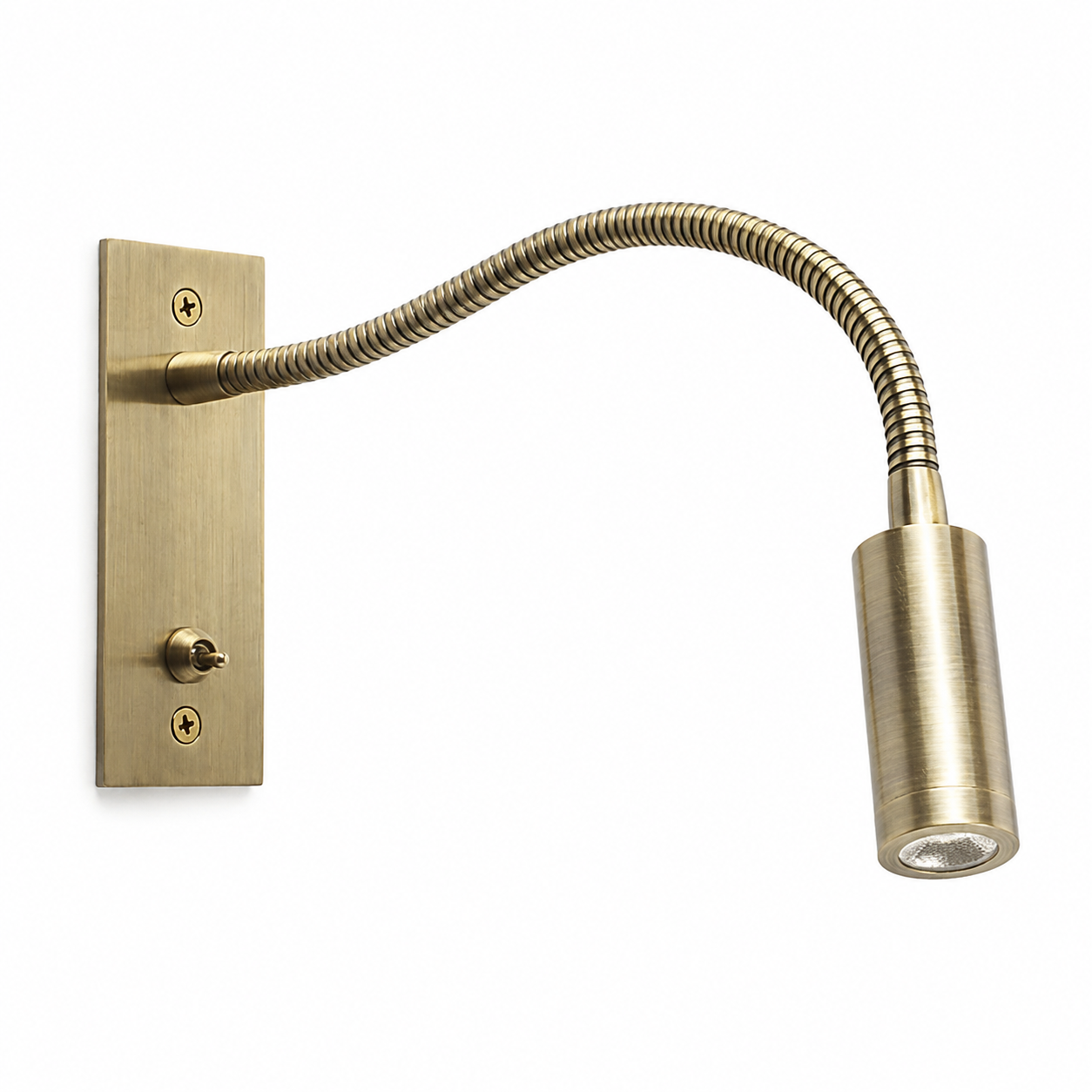
For a flexible-head example, the documented MD-WL-Y092 has a 3 W reading light, metal gooseneck, touch dimming and toggle switch. Its product information does not establish a universal arm travel envelope or precise control sequence. Use the actual sample to determine reach, parked shape and controls. Do not infer those details from a lifestyle photograph.
Coordinate fixing and power
An articulated lamp may put changing loads on its mounting point as the guest moves the arm. Confirm the wall or headboard substrate, fixings, wiring route and accessible junction with the product's installation instructions and the qualified installer. Upholstery or a thin panel alone may not provide a suitable fixing. Do not set an electrical detail from a generic article.
Mark the switch position relative to the pillow. If the head itself has touch control, test whether the guest can find the correct contact point in a dark room. Check that the master room switch and local light behave as intended after power is restored.
Sign off the installed room
Record the accepted base location, arm reach, head aim and parked position with photographs and fixed dimensions. Test the first installed room with the final mattress and side furniture. If a later room has a different headboard thickness or bed size, verify it separately before copying the mounting coordinate. The final criterion is usable reading with comfortable eye lines and practical service access, not visual symmetry alone.