
Quick answer
Give each twin-bed guest a reachable light and an independently understandable switch. Place and aim both fittings against the actual bed spacing, then test whether a room with movable beds still works in each approved arrangement.
To design lighting for twin hotel beds, start with two independent guests. Each person should be able to find, aim and switch off a reading light without disturbing the other. Draw both beds, pillows and any shared nightstand at their real spacing. If the beds can be moved together, test both approved layouts before fixing light centres in the wall or headboard.
Define the room configurations
Some twin rooms keep beds in one position. Others allow staff to push them together or separate them. Those changes can put a wall light above a gap, behind a pillow or too close to one guest's eye. Write down the configurations the hotel will actually use and mark the pillow positions for each. Do not assume a symmetrical elevation covers every arrangement.
The Tourism Northern Ireland hotel assessment criteria provide a useful example of a market-specific expectation for bedside light available to each person. They do not replace the requirements for another region or project brief.
Give each side a clear task light
Aim a sample light at a book on each bed. Check the reader sitting upright and reclined, then look from the neighbouring pillow. A light that reaches one book but spills strongly into the other guest's face fails the shared-room test. The designer may adjust mounting position, shielding or fitting selection after the mock-up.
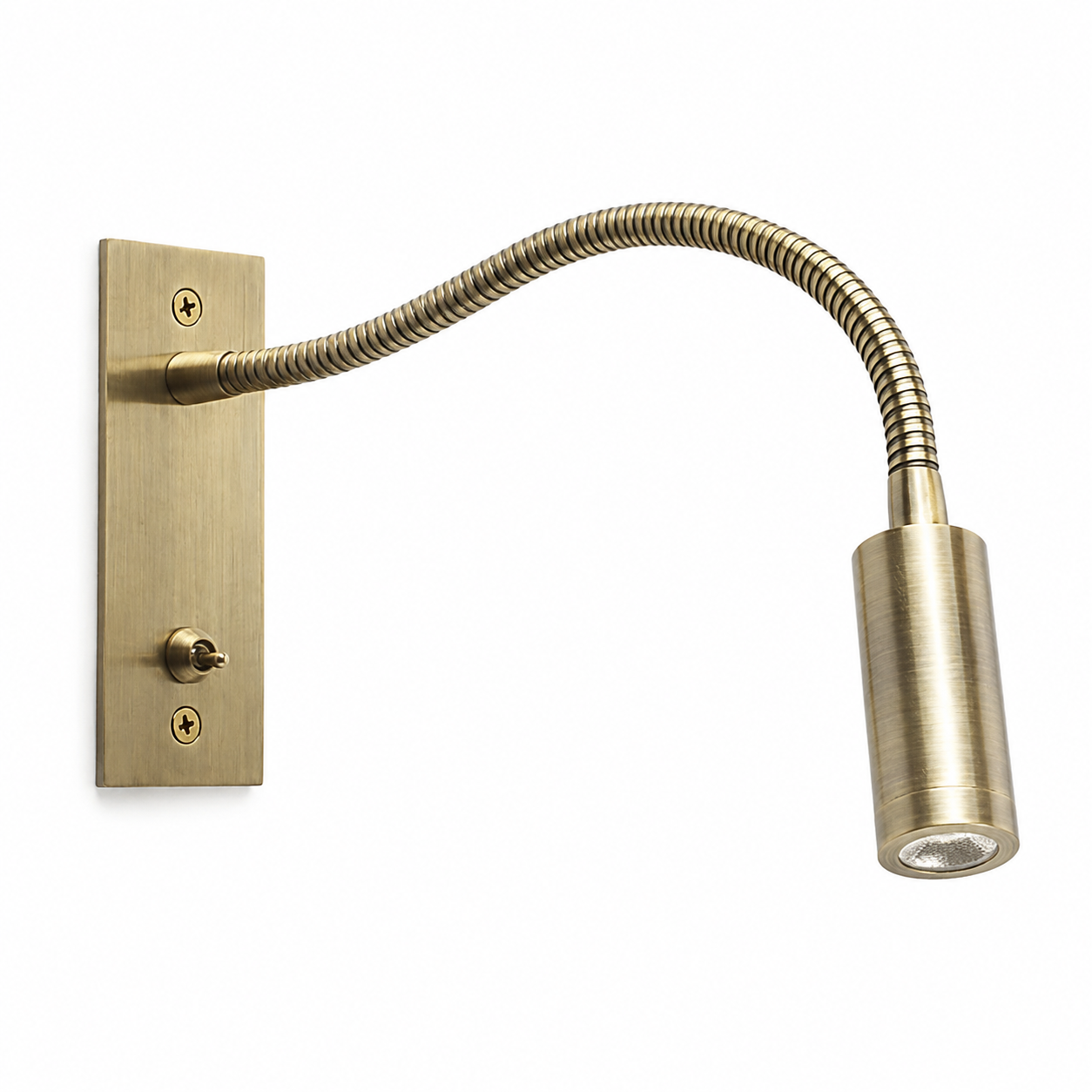
The MD-WL-Y135 recessed reading light and MD-WL-Y003 surface-mounted reading light are two mounting directions. Their documented features differ; neither should be assumed to fit a twin layout without the product drawing, electrical plan and sample test.
Specify independent switching
Write a simple control statement: left switch operates only the left reading light, right switch only the right, and the master control has an agreed effect on both. If dimming is part of the room brief, verify that the exact luminaire supports the proposed control. Y003 is documented as non-dimmable, so it should not be scheduled as a dimmed task light.
Place controls where each guest can reach them without crossing the shared nightstand. Confirm that pillow movement, bedding and a charging cable do not obscure the controls. Have a first-time user try the sequence without coaching. Record any confusion before the room is repeated.
Resolve shared furniture and services
A central table may carry a power point, telephone or lamp. Check that cables and switches remain sensible when two guests use the surface at once. If charging is integrated into a wall light, specify it separately from the reading function and verify whether the port remains powered when lights are off.
The installation drawings should identify left and right circuits, exact fitting orientation, mounting substrate and service access. Photograph the approved room in every bed configuration. For a more detailed switching brief, use the independent bedside switching guide, and release the repeated layout only after the two-guest test passes.
Ask staff who prepare the room to confirm how beds are positioned in practice. Their normal setup should match the approved lighting drawing.