Quick answer
In a small hotel room, put useful light where a guest reads, unpacks and moves rather than relying on one bright ceiling fitting. A compact wall-mounted bedside light can free the nightstand, but its projection, glare and access still need a room mock-up.
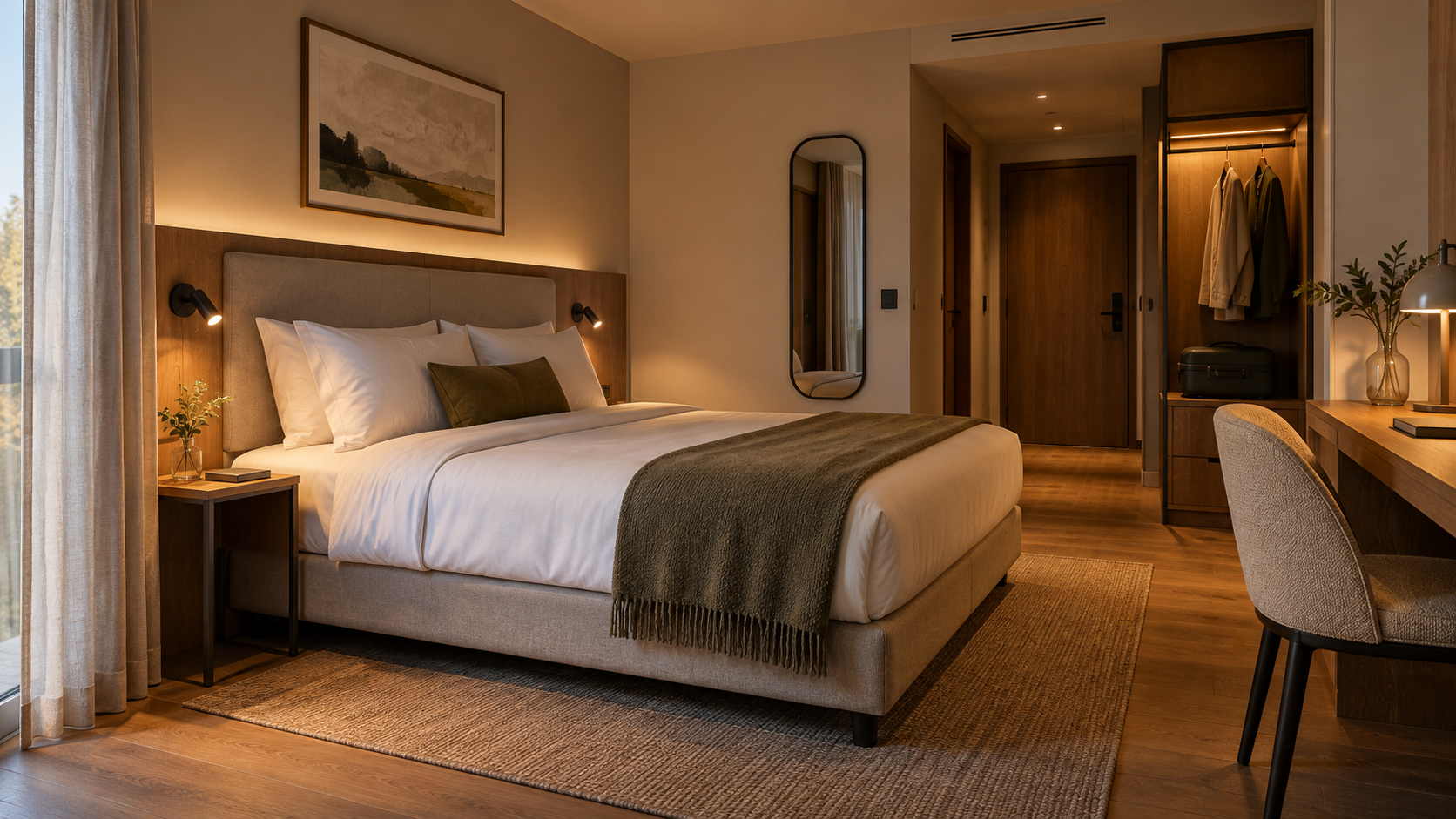
Hotel room lighting ideas for small guest rooms should make limited space easier to use. Put light on the bed, luggage area and circulation route instead of trying to brighten everything with one ceiling source. A wall-mounted reading light can release nightstand space, while separate ambient and task controls let a guest use only the light they need. Check every proposed fitting at the actual room scale.
Map the scarce surfaces
Start with a furnished plan. Mark the bed, door swing, luggage position, desk or shelf, mirror and the space a guest needs to pass. A lamp may look compact in a product photograph yet take useful room when its arm is extended or its shade projects into a narrow route. Include both the operating and parked positions on the elevation.
If the nightstand holds a phone, water and personal items, a wall fitting may be more useful than a portable table lamp. But moving the light to the wall does not remove the need to verify switch reach, cable entry and maintenance access. Put these requirements in the room brief, not just in the electrical drawing.
Use layers without clutter
A compact room still has distinct tasks. Provide general orientation, focused bedside reading and light at the unpacking or work area where required. A single downlight can leave the vertical surfaces dark and create shadows on the book. Adding fittings without a control plan can make the room visually busy.
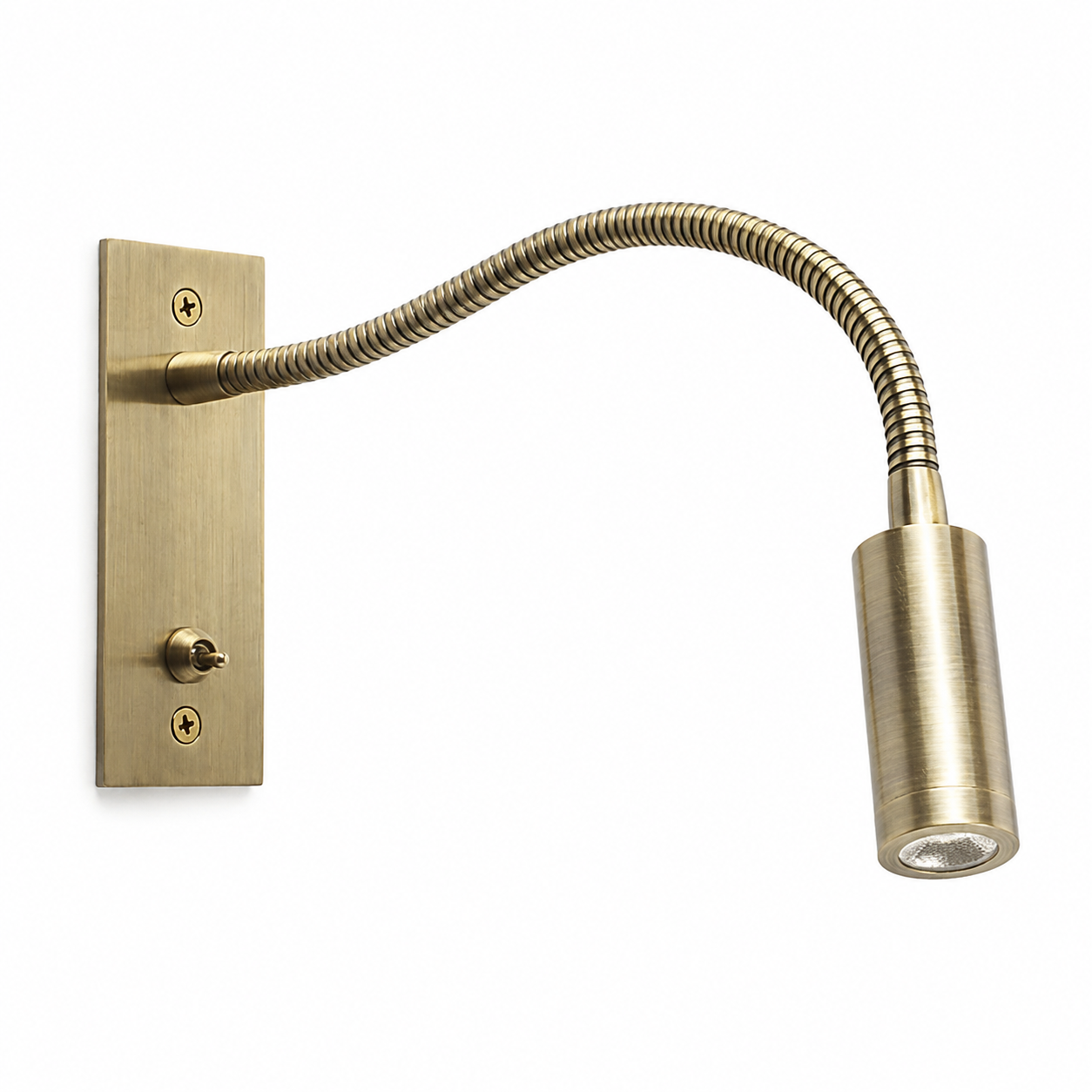
Consider whether a concealed or compact head suits the bed wall. The MD-WL-Y135 recessed reading light offers an adjustable recessed form, subject to a verified cavity and cut-out. The MD-WL-Y003 surface-mounted reading light combines a reading head, toggle and USB-A in its documented configuration. Its faceplate and projection must still be tested against the small-room headboard.
Make the room feel legible
Place controls where guests expect them: a clear entry control and a reachable bedside control. Define what each switch does and avoid hiding a critical task light behind a scene the guest must discover. In a small room, reflections and glare can dominate quickly. Check the view from the bed, desk and doorway, especially when a mirror or glossy furniture panel faces the light.
Light on a vertical wall can help a room feel more open, but this is an experiential design choice, not a guaranteed measured result. Use the room's actual wall colour, fabric and ceiling height in a mock-up. Review with daylight, curtains closed and the evening scene. Do not assume a rendering's brightness accurately represents the built result.
Audit what the guest can touch
Test one person reading while a second person rests. Check whether the light can be aimed without crossing the other pillow. Verify that a bag, opening door or chair cannot hit a projecting head. Confirm that a guest can reach the charging point and switch without moving furniture.
For repeated rooms, record the accepted bracket, opening, cable location and finish in a common drawing set. Check the housekeeping access and the route for replacing a failed component. A small room can make these operations harder, so solve them before ordering.
The simplest useful small-room scheme is one that supports real guest tasks with few visible objects. The headboard lighting guide gives a more detailed coordination method for the bed wall.