Quick answer
Lighting affects a guest through usable tasks, visual comfort and understandable controls; test the complete stay sequence rather than judging one room photograph.
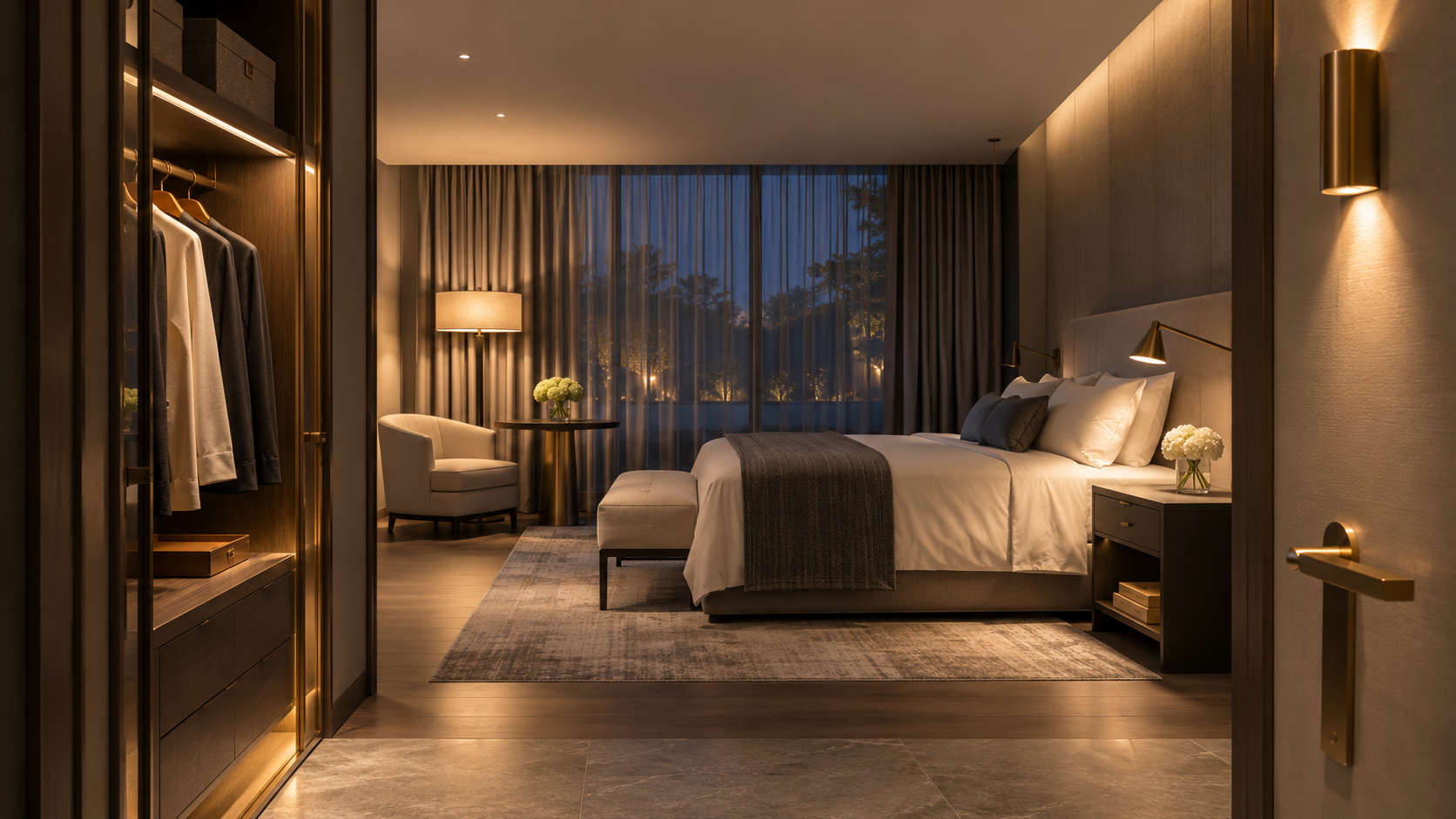
How lighting affects hotel guest experience is easiest to understand as a sequence of small decisions. A guest needs to enter an unfamiliar room, find belongings, work or read, relax and move safely after dark. Light helps when each task can be completed without searching for a control or exposing a companion to unwanted brightness. A striking room photograph may demonstrate atmosphere, but it cannot show whether a switch is reachable from bed or whether the night route works. Review the guest journey in a furnished prototype and record what a first-time user actually does.
Arrival: make the room legible
The entry state should reveal the door route, luggage surface and primary controls without forcing every fitting to full output. Walk into the room carrying a bag. Can the guest find the wardrobe and place the bag without crossing an unlit patch? Does a bright source reflect in the television or mirror? The answer depends on the actual furniture and view direction.
Daylight also changes the arrival experience. Check the room with the curtains open and closed. A light that feels useful at dusk may disappear against a bright window, while a decorative lamp may become too prominent at night. The room needs an understandable starting state in both conditions.
Tasks: support what the guest came to do
Test reading from each pillow, work at the desk and grooming at the mirror as separate tasks. A bedside reading head should light the page without shining into another guest's eyes. A desk light should avoid the writer's own shadow and screen reflection. The hotel room reading and working guide examines those two work surfaces in more detail.
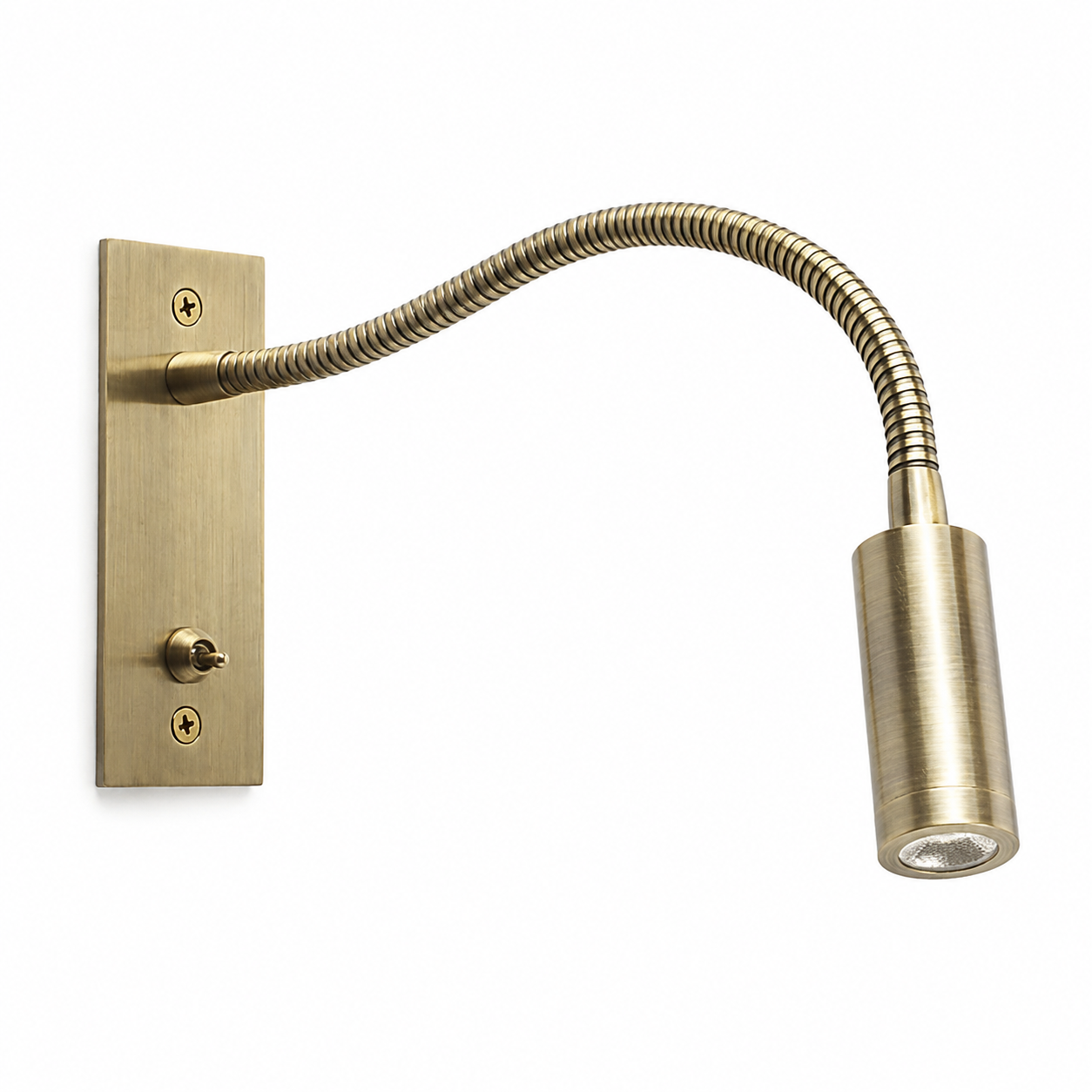
Product features should be matched to these tasks, not generalized. The documented MD-WL-Y092 has a flexible 3 W reading head and touch dimming, but its exact touch sequence still needs a physical sample check. The documented MD-WL-Y003 uses a physical toggle and its reading head is non-dimmable. Either may suit a room only after the mounting, controls and guest posture are tested together.
Rest: reduce effort and unwanted light
At bedtime, ask a person unfamiliar with the room to turn off the main lights from the pillow. Watch for lamps that remain on, confusing scene buttons or a charger indicator that creates an unwanted glow. A guest should not need to understand the control system's internal wiring to reach a calm off state.
Then test the bathroom route at night. The route must be visible enough to use without activating harsh light at the pillow. Check both directions and any door that changes the view. This is a room-specific observation, not a universal illuminance claim. The sleep and relaxation lighting review gives a focused test for this stage.
Turn impressions into an acceptance record
Do not claim that one lamp raises satisfaction or sleep quality without evidence from the actual hotel. Instead, record observable actions: time taken to find a switch, whether a task surface is usable, unwanted spill at the other pillow, and whether a guest can restore a comfortable state after leaving the bathroom.
Invite operations staff to repeat the sequence during cleaning. They need a practical all-on and reset state, while guests need simple local control. Photograph the approved room and list the fixture, driver and control versions. If any of those changes during procurement, repeat the relevant part of the journey before approving a substitute.