Quick answer
Make light easy to reduce, remove unwanted sources at the pillow, and test an understandable night route in the finished room.
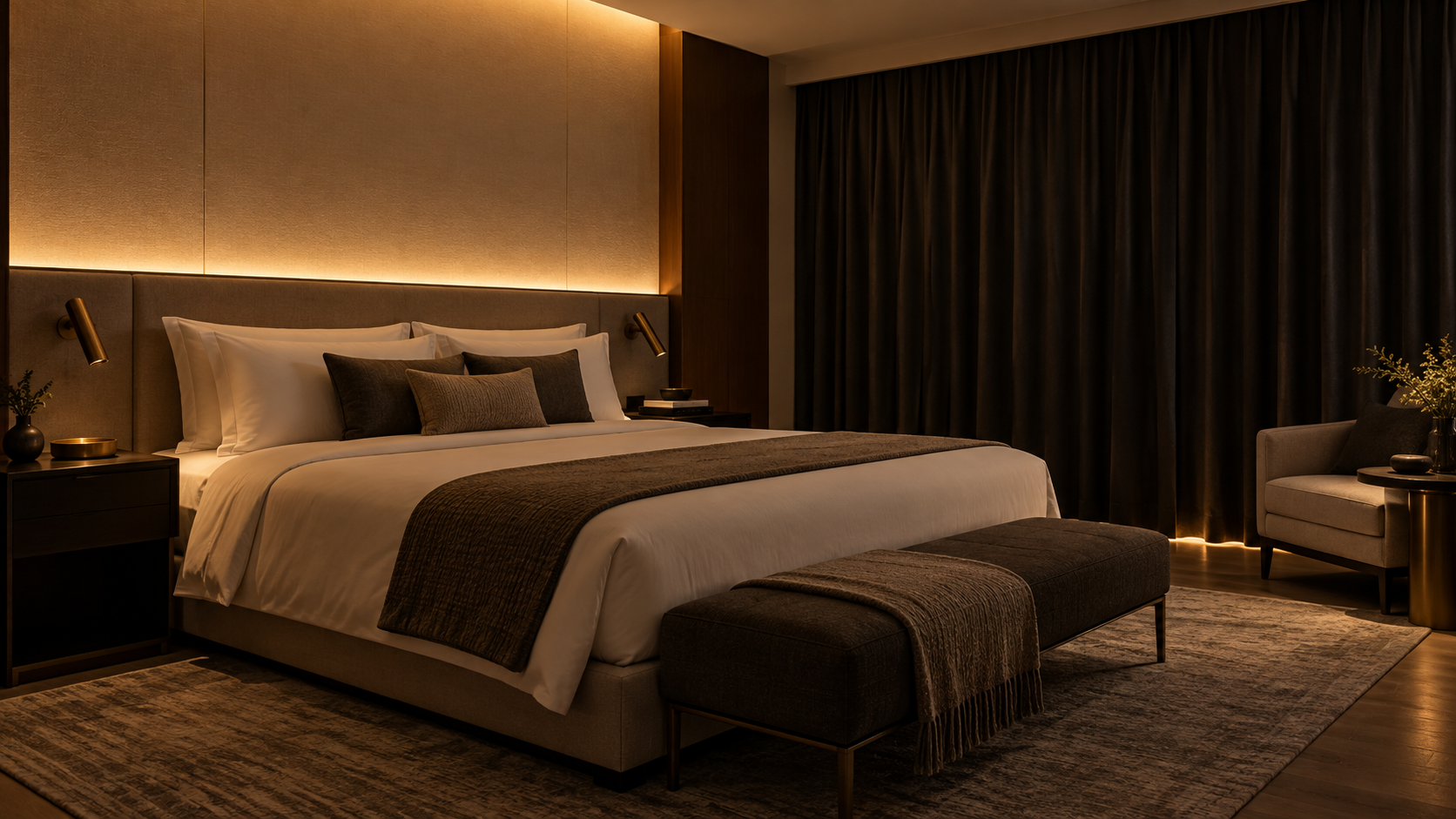
Hotel room lighting for sleep and relaxation should let guests reduce light easily, avoid unwanted light at the pillow and still find a safe route after dark. The practical design task is to control what remains visible when the guest wants to rest. Give bedside lighting its own switch, provide an understandable all-off action, and test indicator lights, curtains and bathroom spill in a furnished room. Warm appearance alone does not make a room restful if a fitting shines into a guest's eyes or cannot be switched off.
Start with the room in its off state
Stand at the entrance, then lie in both bed positions with the normal room lights off. Look for light from control panels, chargers, television equipment, door gaps and exterior sources. Record each source and decide whether it is necessary. A small, persistent indicator can become conspicuous after the eyes adapt to darkness. The lighting schedule should include the off state, not only the attractive photographed scene.
Check curtains and any glazed bathroom partition with the actual installation. The lamp selection cannot compensate for uncontrolled light from the window or an adjoining space. Ask the room design team to identify what should remain available for wayfinding and what should switch off completely.
Separate winding down from reading
A guest may want soft background light before sleep and a more focused beam while reading. Those are different tasks. One general ceiling fitting turned down very low may leave the page unreadable; a bright bedside light may disturb another guest. Independent controls give each task a clearer solution.
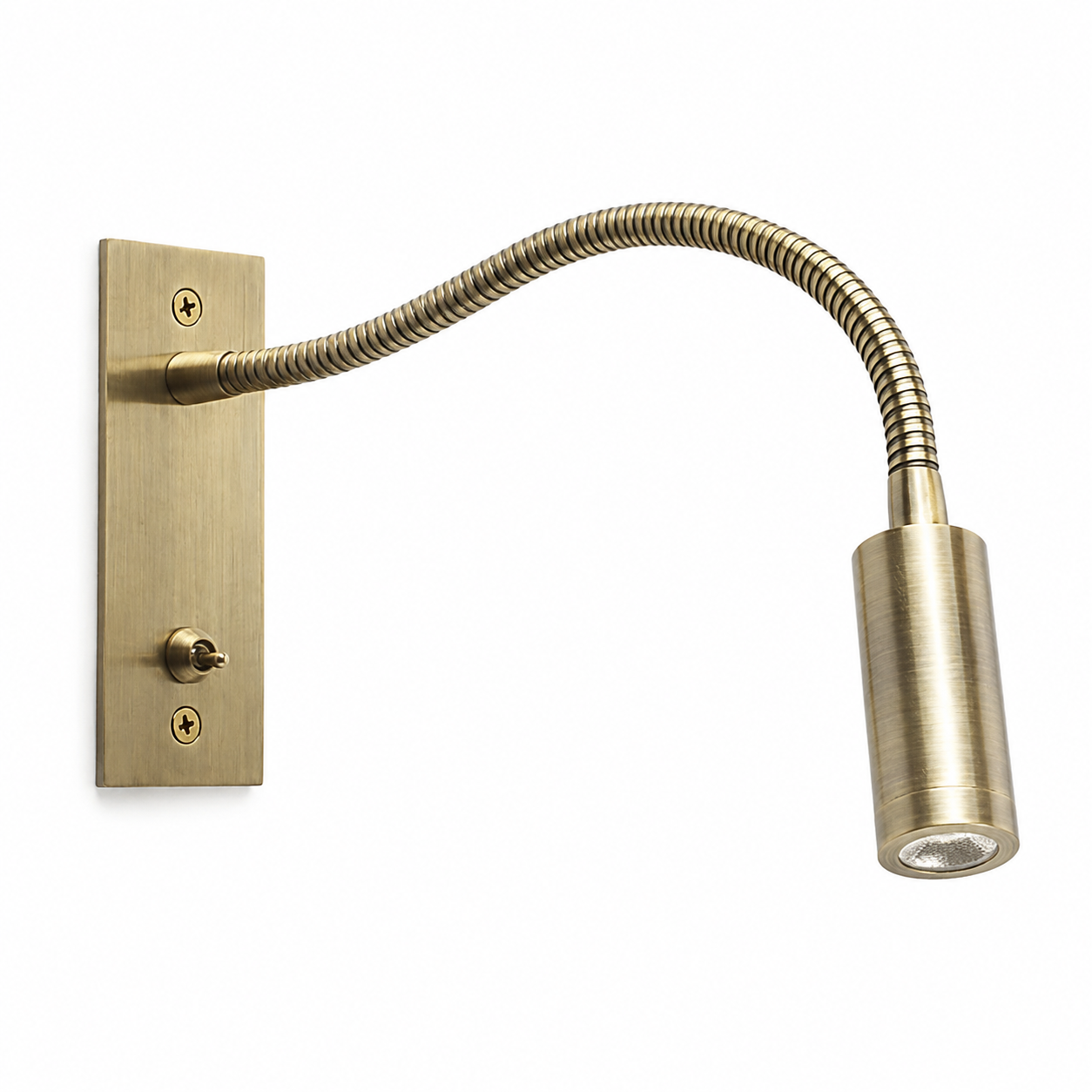
The hotel bedside reading-light selection guide explains how to test a focused head at the book. In a shared bed, also observe the second pillow and the parked position. The documented MD-WL-Y092 has a flexible head and touch dimming, but its exact control sequence needs sample verification. Do not infer a night mode or preset from the presence of touch control.
Treat colour and dimming as tested choices
Compare proposed warm-white configurations against the room's fabric, timber, wall finish and other lamps. Use the exact ordered version in the mock-up. A catalogue listing several correlated colour temperatures usually describes order choices, not a colour-changing guest control. The 2700K versus 3000K guestroom guide explains that distinction.
If dimming is part of the brief, test the low end, flicker appearance, off transition and recall after power cycling with the actual driver and control. Record any glow or abrupt step. Do not write a dimming requirement into the room brief and assume an unrelated lamp will satisfy it.
Make night movement usable
Map the route from each side of the bed to the bathroom. A low-level light may help, but it should not shine into a sleeping guest's face or be triggered unnecessarily by movement in bed. Test sensor coverage, delay and manual override in the completed room. Ask the electrical designer to confirm safety and local requirements; no one article can define a universal minimum for every building.
Approval should include an evening walkthrough, both bed positions and the all-off state. Keep the signed control sequence with the room schedule, because later changes to a switch panel or driver can undo an otherwise sound lighting plan.