Quick answer
Locate the book and desk work surface first, then give each controllable light and test glare, shadows and the combined control sequence.
Hotel room lighting for reading and working needs two task surfaces, not one generic brightness setting. First locate the book or tablet at the bed and the papers or keyboard at the desk. Then give each surface a controllable light that can be used without uncomfortable glare or strong spill onto a second guest. Keep enough background light to make the room comfortable, and test both tasks with the actual furniture, screen and fixture samples. Electrical watts or a decorative photograph cannot tell you whether the page and desk will be usable.
Map the two work positions
A guest reads upright, reclined or on one side. The page moves with posture. At the desk, the work surface, screen and seated eye line occupy different positions. Put both on the room elevation and plan. Check whether a desk lamp casts a shadow from the working hand and whether its source reflects in a screen.
Do not ask one ceiling downlight to serve both areas merely because it reaches them. It may create glare in one position and a shadow in another. Give the guest a local control near each task so the unused zone can remain quieter.
Check bedside aiming with both pillows occupied
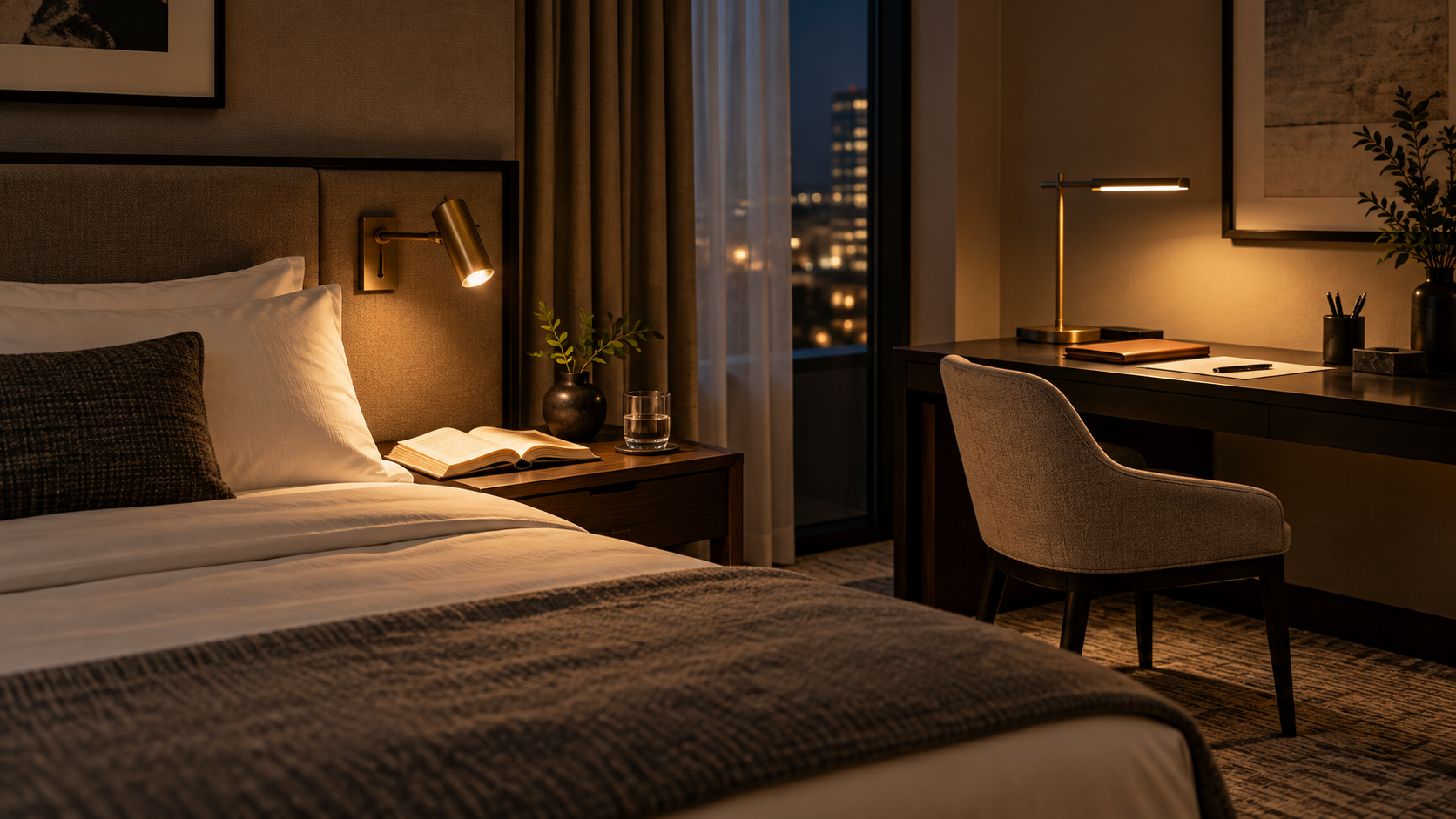
Place the actual reading light at the proposed point and test a printed page while upright and reclined. Look from the neighboring pillow as well. If the other guest sees the bare source or a bright patch, change position, shield or fitting. Record the final aim and the parked position. The how-to-choose guide gives a broader product-selection sequence.
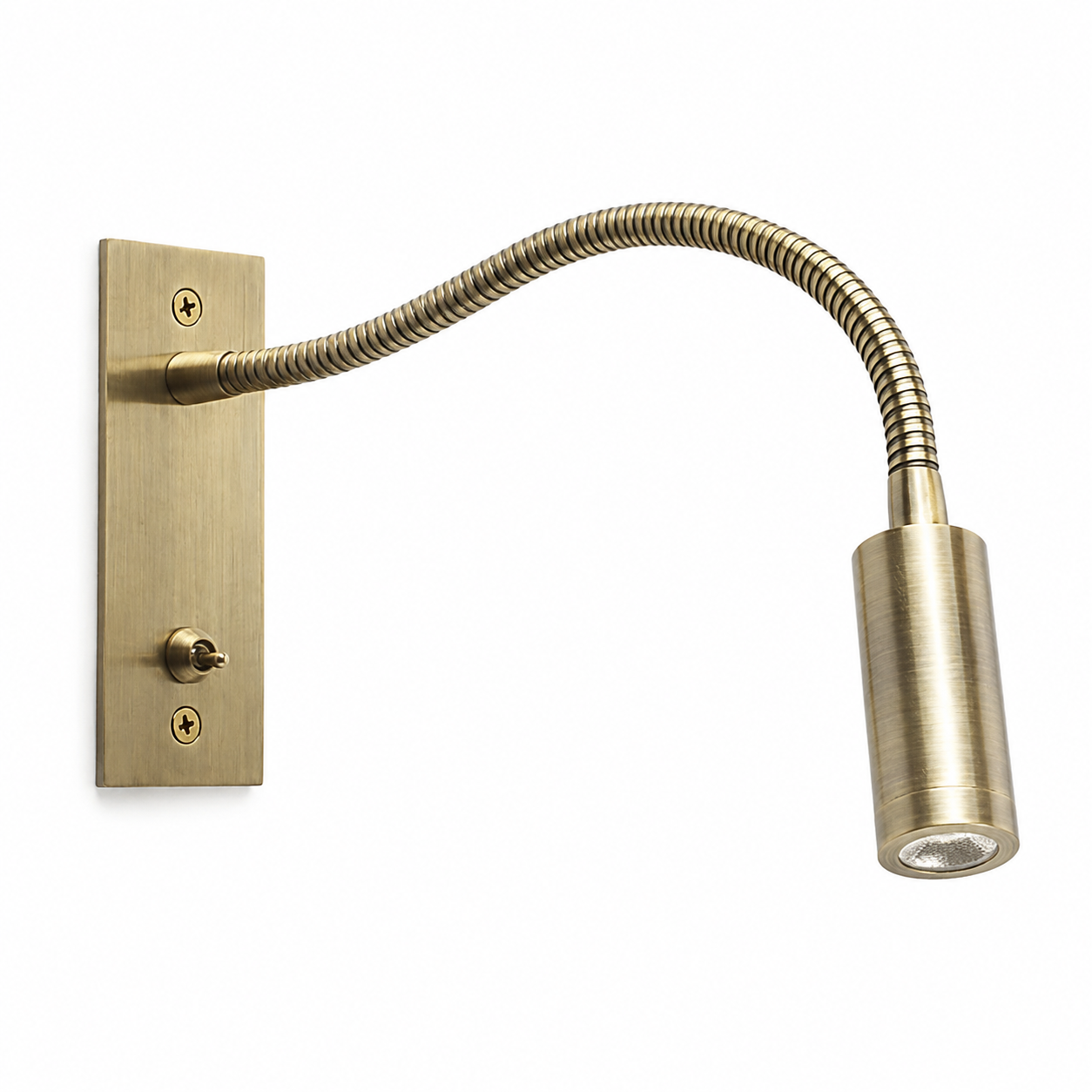
The documented recessed MD-WL-Y135 has an adjustable 3 W reading head and a 30° beam option in its product pack. Those facts do not establish illuminance on the page at your mounting distance. Request the exact configuration's photometric file and check a room sample before claiming a result.
Make the desk usable without disturbing rest
Place the desk task light where the seated user can control it without reaching behind a screen or moving equipment. Check the arrangement in daylight and at night. A bright monitor can make the surrounding surface feel too dark; a lamp aimed at the screen can create reflections. Test a document and a real device at the planned desk depth.
For a small room, a wall-mounted or integrated desk light may save surface area, but confirm cable access and maintenance. If furniture can move between room types, keep the electrical and lighting positions coordinated. Do not assume every desk location in a floor plan has the same usable light.
Specify the combined scene
Write a short acceptance script: turn on the entry light, work at the desk, read in bed while the desk is off, and switch off from the pillow. Record each control and whether the master switch affects charging power. Repeat from the other side of a shared bed.
Include product identity, optic, colour option, driver, mounting and control in the fixture schedule. Approve both task zones in a furnished mock-up. If the desk or headboard changes after sign-off, retest the affected task instead of treating the previous approval as transferable.