Quick answer
Provide clear task light, legible controls, low-glare transitions and a usable night route, then test the room with guests of varied visual ability.
Hotel lighting design for senior-friendly guest rooms should make everyday actions easier to see and easier to control without turning the room into a clinical space. Give guests clear light at the door, luggage area, mirror, reading position and bathroom route. Reduce exposed bright sources, sudden dark-to-light transitions and hard-to-find switches. There is no one light level that suits every older guest; visual ability and preference vary. A furnished sample room should be tested by people with different needs, and any formal accessibility requirement should be reviewed separately by the project team.
Make important surfaces easy to read
Begin with tasks rather than a ceiling-wide brightness target. Can a guest distinguish a door handle from the surrounding wall, read a paper notice at the desk and see the edge of a bedside table? Does the mirror light illuminate the face without placing a strong source in the eye line? Shadows on steps or furniture edges deserve attention in the actual room.
Contrast can help identify controls and surfaces, but it must be checked under the chosen lamps and finishes. A dark switch on a dark panel may disappear at night even if it looked attractive in a daylight rendering. Use the guest-room lighting design guide for the wider room plan; this page focuses on ease of use for guests with varied visual needs.
Control glare and transitions
More light is not automatically more useful. A bare bright source close to the pillow can make a darker part of the room harder to perceive. Check the lamp from the bed, chair and bathroom doorway. Aim or shield it so the task surface receives light while the source is less conspicuous.
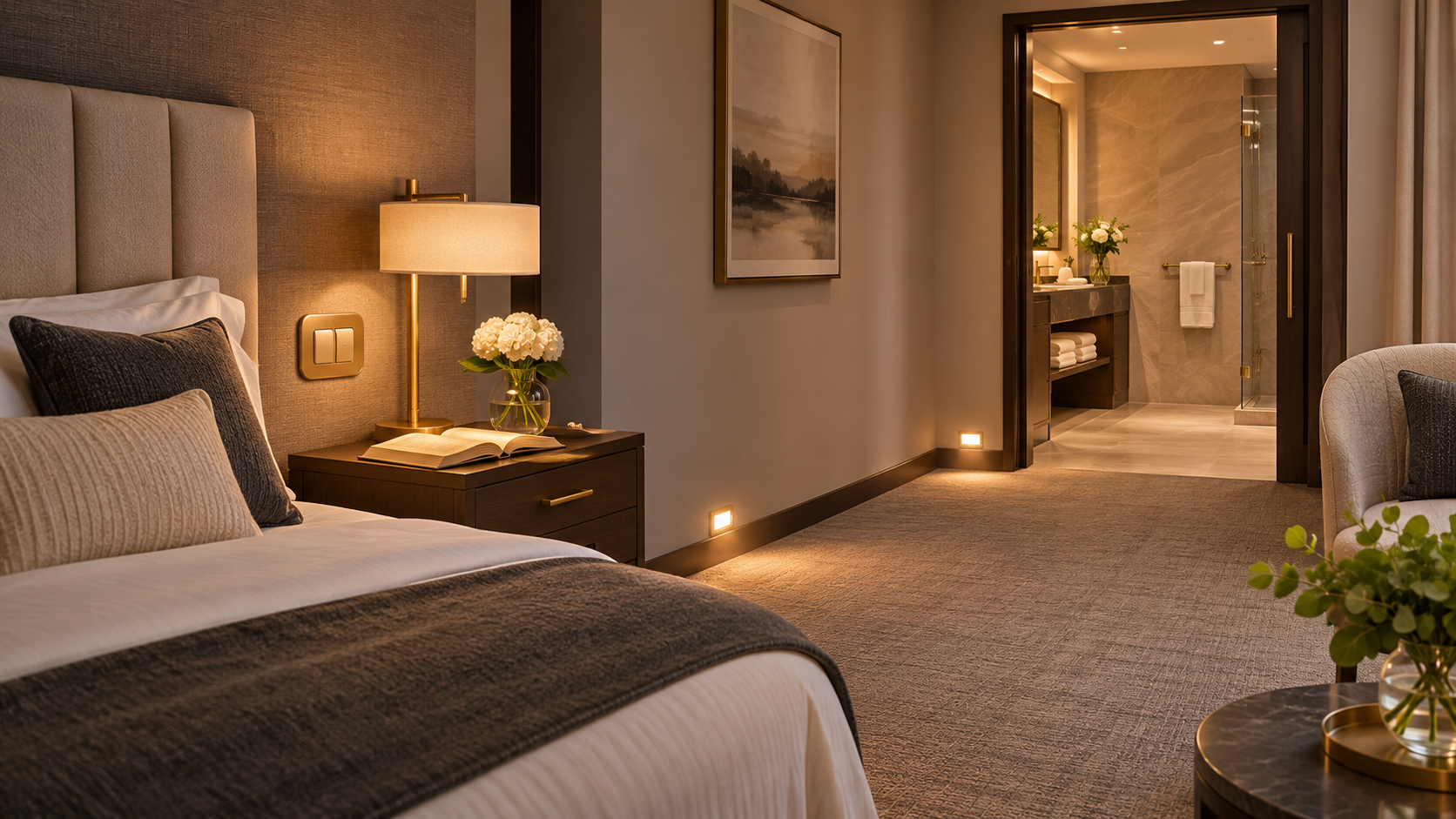
Walk from a bright corridor into the room and from the bed toward the bathroom at night. Verify that the next control can be found before the guest has to cross a dark area. If a low-level route light is specified, test it with doors in realistic positions and check whether it disturbs a sleeping companion. The objective is a visible path, not a promised health outcome.
Keep controls simple and reachable
A guest should be able to turn on a reading light, reduce the room and reach all-off without interpreting a complex scene panel. Consider tactile feedback and a clear relationship between each switch and the light it operates. Test from a seated and reclining position with the real mattress and pillows. Staff also need an understandable reset state.
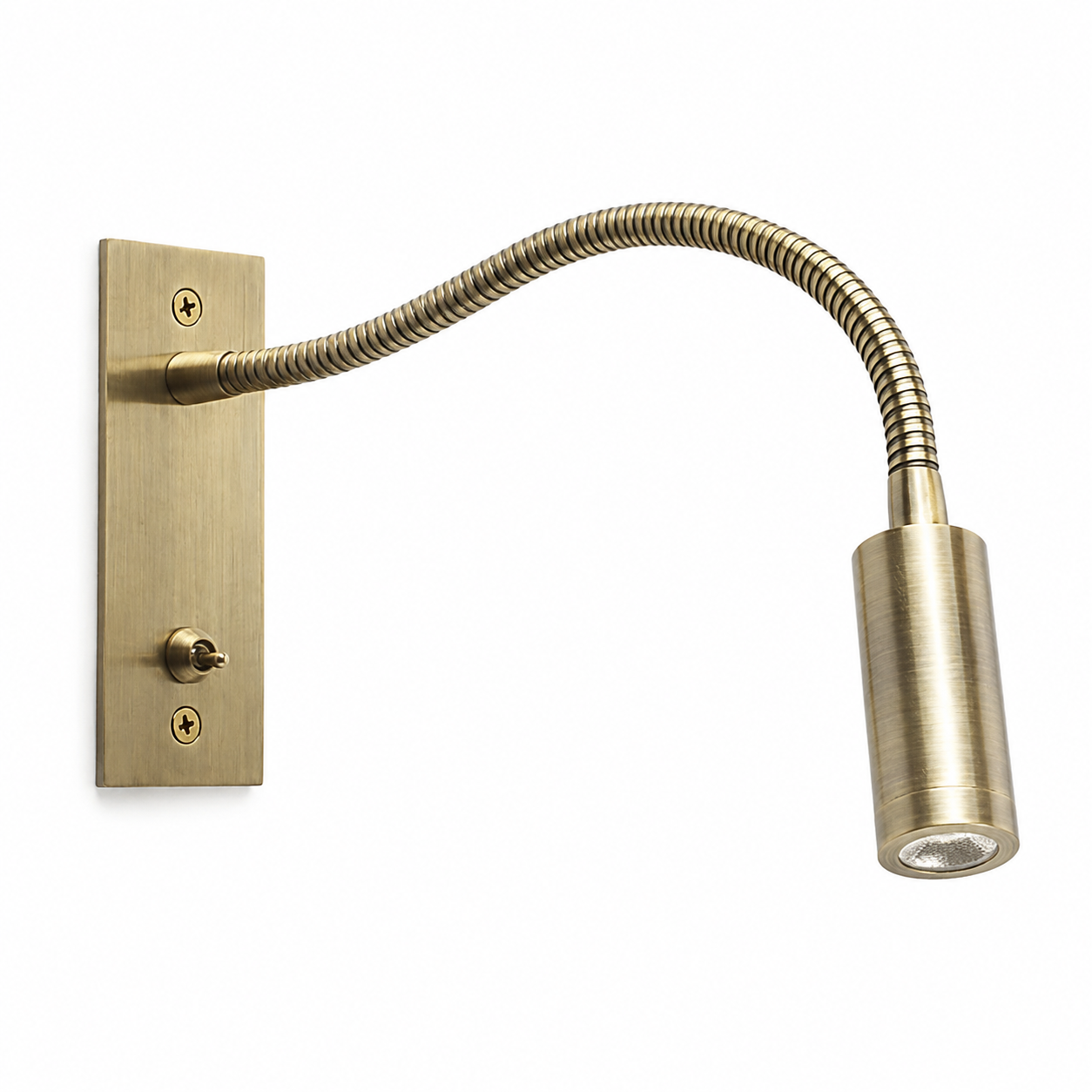
The documented MD-WL-Y003 has a physical toggle for its non-dimmable 3 W reading head. That is a specific control fact, not proof that its switch is reachable in every room. Verify its proposed mounting position and the guest's hand reach in the prototype. Do not label another MYDE model as having the same switch without its own product evidence.
Record the acceptance test
Invite a range of users to perform the room sequence: enter, find belongings, read, turn everything off and move to the bathroom. Record difficulties without assuming that one participant represents every older guest. Keep the fixture, control, furniture and finish versions with the test notes so later substitutions can be assessed.
This article is a design review, not an accessibility certification. Check the destination market's applicable building and accessible-room rules with qualified specialists. Where a rule specifies a measurable requirement, use the approved project documents and measured room results rather than a generic article or generated illustration.