Quick answer
Accessible hotel room lighting starts with usable control locations and clear light for the routes and tasks a guest actually uses. Test controls from the bed and accessible approach positions, then check the destination market's applicable rules; a product photo cannot establish compliance.
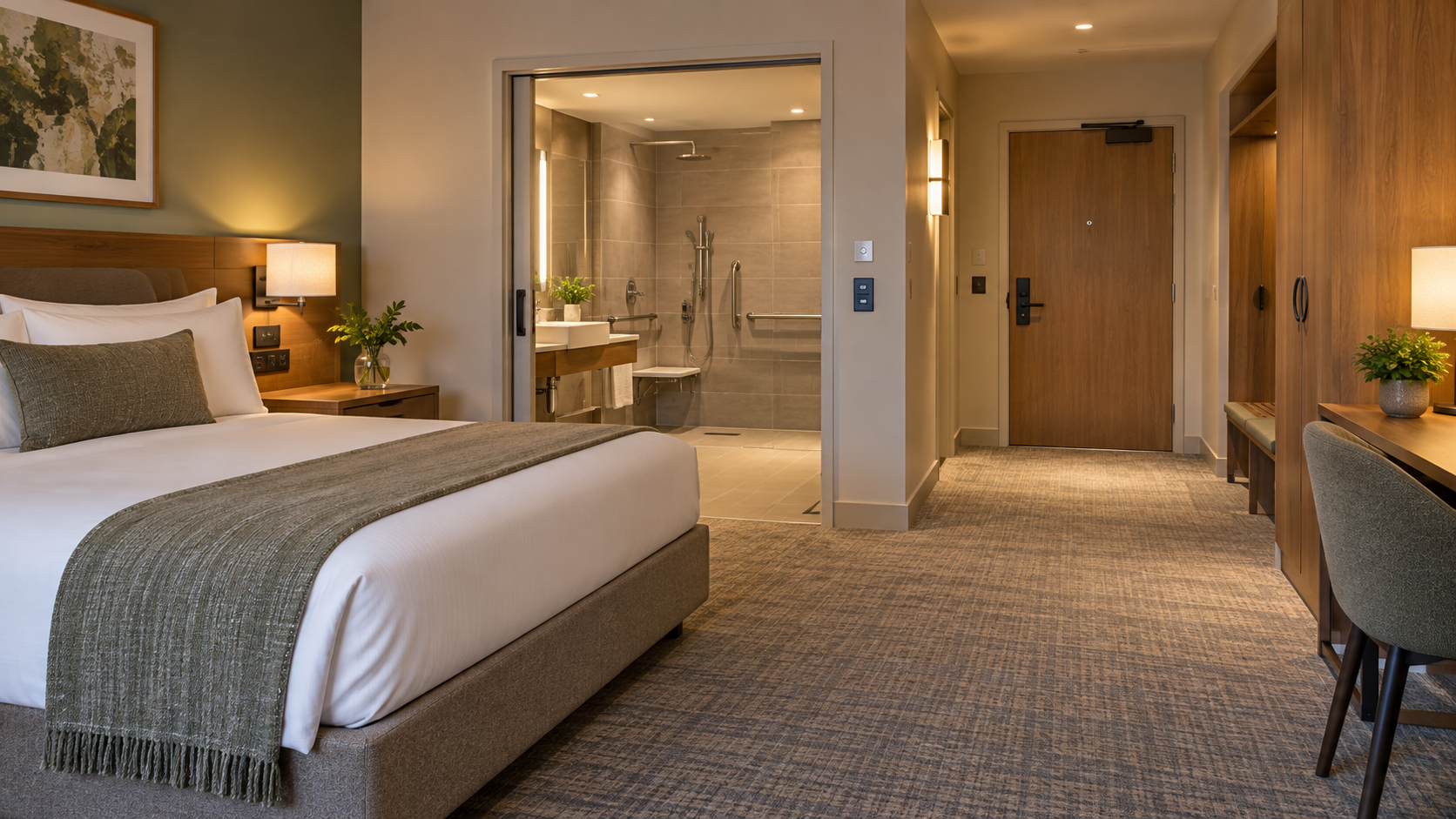
Accessible hotel room lighting design asks whether a guest can find, reach and operate the controls and see the routes and tasks that matter. Start with the actual bed, entrance, bathroom approach and accessible clearances. Then test the room from the guest's likely seated and standing positions. The project accessibility specialist must check the applicable local standards; a luminaire choice alone cannot establish room compliance.
Treat controls as part of the room layout
Mark every switch, dimmer, outlet and charging point on the room drawings. Check the reach and approach from the entry, bed and other intended use positions. A beautiful switch hidden by a bedside table or behind a pillow is not an accessible solution simply because its mounting height looks plausible on an elevation.
For US projects, the U.S. Access Board guide to ADA operable parts explains that light switches and receptacles in accessible spaces are covered by the relevant operable-part criteria. Reach range, clear floor space and operation all matter. This is a US reference; have the design team identify the rules that apply in the project's jurisdiction and building type.
Make operation understandable
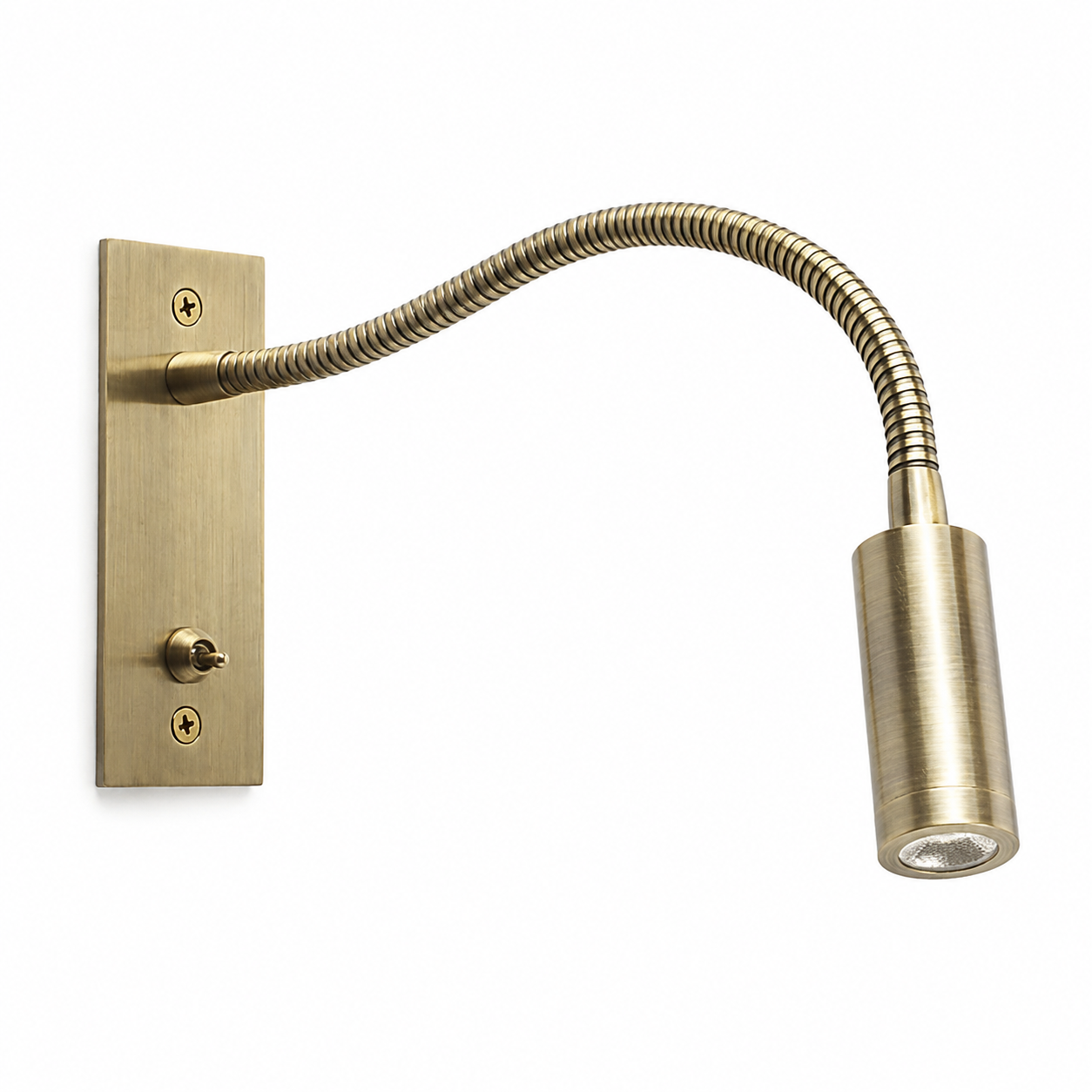
Check whether a first-time guest can tell which control operates which light. A distinct physical action can provide feedback, but the full sequence still needs testing. The MD-WL-Y003 surface-mounted reading light has a documented physical toggle and is non-dimmable. That does not prove it meets an accessibility rule at any particular mounting position.
If a touch control or scene keypad is proposed, test its target size, feedback, labels and behaviour after power restoration with the actual room system. Do not assume that a control marked in a supplier drawing will remain visible after headboard upholstery, pillows and bedside objects are installed.
Check useful light and glare together
Follow the route from the entrance to the bed and bathroom. Look for deep shadows at changes in surface or level, and for direct glare when seated or lying down. A stronger light is not always more usable if it puts the source in the guest's eye. Ask the lighting designer to set and verify project criteria for task and circulation lighting.
Test the reading light with a book at the actual pillow location. Can it be aimed without awkward reach? Can the guest turn it off from a comfortable posture? Is the neighbouring person's side disturbed? Include the low-light night route in the review rather than judging only the arrival scene.
Use a full-size review and record exceptions
Construct a representative room with the real bed height, headboard, controls and furniture. Invite the accessibility lead to test the approach and operation. Record any conflict between reach, aesthetics, electrical routing and maintenance access, and revise the drawing before repeat installation.
The room sign-off should include the applicable accessibility standard and edition, control locations, clearances, operation sequence, lighting criteria, and any approved alternative detail. Preserve the tested configuration in the procurement schedule. A changed bedside table, switch plate or bed position can invalidate the original review, so check later substitutions against the same requirements.