Quick answer
Give desk work, bedside reading and rest distinct lighting states; test each with actual furniture and a guest unfamiliar with the room.
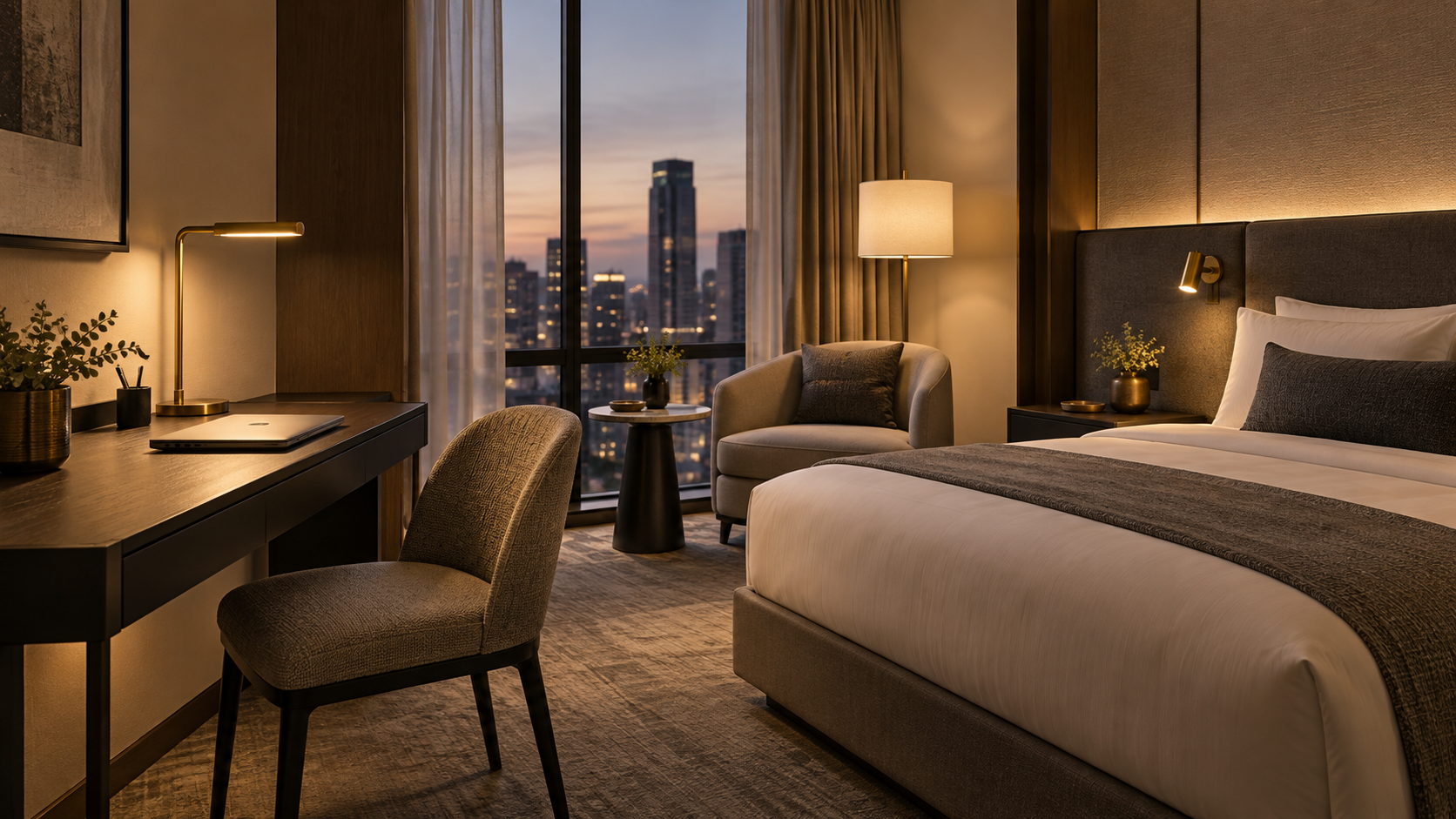
Hotel lighting design for business hotels should make a compact guest room work for arrival, desk use, video calls, reading and sleep. Begin with the actual furniture plan and the guest's likely sequence through the room. Give the desk and bedside separate task lights, keep the controls easy to find, and test screen reflections and the night route. The room does not need a different visual identity for every task, but it does need enough control that a guest can work without lighting the whole bed and rest without a glowing work area.
Make the desk a real task zone
Locate the desk on the plan before choosing a lamp. Check the work surface, seat, screen position and power access. A fitting can look adequate in an empty room while leaving a document in shadow once a laptop is open. Test a real laptop and paper from the seated eye line. Record any reflection from the window, mirror or glossy wall.
For video calls, check whether the guest's face is reasonably visible without a harsh overhead source or a bright window behind the chair. This is a room test, not a claim that any particular wall light is a studio light. Avoid a fixed specification that assumes all desks face the same direction when room types vary.
Keep bedside tasks independent
A business guest may review material in bed while another person sleeps. Provide a reading light that can be aimed at the page and switched from the pillow. Test from both positions in a shared bed. The reading and working guide gives the two-surface test in detail.
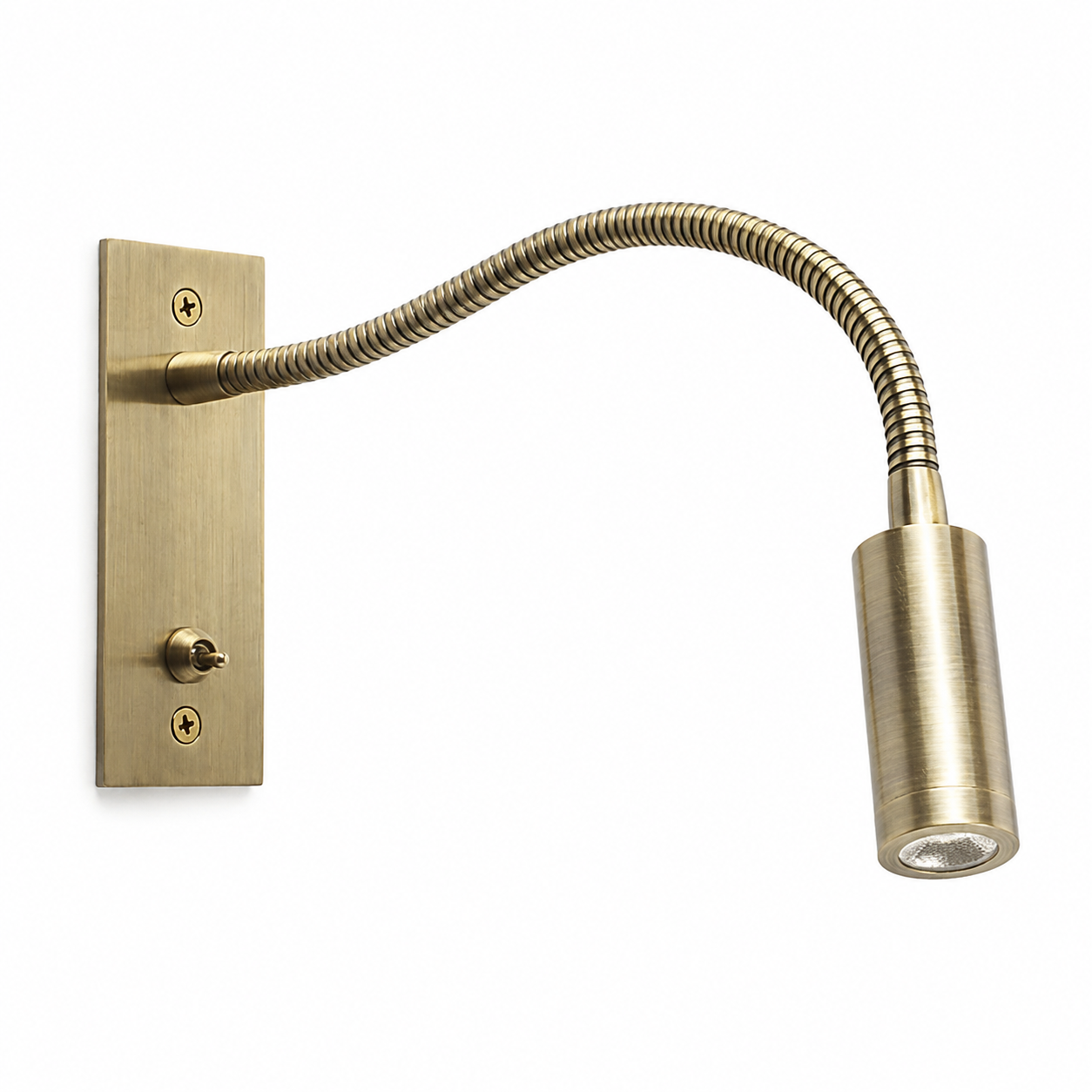
If a bedside assembly includes a charging port, treat the electrical output and the reading light as separate functions. The documented MD-WL-Y003 combines a surface-mounted 3 W reading head, physical toggle and one USB-A port rated 5 V/2 A. Its product pack says the reading head is non-dimmable. That does not establish suitability for a laptop charger or a room-wide dimming scene. Confirm the guest device brief and exact charging specification separately.
Design controls for a short stay
Guests should find entry light immediately, identify the desk and bedside switches, and understand how to turn the room off from bed. Test the control sequence with someone who has not seen the drawings. Verify whether the room master cuts desk and bedside power and whether charging remains available when intended. Label the electrical schedule clearly enough that installation and operations teams can repeat the same arrangement.
For overnight movement, test the path to the bathroom without waking a second guest with full-room light. Check automatic lighting for nuisance activation and provide a clear manual option. A scene name on a control panel does not prove that the scene works after furniture and curtains are installed.
Approve one representative room of each type
Use the finished desk, bed, window treatment and electrical layout in a mock-up. Run arrival, work, call, reading and all-off scenarios. Record exact sample variants, driver and control settings, accepted aim, and unresolved issues. Compare later rooms against that approved reference. If the desk shifts to the opposite wall or the bed size changes, repeat the relevant checks before multiplying the design.