
Quick answer
Test the mock-up from occupied guest positions, then verify every lighting layer, switch, finish, wiring point and service route against the approved schedule. Record defects and retest before releasing the repeated room package.
An effective hotel mock-up room lighting checklist starts with the guest, not the fixture schedule. Sit on each side of the bed, work at the desk, enter from the corridor and walk to the bathroom at night. Operate the proposed switches without instructions. Then compare what you see with the approved drawings and sample schedule. A beautiful room photograph cannot reveal a switch hidden by a pillow, a bright source in the other guest's eyes, or a driver that maintenance cannot reach. The purpose of the mock-up is to resolve these issues before they are repeated across rooms.
Set the approval baseline before the visit
Bring the current reflected ceiling plan, electrical plan, headboard elevation, room finish board and fixture schedule. Give every light a schedule code. Record its exact model or proposed equivalent, ordered finish, colour temperature, optic, control method, mounting detail and supply scope. Mark any item that is still provisional; a visual approval must not silently become approval of an unverified electrical or photometric configuration.
Assign one person to record findings and one owner to close each item. Photograph the same views before and after changes. Note the date, room type, sample revision and operating settings so the next reviewer can reproduce the test.
Walk the guest journey in the actual room
Start at the doorway with the room in its expected arrival state. Can the guest identify the main control? Check the route to the bed and bathroom with the room lights off, then with any night setting enabled. Confirm that a bright decorative source does not dominate the field of view when the guest lies down.
At each pillow, test reading while upright and reclined. Aim the light at an open page, then look from the neighboring pillow. Check whether the source is visible directly, whether the other side receives spill, and whether a hand can reach the switch without moving the headboard or pillow. Repeat with ambient lighting on and off. For task-light performance, use the project team's measurement method and target; a catalogue wattage or beam angle cannot replace a page-plane check.
At the desk and seating area, check shadows on the work surface, reflections in screens and the location of controls. At the mirror, inspect face lighting from the intended standing position. Record each problem against the fixture or control code, not just as a general impression.
Check controls as a system
Operate each switch in the order a first-time guest would. The label, position and feedback should make the result understandable. Test left and right reading lights independently, then test any master or scene control. Turn power off and back on under the project's agreed test procedure and record the resulting state. Charging outlets, if present, need their own functional check; the light switch must not be assumed to control or preserve charging power.
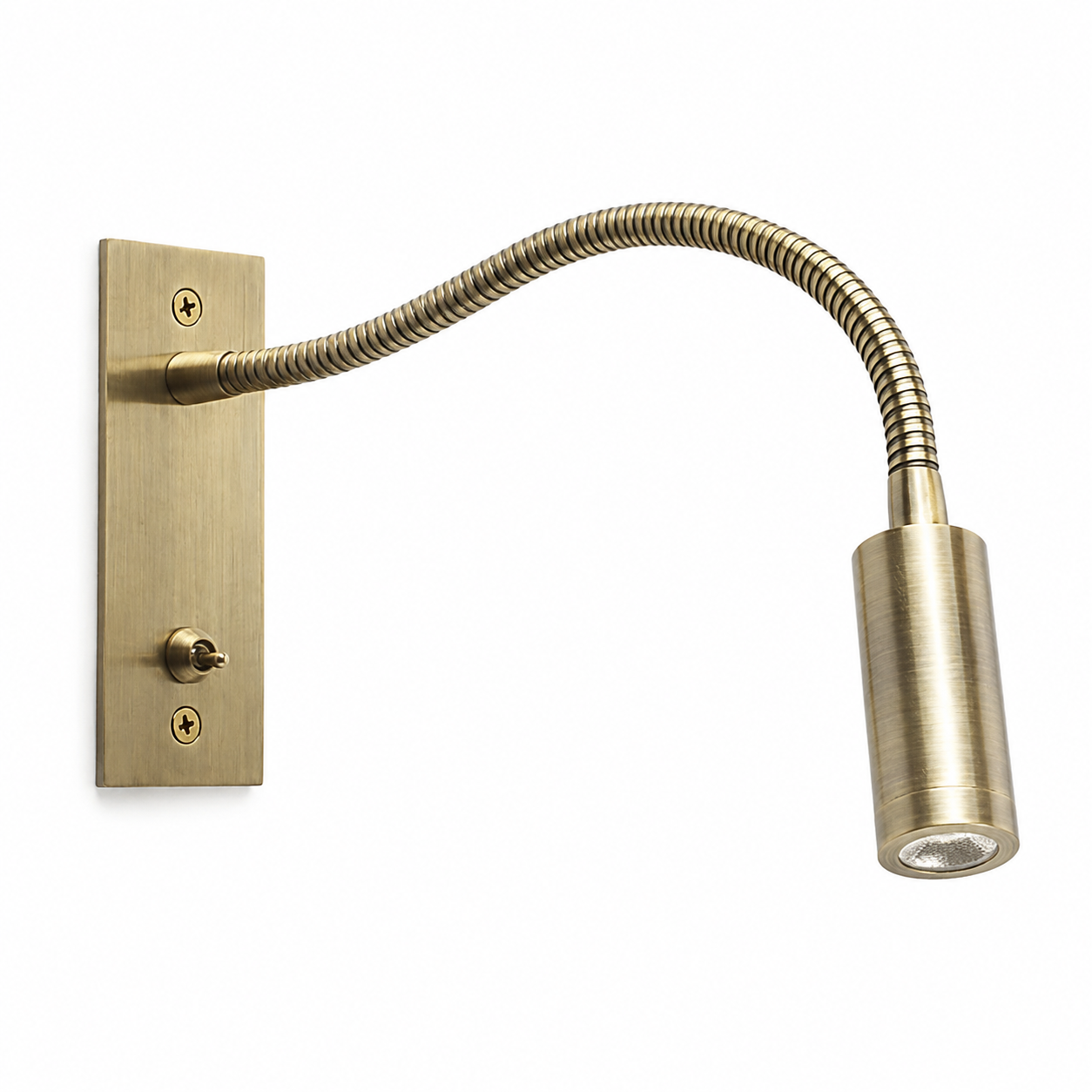
For example, MYDE MD-WL-Y003 has a confirmed physical toggle and a separate USB-A port rated 5 V/2 A. Its reading light is specified as non-dimmable. MD-WL-Y135 has a concealed switch, but the source pack does not establish its exact trigger sequence or dimming behavior. Those are sample-test questions, not claims to put in a hotel operating guide.
Inspect installation and service access
Compare installed positions with the dimensioned drawings. Check the faceplate or cut-out, wall build-up, cable entry, fixing substrate and clearance behind the headboard. Ask the electrician to confirm the electrical design and applicable local rules. A product's overall dimensions are not its cut-out dimensions.
Have maintenance staff show how the fitting or driver would be reached and replaced. Have housekeeping assess whether the head and surrounding panel can be cleaned without awkward handling. Record any component that requires a tool, spare part or access panel. Test the parked position of an adjustable head so it does not snag bedding or conflict with routine room work.
Use a signed defect and approval record
- Identify the exact room type, sample revision and approved fixture schedule.
- For each finding, record location, task, photograph, drawing reference and owner.
- Mark whether the item blocks design approval, sample approval or repeated ordering.
- Retest after a change to mounting, optic, control logic or finish; do not inherit an earlier approval automatically.
- Sign the final physical sample and archive the agreed drawings, control sequence and maintenance notes together.
The accepted mock-up becomes a comparison reference for later rooms. It does not prove that every delivered unit matches the sample; incoming inspection still has a role. The hotel lighting quality control checklist explains that later stage. For a project-specific mock-up review, send the room drawings and fixture schedule to MYDE with the unresolved questions clearly marked.