
Quick answer
Specify substrate, appearance and exposure, approve a finished sample, then control preparation, inspection and substitutions.
A custom metal finish process for hotel wall lights should begin with a signed visual and technical brief, then a controlled sample and repeatable acceptance criteria. Decide the substrate, color, sheen, texture, touch points and cleaning exposure before comparing finish methods. Ask the proposed supplier to document surface preparation, coating or plating steps, inspection and repair limits for the exact part. A finish name such as “brushed brass” is not a complete specification and does not prove how a particular MYDE product is made.
Define the appearance and use conditions
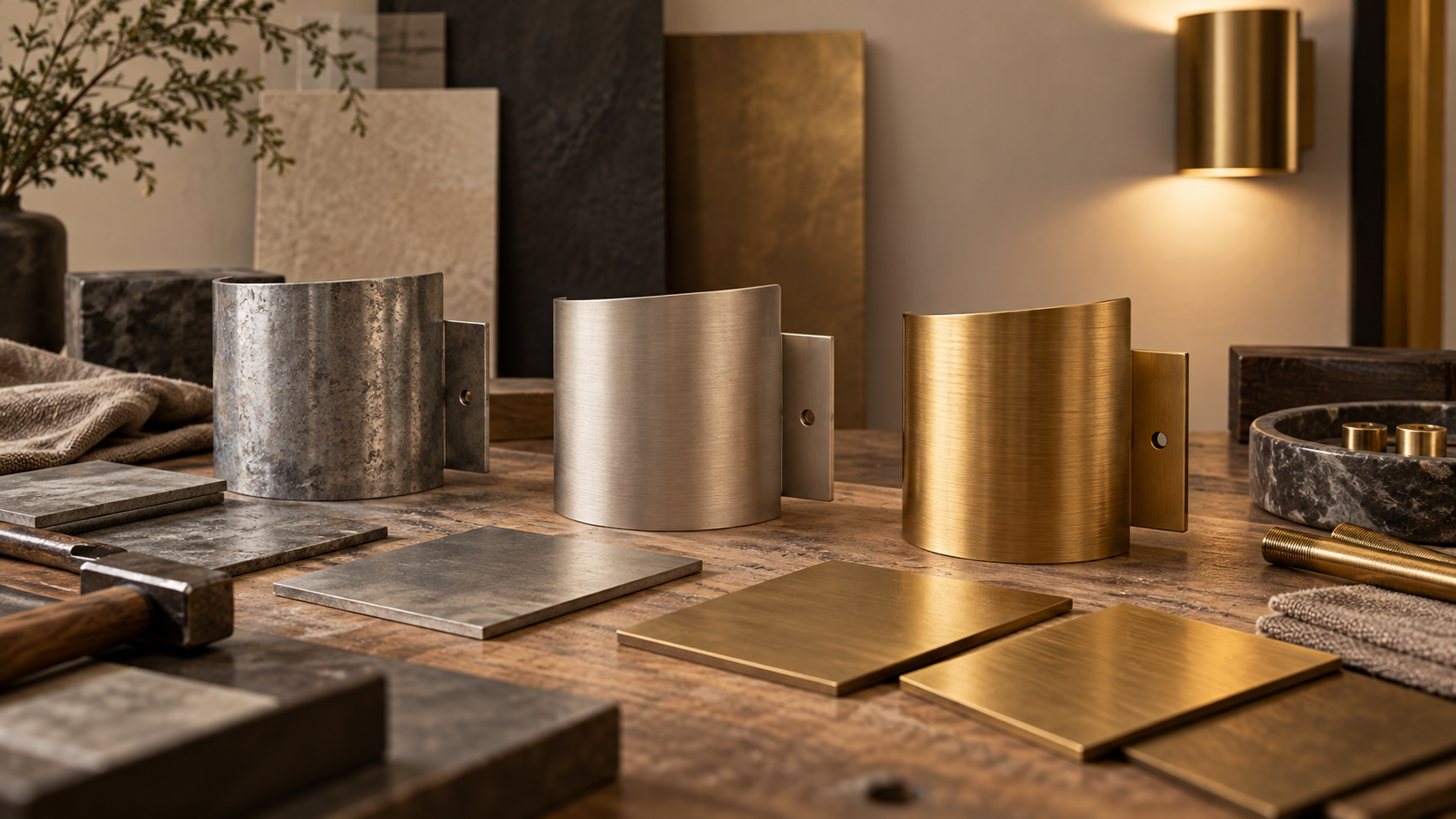
Describe the finish against a physical reference under the guestroom's actual light. Record whether the surface should be matte, satin or reflective and whether visible grain has a required direction. Identify high-touch areas, cleaning chemicals and adjacent materials. A finish that looks right on a small loose swatch may appear different on a curved faceplate or beside timber and fabric.
Keep the approved sample with a version number and photographs under neutral and installed light. Photographs help communication but cannot replace the physical reference for color and sheen.
Confirm the substrate and preparation
Ask what base metal and fabrication route the offered part uses. Edges, joints, welds and fastener holes may need different preparation from flat surfaces. Surface preparation affects adhesion and visible consistency, so include it in the production record. Do not assume an identical coating procedure can be transferred between different substrates or shapes.
If the project changes a faceplate thickness, weld or machining detail, review the finish sample again. The visible result and durability may change with the underlying part.
Select and validate the finish route
Powder coating, electroplating, anodizing and other methods have different constraints and appearances. The powder-coating versus electroplating guide compares two common routes at a decision level. Choose based on the actual substrate, target appearance, environmental exposure, maintenance and available test evidence. Avoid treating one method as universally superior.
Ask for a process description and relevant test results for the chosen configuration. If a protective clear coat is proposed, identify it explicitly. Request a sample after the complete process, not an unfinished intermediate part.
Agree on inspection and change control
Set the viewing distance and lighting conditions for appearance inspection, permitted range of shade or texture, and a method for checking adhesion or corrosion where relevant. Agree how cosmetic defects, edges and hidden faces are assessed. A single attractive prototype does not establish repeat consistency; inspect pilot parts from the intended production route.
Record the accepted part, finish code, process revision and supplier evidence. If a process, substrate or subcontractor changes, review a fresh sample before shipment. The hotel wall-light finish selection guide covers the room-level choice. This article offers a buyer's method; it does not claim MYDE operates a particular finishing line without verified factory evidence.
For replacement parts years later, retain one protected master sample and the inspection conditions. A verbal finish name may be interpreted differently by a new supplier or batch. The physical reference gives maintenance and procurement teams a clearer basis for matching a visible part.