
Quick answer
Compare the full finished part and its process evidence; neither powder coating nor electroplating is universally best.
Powder coating versus electroplating for hotel lighting is a comparison of finish process, substrate, appearance and required evidence. Powder coating applies and cures a polymer coating; electroplating deposits metal through an electrochemical process. Either can be suitable for a wall-light part when the actual material, preparation, geometry and service conditions support it. Compare approved physical samples and test records rather than assuming that a brass-colored surface is plated or that a black surface is powder coated.
Begin with the part and exposure
Identify the substrate and the exact part geometry. Sharp edges, deep recesses, joints and fasteners can influence how a finish is applied and inspected. Note whether the part is touched by guests, cleaned frequently or exposed to moisture. The selected finish must also work with the fixture's thermal and electrical design; surface appearance alone is not the whole product approval.
Do not extrapolate a finish method from a marketing photograph. Ask the supplier which process, preparation and protective layers are used on the ordered configuration.
What powder coating changes
Powder coating creates a cured coating on a prepared surface. It can offer controlled colors and textures, but the final result depends on substrate preparation, film thickness, curing and part geometry. Ask for a complete coated sample and the applicable adhesion, durability and cleaning evidence. A smooth swatch may not reveal buildup at corners or changes around an assembled faceplate.
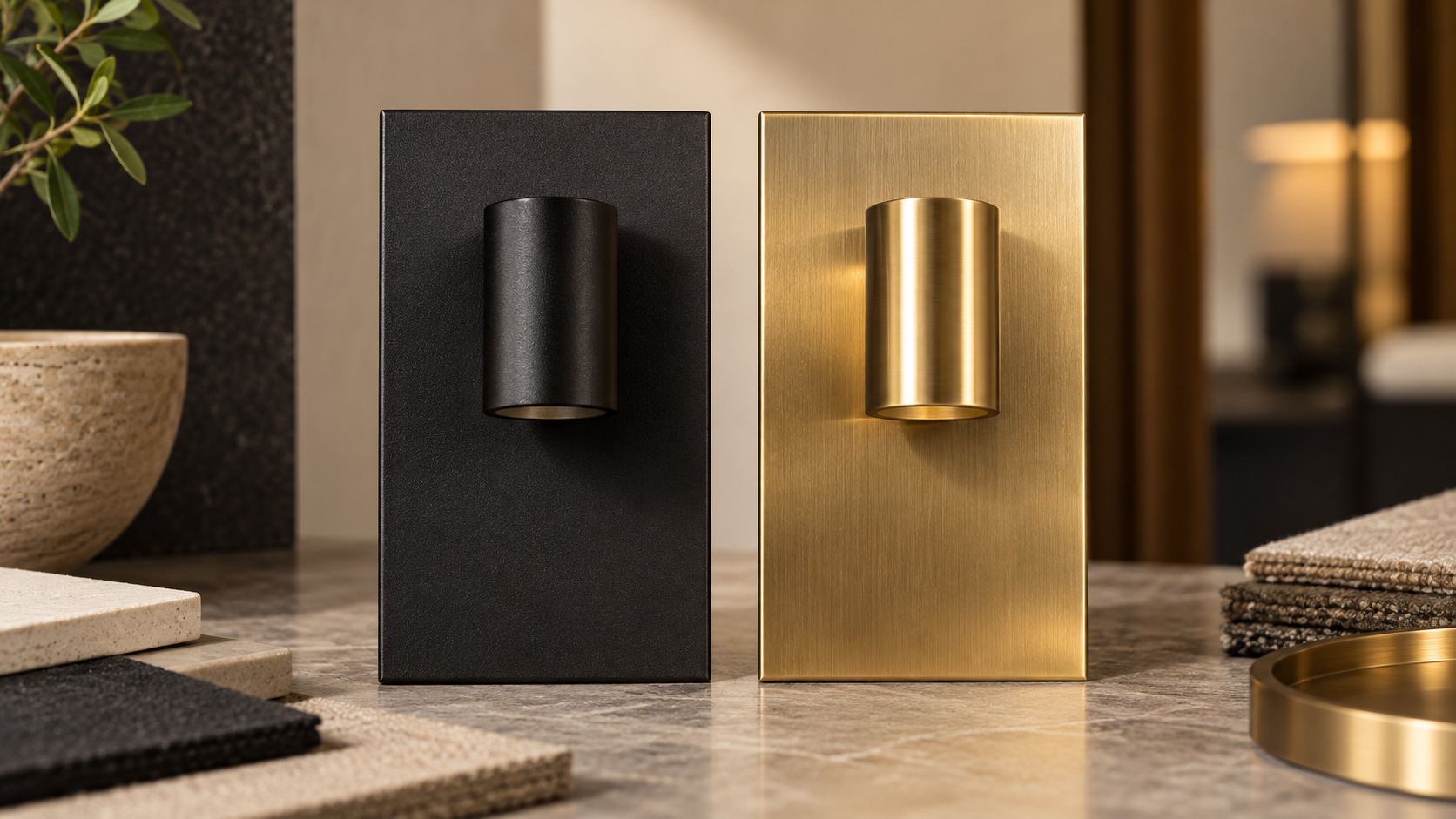
If a project wants a matte black component, compare the physical sample under both neutral inspection light and the room's warm ambient light. The word “matte” can cover visibly different sheens, so define a signed reference.
What electroplating changes
Electroplating deposits a metal layer on a suitable prepared base. It may be selected for a metallic appearance, but the visible tone and durability depend on the substrate, plating stack, thickness, finishing and any protective coating. Ask for evidence suited to the destination and cleaning regime. A brass-tone appearance is not evidence of solid brass or a particular plated metal.
Inspect corners, backs and contact points on the actual part. A sample flat coupon is useful for comparison but cannot show every feature of a finished wall light.
Compare like with like
Ask each supplier to submit a finished part, process description, finish code, cleaning guidance and relevant test reports. Inspect both under the same light and at the same viewing distance. Record acceptable appearance range, defect criteria and how replacements will be matched. Price and lead time may matter commercially, but do not let a generic process label substitute for evidence on the exact part.
The custom metal finish process guide explains how to move from brief to signed sample. The finish selection guide deals with the room aesthetic. Before repeated supply, approve pilot parts from the intended process and document any substrate or process change. No claim here identifies a specific MYDE model as powder coated or electroplated without its verified product record.
If cleaning guidance differs between proposed finishes, involve hotel operations before signing the sample. A visually attractive surface that requires a maintenance method the property cannot follow is a poor repeat choice. Keep approved cleaning products and inspection expectations with the asset record.