
Quick answer
Define an owned, testable brief; approve a documented prototype; then control production changes, inspection and service. OEM is a process label, not proof of a specific factory or certification.
The hotel lighting OEM process turns an approved buyer specification into repeated supply by a manufacturing partner. For a project, the critical path is a clear brief, documented engineering, a signed sample, controlled changes, inspection and service support. “OEM” does not by itself identify who owns a design, what a factory makes in house, or which certifications cover a final product. Define those details in the contract and technical record before ordering.
Begin with an owned, testable brief
Identify the buyer's intended room, target market, product appearance, lighting task, installation constraints and control sequence. State who supplies the drawing and who owns later revisions, tooling and artwork. Put the exact accepted performance and finish criteria in writing. A reference photograph can communicate direction, but it cannot define dimensions, cut-out, beam, electrical connection or allowable finish variation.
Ask the manufacturer to review the brief for feasibility and return a list of open questions. Typical questions concern headboard depth, backing, driver position, cable route, source and optic, control compatibility, service access and market evidence. Resolve these in a controlled drawing revision. Do not describe a custom finish or charging function as available for a MYDE model until the relevant configuration is confirmed.
Prototype, test and sign the sample
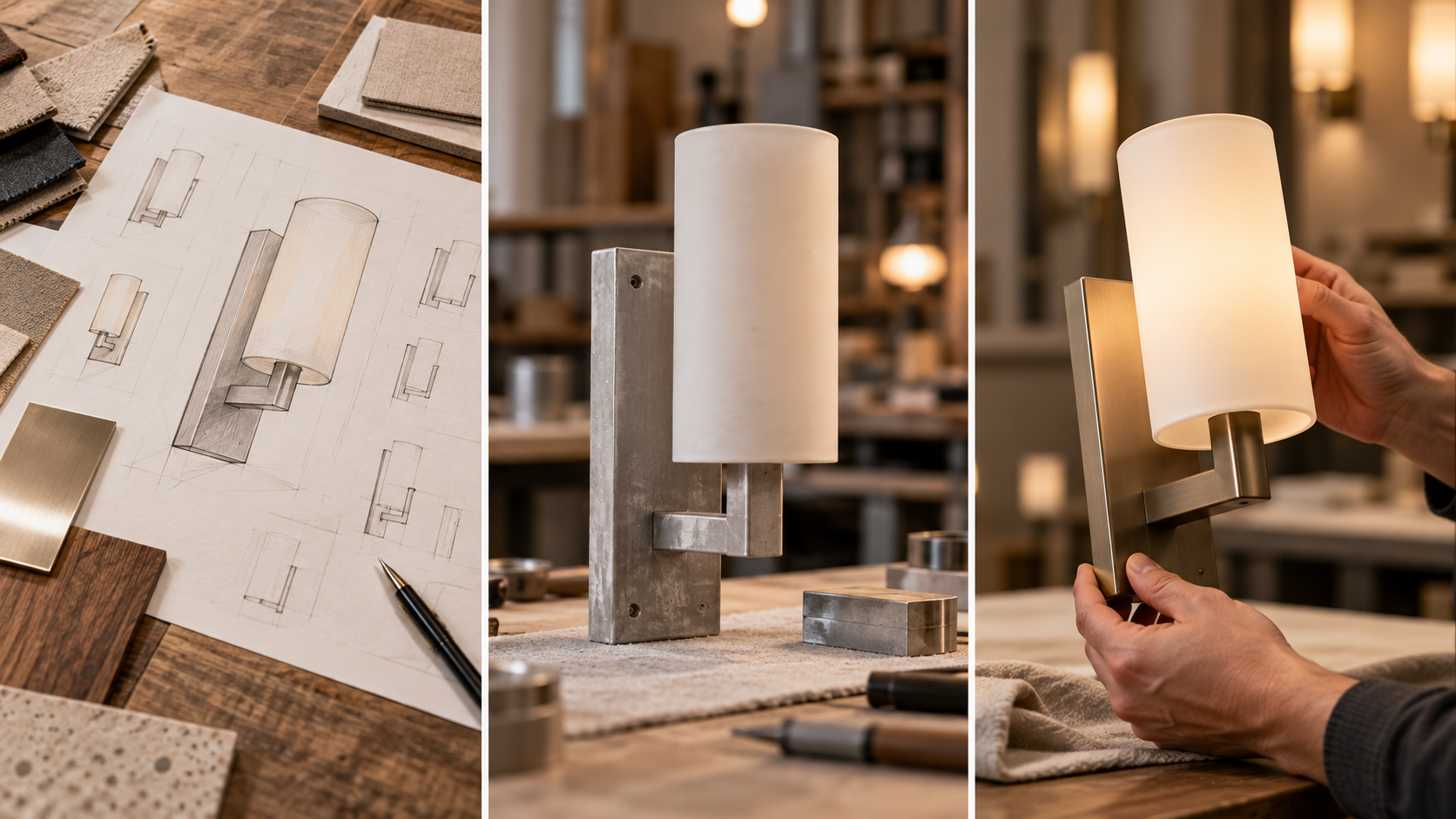
The first physical sample should be identified by model, version and bill of materials. Compare it with the drawing, finish reference and electrical specification. Install it in a full-size room to test the guest's reading and switching tasks. Record any changes and issue a revised sample where needed. The custom wall-light development guide details the design-to-sample path; the OEM brief should also decide who can approve a change.
Ask for test and destination-market documents that identify the final assembled configuration. A component certificate or a result for an earlier prototype may not cover a new driver, USB module or housing. Approval of appearance does not replace electrical assessment. Keep the signed sample as the reference for incoming inspection and later replacement orders.
Control repeated production
Agree on inspection points for finish, dimensions, assembly, switching and packaging. Ask how the manufacturer traces lots and records component changes. A substituted LED, driver or surface treatment can affect colour, dimming, fit or service, even when the front view appears unchanged. Require written notice and approval before changes to controlled items. Define an acceptance method for production samples and a route for nonconforming units.
The ISO supplier-selection guide offers questions about quality-system evidence, but do not assume any particular MYDE facility holds a certification without a verified document. Evaluate the actual proposed supplier and product record. Discuss spare parts and replacement compatibility before the first shipment, not after a hotel is occupied.
Handover records
- Approved drawing, configuration and ownership terms.
- Signed prototype with finish and functional acceptance results.
- Applicable test documents for the final product and target market.
- Inspection plan, lot identification and change-control route.
- Installation, cleaning, service and spare-parts information.
An OEM process is successful when the delivered units can be checked against the same approved reference and a later change can be traced and evaluated.