
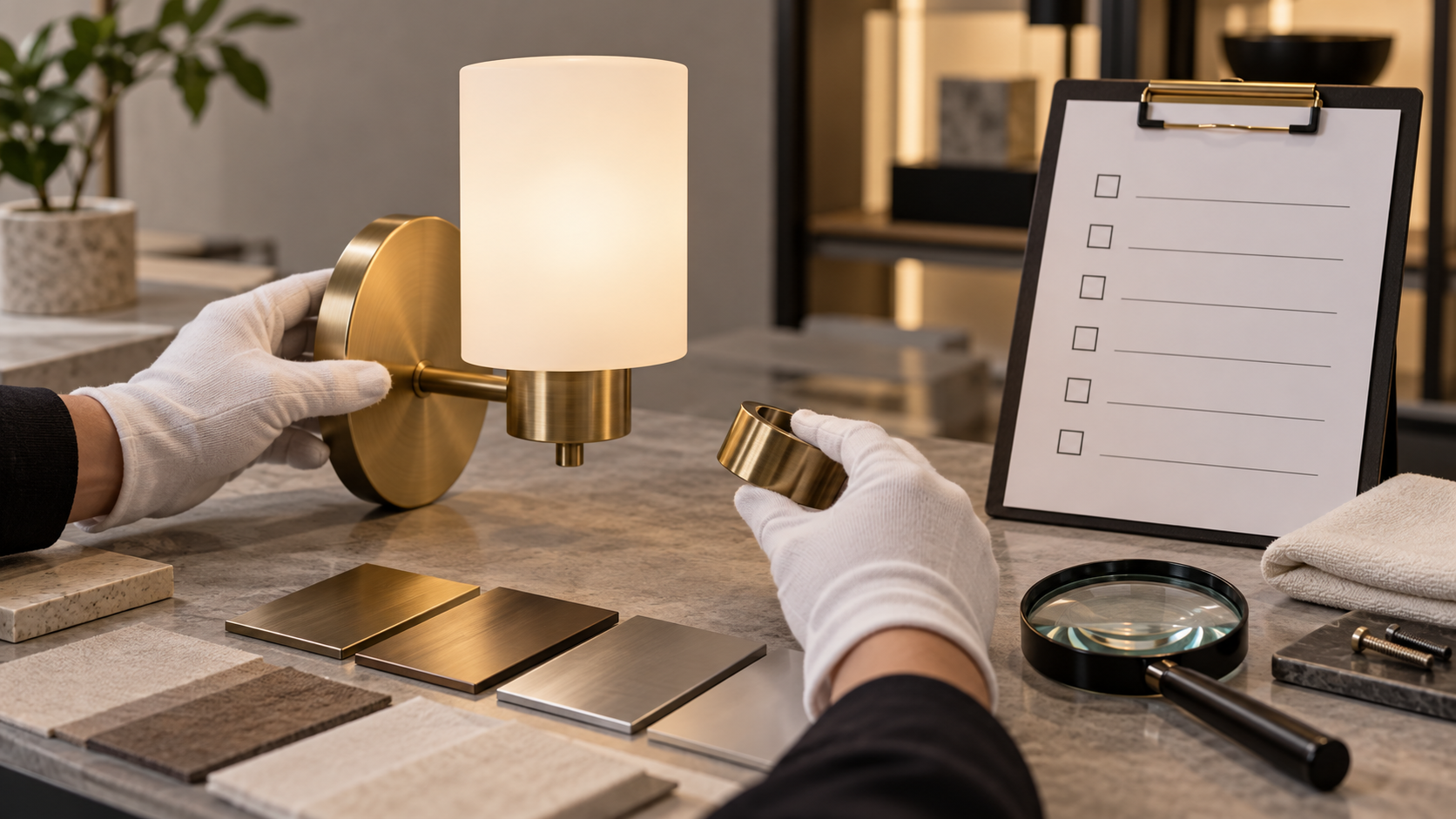
Quick answer
Label the exact sample, compare it with the schedule and test appearance, reading light, controls, fitting and evidence. Sign only a specific version with recorded results and open issues.
A hotel lighting sample approval checklist should answer a precise question: does this exact submitted luminaire match the project brief and evidence well enough to become the reference for repeated supply? Check identity, appearance, function, light distribution, installation and documentation together. Sign a sample only after the relevant tests are recorded, and retain it with its model and revision. A visual thumbs-up cannot settle electrical suitability or the behaviour of a dimmed guestroom circuit.
Check identity before appearance
Label the sample with manufacturer, model, option codes, source, driver, optic, CCT, finish, control version and date. Compare these with the supplier's current technical sheet and the project schedule. If the sample has an undocumented substitution, stop the approval until its effect is understood. A loose mock-up component may help explore a concept but should not be signed as the production reference.
For a recessed product, compare the supplied installation drawing with the planned cavity, cut-out and fixing. For a surface fitting, check bracket, backing and cable entry. Confirm how the complete unit can be removed and serviced. If a charging port is present, record its exact output and test behaviour with the room power sequence. Ask the qualified project team to check destination-market electrical and protection evidence.
Review the sample in its room context
Place finish samples beside the headboard fabric, timber and paint under the intended lighting scenes. Look at joints, edges, fasteners, texture and repeatability. Install the sample at the proposed position and read from each pillow, with the other lights off. Observe glare, page coverage and spill onto the second bed. A bench sample cannot reproduce those room conditions.
Operate every switch repeatedly. Test the room master, independent bedside control, dimming range if used and recovery after power loss. The US Department of Energy's dimming guidance specifically recommends testing the complete circuit because nominal compatibility does not guarantee smooth low-level operation. Record results rather than writing “works” without conditions.
Record acceptance and changes
Use a pass, fail or pending line for each requirement, with evidence and an owner. Photograph the installed sample from normal guest viewpoints, but keep measurements and test notes separately. If a finish, driver or optic changes, mark the first sample superseded and repeat the affected tests. Link the signed sample to the purchase order and incoming inspection plan.
The mock-up-room process covers the broader interaction of all room layers. This checklist concerns the individual product specimen and its documented configuration. Both approvals may be necessary before release.
Minimum checklist
- Identity and revision match the schedule and evidence package.
- Finish, physical dimensions and fixing match the approved detail.
- Source, beam, glare and reading task work in the real room.
- Switch, dimming and charging behave as specified.
- Market and electrical documents cover the exact configuration.
- Service access and replacement parts have a documented route.
- Approver, date, exceptions and retained sample location are recorded.
Leave any unresolved line open. An approved sample is useful because it is specific, traceable and repeatable, not because it carries a signature alone.