Quick answer
LED flicker depends on the complete electrical and control combination; request measured results for the ordered configuration and test low dimming states.
Why flicker matters in hotel lighting is that a lamp can appear steady while its light output varies over time. The driver, LED module, dimmer and control setting determine that variation as a system. Motion of a hand, eye or phone camera can reveal effects that a still product photograph cannot. Do not accept “flicker-free” as a complete specification without a stated measurement method, operating state and exact ordered configuration. For hotel rooms, pay attention to bedside reading and low dimming states, where guests spend time close to the source.
Use precise language about the phenomenon
The U.S. Department of Energy's flicker overview describes temporal changes in light output, including visible flicker and motion-related effects. The same source explains that LED behavior depends strongly on driver design and dimmer interaction. This is general lighting science; it is not a measurement of a MYDE product.
Avoid claiming that every modulation pattern has the same health effect. The DOE notes that research and thresholds vary by effect and population. A procurement brief can still ask for measured temporal-light data and visual checks without making a medical promise or inventing a universal safe number.
Test the complete electrical combination
Identify the LED module, driver, control interface and input supply for the exact fitting. Ask the supplier to state what was measured at full output, typical use and the lowest supported dimming state. A lamp tested alone can behave differently when combined with the room controller. Driver substitutions during procurement may change the result.
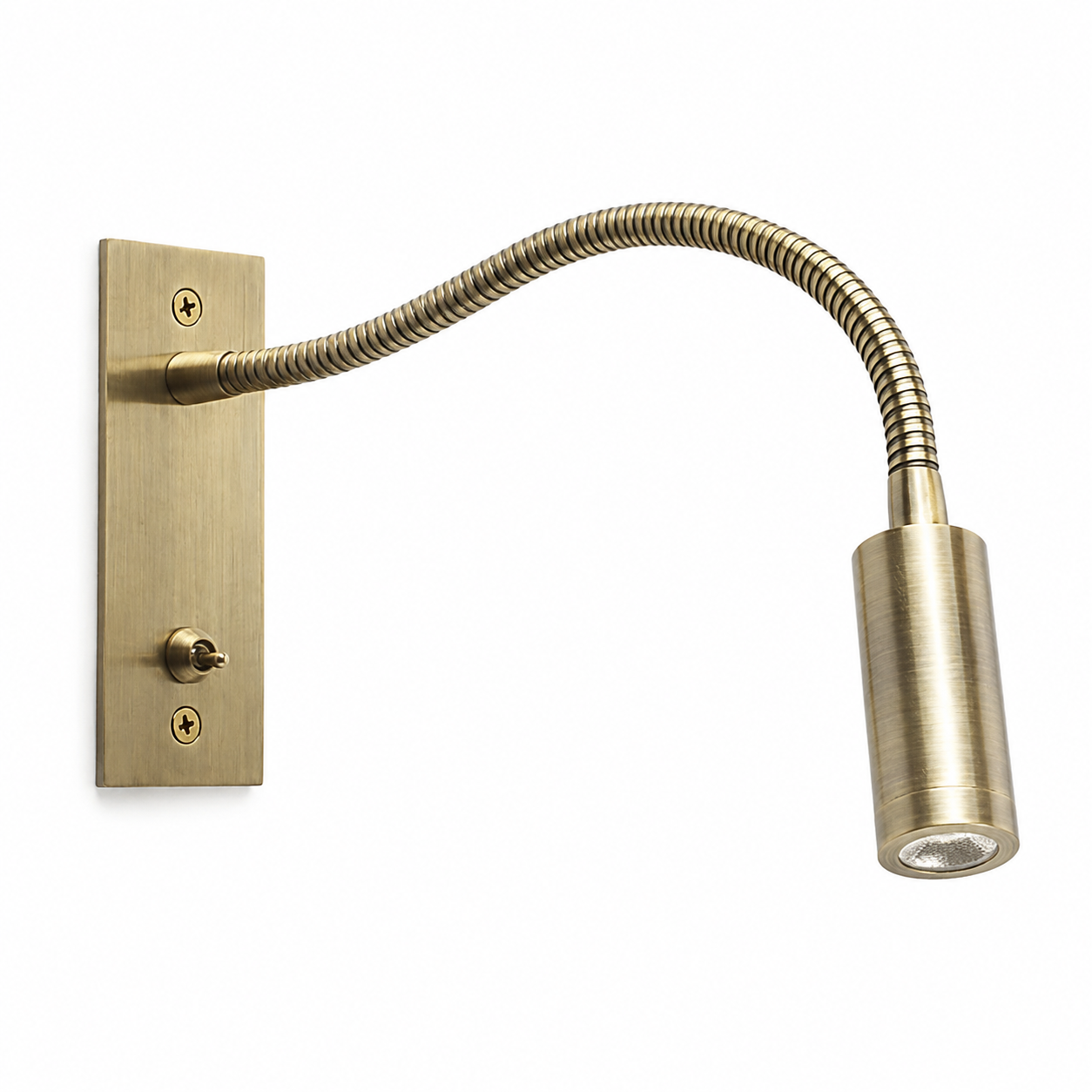
The documented MD-WL-Y092 has touch dimming and a 3 W flexible reading head. Its pack does not provide temporal-light measurements or a verified full control sequence. Do not call it flicker-free on that evidence. Ask for the exact sample and test it with the intended room power and controls. The dimming-options guide covers the control choices separately.
Observe use in the furnished room
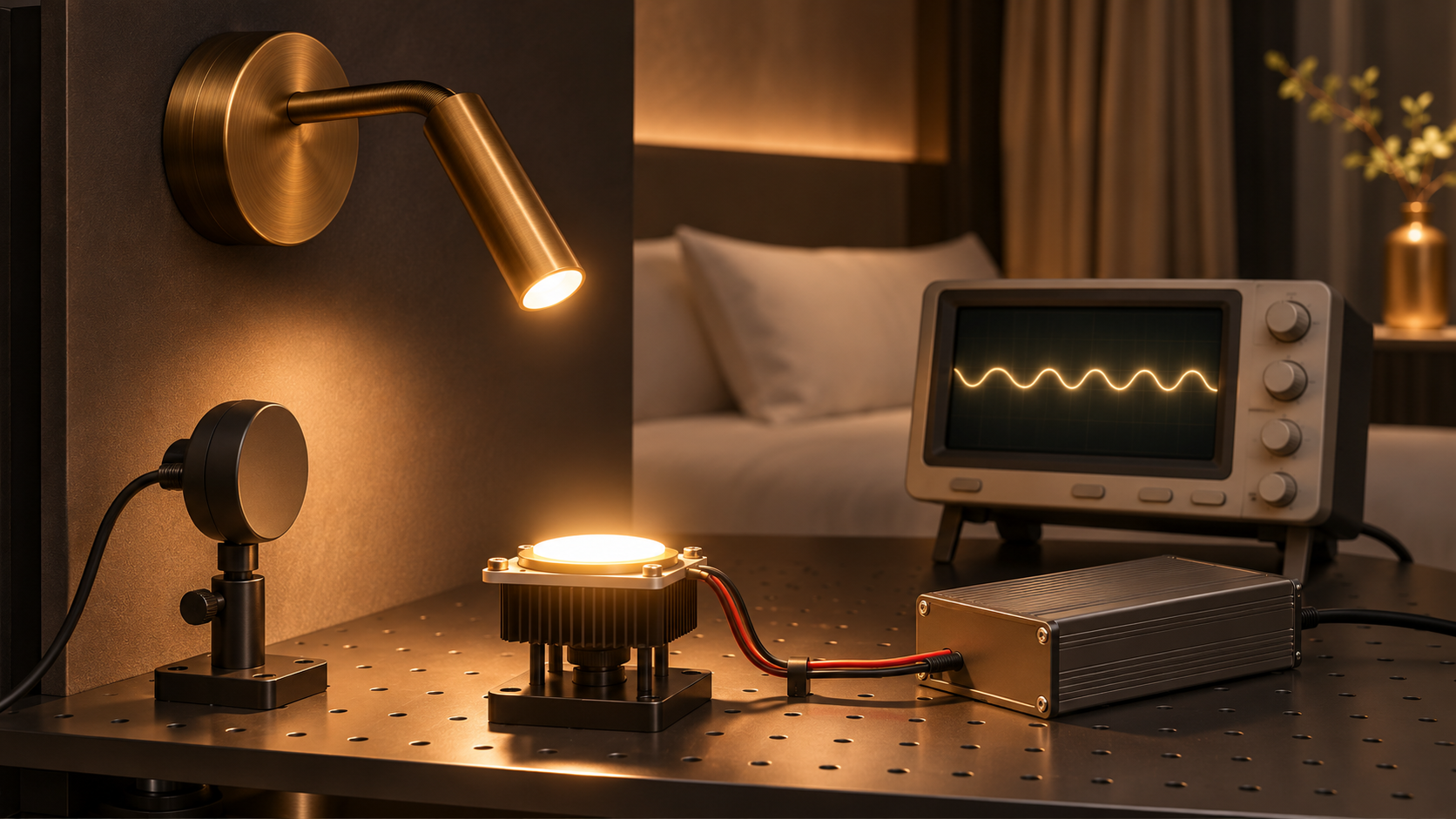
In a mock-up, examine the book surface and nearby moving hands at each dimming state. Listen for driver noise and look for instability or sudden jumps as the level changes. A phone camera can be a quick warning aid, but its rolling shutter and settings are not a calibrated flicker meter. Use a documented instrument and method when the project requires a quantitative acceptance criterion.
Check interactions with the room master, occupancy control or bedside scene. A low level used for a night route might be the state where an incompatible dimmer behaves worst. Record each observed state with the exact hardware versions so the result can be repeated.
Write a testable specification
Request the measurement standard, metric, frequency range, operating conditions and actual report rather than a badge. Include the selected dimmer or controller and permitted substitutions in the fixture schedule. A manufacturer's result for one product family cannot be copied to a different driver combination.
If the delivered sample differs from the approved one, repeat the relevant test before room-wide installation. The practical objective is a visually stable, documented system in the conditions guests will use. This article provides a review method, not a certification of any particular fitting.